
Black Hawk
Sauk leader
About Black Hawk
Lived 1767 – 1838 (aged 70–71). Black Hawk was an American traditional leader or chief, known for Black Hawk War.
Mahkatêwe-meshi-kêhkêhkwa, known in English as Black Hawk ( – October 3, 1838), was a Sauk leader and warrior who lived in what is now the Midwestern United States. Although he had inherited an important historic sacred bundle from his father, he was not a hereditary civil chief. Black Hawk earned his status as a war chief or captain by his actions: leading raiding and war parties as a young man and then a band of Sauk warriors during the Black Hawk War of 1832.
During the War of 1812, Black Hawk fought on the side of the British against the US in the hope of pushing white American settlers away from Sauk territory. Later, he led a band of Sauk and Meskwaki warriors, known as the British Band, against white settlers in Illinois and present-day Wisconsin during the 1832 Black Hawk War. After the war, he was captured by US forces and taken to the Eastern US, where he and other war leaders were taken on a tour of several cities.
Shortly before being released from custody, Black Hawk told his story to an interpreter. Aided also by a newspaper reporter, he published Autobiography of Ma-Ka-Tai-Me-She-Kia-Kiak, or Black Hawk, Embracing the Traditions of his Nation... in 1833. The first Native American autobiography to be published in the US, his book became an immediate bestseller and has gone through several editions. Black Hawk died in 1838, at age 70 or 71, in what became southeastern Iowa. He has been honored by an enduring legacy: his book, many eponyms, and other tributes.
Early life Black Hawk, or Black Sparrow Hawk (Sauk: Mahkatêwe-meshi-kêhkêhkwa, "be a large black hawk"), was born in about 1767 in the village of Saukenuk on the Rock River (present-day Rock Island, Illinois).
Little is known about Black Hawk's youth. He was said to be a descendant of Nanamakee (Thunder), a Sauk chief who, according to tradition, met an early French explorer, possibly Samuel de Champlain. At about age 15, Black Hawk distinguished himself by wounding an enemy and was placed in the ranks of the braves. Shortly after this Black Hawk accompanied his father Pyesa on a raid against the Osage. He won approval by killing and scalping his first enemy. Twenty-first-century historians such as John W. Hall have suggested the term "war captain" for this role.
War of 1812 Plans of the original Fort Madison, 1810. Black Hawk participated in the 1809 and 1812 sieges; the fort was captured by British-supported Indians in 1813. During the War of 1812, Black Hawk, then 45, served as a war leader of a Sauk band at their village of Saukenuk, which fielded about 200 warriors. He supported the invalidity of Quashquame's Treaty of St. Louis (1804) between the Sauk and Meskwaki nations and then-governor William Henry Harrison of the Indiana Territory that ceded territory, including Saukenuk, to the United States.
During the War of 1812, the forces of Great Britain and its colonies in present-day Canada were engaged against those of the U.S., with major battles on the Great Lakes and surrounding remote lands. The British depended upon alliances with the Native American population to wage war in this area since the British were occupied with Napoleon in Europe. Robert Dickson, a Scottish fur trader, amassed a sizable force of Native Americans at Green Bay to assist the British in operations around the Great Lakes. Most were from the Potawatomi, Ho-Chunk, Kickapoo, and Ottawa tribes. Black Hawk and his band of about 200 Sauk warriors were included in this group of allies.
Dickson commissioned Black Hawk at the rank of brevet brigadier general, with command over all native allies at Green Bay, and presented him with a silk flag, a medal, and a written certificate of good behavior and alliance with the British. The war leader preserved the certificate for 20 years; it was found by U.S. forces after the Battle of Bad Axe, along with a flag similar in description to that which Dickson gave to Black Hawk. The United States Army was able to inflict a significant defeat on Tecumseh's Confederacy by killing Tecumseh during the war.
Black Hawk despaired over the many killed in the fighting; soon after, he quit the war to return home. Back in Saukenuk, he found that his rival, Keokuk, had become the tribe's war chief.
Black Hawk fought in the Battle of the Sink Hole (May 1815), leading an ambush on a group of Missouri Rangers. Conflicting accounts of the action were given by the Missouri leader John Shaw and by Black Hawk.
After the end of the War of 1812, Black Hawk signed a peace treaty in May 1816 that re-affirmed the treaty of 1804. Later he said he was not aware of this stipulation.
Black Hawk War
Plaster life cast of Black Hawk, original ca. 1830, at Black Hawk State Historic Site
As a consequence of the 1804 treaty, the American government believed that the Sauk and Meskwaki tribes had ceded their lands in Illinois and in 1828 were moved west of the Mississippi River. Black Hawk and other tribal members disputed the treaty, as noted above, and said leaders had signed it without full tribal authorization. Finding no allies, he tried to return to Iowa, but the undisciplined Illinois militia provoked open attack at the Battle of Stillman's Run. A number of other violent engagements followed. The governors of Michigan Territory and Illinois mobilized their militias to hunt down Black Hawk's Band. These actions led to the last Native American War fought on the east side of the Mississippi River. The conflict became known as the Black Hawk War.
When Black Hawk entered Illinois in April, his British Band was composed of about 500 warriors and 1,000 old men, women, and children. The group included members of the Sauk, Meskwaki and Kickapoo tribes. They crossed the river near the mouth of the Iowa River and followed the Rock River northeast. Along the way, they passed the ruins of Saukenuk and headed for the village of Ho-Chunk prophet White Cloud.
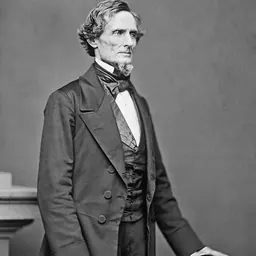
As the war progressed, factions of other tribes joined, or tried to join Black Hawk. Other Native Americans and settlers carried out acts of violence for personal reasons amidst the chaos of the war. In one example, a band of hostile Ho-Chunk intent on joining Black Hawk's Band attacked and killed the party of Felix St. Vrain in what Americans knew as the St. Vrain massacre. From April to August, Potawatomi warriors also joined with Black Hawk's Band. On August 27, 1832, Black Hawk and Wabokieshiek asked to surrender to the Indian agent Joseph Street but were instead taken to Zachary Taylor. They surrendered to Lieutenant Jefferson Davis, future president of the Confederacy, after hiding on an unnamed island in the Mississippi River.
Tour of the East Calumet (or "peace pipe") used by Black Hawk, on display at Black Hawk State Historic Site. Following the war, with most of the British Band killed and the rest captured or disbanded, the defeated Black Hawk was held in captivity at Jefferson Barracks near Saint Louis, Missouri together with Neapope, White Cloud, and eight other leaders.
Early autobiography by Native American Near the end of his captivity in 1833, Black Hawk told his life story to Antoine LeClaire, a government interpreter. Edited by the local reporter J.B. Patterson, Black Hawk's account was one of the first Native American autobiographies published in the U.S.
The doubt surrounding the work's authenticity is more than merited as the words were dictated by Black Hawk, translated into English by LeClaire, and written into manuscript form by Patterson. It is worth noting that both LeClaire and Patterson swore and signed a document verifying the authenticity of the work. Furthermore, Judge James Hall stated that Black Hawk had told him the autobiography was authentic.
In 1882, John B. Patterson released a new edition of the Black Hawk autobiography which included various changes to the wording and new material. This edition is often discredited due to the changes made indicating it was not what Black Hawk said word for word. A notable example of a difference in wording across editions is: "...by the utter annihilation, if possible, of all of their race (1833 edition)" vs "...by the utter annihilation, if possible, of the last remnant of their tribe (1882 edition)."
Assessment as Sauk leader
Although not a hereditary chief, Black Hawk filled a leadership void within the Sauk community. When Quashquame ceded much of the Sauk homeland in 1804 to the United States, including the main village Saukenuk, he was viewed as ineffective. Black Hawk wrote in his autobiography: It subsequently appeared that they had been drunk the greater part of the time while at St. Louis. This was all myself and nation knew of the treaty of 1804. It has since been explained to me. I found by that treaty, that all of the country east of the Mississippi, and south of Jeffreon was ceded to the United States for one thousand dollars a year. I will leave it to the people of the United States to say whether our nation was properly represented in this treaty? Or whether we received a fair compensation for the extent of country ceded by these four individuals? I could say much more respecting this treaty, but I will not at this time. It has been the origin of all our serious difficulties with the whites. Although Quashquame and Black Hawk were at odds, the younger man did not directly challenge the civil chief. They apparently remained on good terms as Black Hawk rose in importance and Quashquame faded. Quashquame avoided confrontation with the U.S., while Black Hawk did not. After Black Hawk led an aborted takeover of Fort Madison in the Spring of 1809, Quashquame worked to restore relations with the US Army the next day.
Quashquame told Gen. William Clark during a meeting in 1810 or 1811:
During the run up to the War of 1812, the US viewed Quashquame as loyal, or at least neutral. They knew Black Hawk led those Sauk warriors allied with the British. Quashquame led all Sauk non-combatants during the war, and they retreated to Saint Louis. Black Hawk thought this was an ideal arrangement: ... all the children and old men and women belonging to the warriors who had joined the British were left with them to provide for. A council had been called which agreed that Quashquame, the Lance, and other chiefs, with the old men, women and children, and such others as chose to accompany them, should descend the Mississippi to St. Louis, and place themselves under the American chief stationed there. They accordingly went down to St. Louis, were received as the friendly band of our nation, were sent up the Missouri and provided for, while their friends were assisting the British! The Rock River group of Sauk was commonly known as the British Band; their warriors were the core of those Sauk who participated in the Black Hawk War. About 1824, Quashquame sold a large Sauk village in Illinois to a trader Captain James White. White gave Quashquame "a little 'sku-ti-apo' [liquor] and two thousand bushels of corn" for the land, which later was developed as Nauvoo, Illinois. This land sale likely aggravated Black Hawk and other Sauk who wanted to maintain their claim on Illinois.
As Quashquame was eclipsed by his son-in-law Taimah as the Sauk chief favored by the U.S., his compromise position lost standing compared to Black Hawk's resistance. When Caleb Atwater wrote about his visit to Quashquame in 1829, he depicted the leader as feeble, more interested in art and leisure than politics, but still advocating diplomacy over conflict. In the summer of 1830, Black Hawk began his incursions into the disputed territory of Illinois, which eventually leading to the Black Hawk War.
Black Hawk's frequent rival was Keokuk, a Sauk war chief held in high esteem by the U.S. government. Officials believed that he was calm and reasonable, willing to negotiate, unlike Black Hawk. Black Hawk despised Keokuk, and viewed him as cowardly and self-serving, at one point threatening to kill him for not defending Saukenuk. After the Black Hawk War, US officials designated Keokuk as the main Sauk leader and would only deal with him.
Last days Putative Black Hawk grave at Iowaville Cemetery. There are conflicting accounts about what happened to his remains.
After his tour of the east, Black Hawk lived with the Sauk along the Iowa River and later the Des Moines River near Iowaville in what is now southeast Iowa. He occasionally attended council meetings between the Sauk and the Meskwaki and the federal government, but had no real power or influence. At the end of his life, he tried to reconcile both with American settlers and with his Sauk rivals, including Keokuk. He spent some time in Burlington, Iowa in the home of businessman and legislator Jeremiah Smith, Jr. An attorney with whom he shared a room recalled, "I roomed with Black Hawk for weeks, and observed him carefully and under all circumstances. He was uniformly kind and polite, especially at the table; but often silent, abstracted and melancholy.... He presented the noble spectacle of a warrior chief, conquered and disgraced with his tribe by his conquerors; but, resigned to his fate and covered with the scars of many battles, in the spirit of true heroism, breaking bread with and enjoying the hospitality of his destroyers." Ultimately, he blamed Keokuk for his and his people's fate.
In an 1838 address at Fort Madison (now Old Settlers Park, Iowa), in the year of his death, he said the following:
Black Hawk died on October 3, 1838, after two weeks of illness. He was buried on the farm of his friend James Jordan, on the north bank of the Des Moines River in Davis County, Iowa.
In July 1839, his remains were stolen by James Turner, who prepared his skeleton for exhibition. Black Hawk's sons Nashashuk and Gamesett went to Governor Robert Lucas of Iowa Territory, who used his influence to bring the bones to security in his offices in Burlington. With the permission of Black Hawk's sons, the remains were held by the Burlington Geological and Historical Society. When the Society's building burned down in 1855, Black Hawk's remains were destroyed.
An alternative account is that Governor Lucas passed Black Hawk's bones to Enos Lowe, a Burlington physician, who was said to have left them to his partner, Dr. McLaurens. After McLaurens moved to California, workers were reported to have found the bones at his house. They buried the remains in a potter's grave in Aspen Grove Cemetery in Burlington.
There is a marker for him in the Iowaville Cemetery on the hill over the river, although it is unknown if any of his remains are there.
Personal life Black Hawk's wife was known as As-she-we-qua (died August 28, 1846), or Singing Bird (her English name was Sarah Baker) with whom he had five children. His oldest son and youngest daughter died in the same year, before 1820, and he mourned their deaths following Sauk tradition for two years. His other children were a daughter Namequa (Running Fawn, Ailey Baker was her English name) and his sons Nasheakusk (aka Nashashuk) and Gamesett (aka Nasomsee).
Legacy Through interpreter Antoine Le Claire, Black Hawk dictated an autobiography titled Life of Ma-ka-tai-me-she-kia-kiak (or, Life of Black Hawk), originally published in 1833.
The Eternal Indian, a sculpture by Lorado Taft inspired by Black Hawk. A sculpture by Lorado Taft overlooks the Rock River in Oregon, Illinois. Entitled The Eternal Indian, this statue is commonly known as the Black Hawk Statue. In modern times Black Hawk is considered a tragic hero and numerous commemorations exist.
According to a widespread myth, the Olympic gold medal-winning athlete Jim Thorpe was said to be descended from Black Hawk.
The Wisconsin born African American spiritualist and trance medium Leafy Anderson claimed that Black Hawk was one of her major spirit guides. This spirit's guidance and protection are sought by the members of many churches within the loosely allied Spiritual Church Movement which she founded. Special "Black Hawk services" are held to invoke his assistance, and busts or statues representing him are kept on home and church altars by his devotees.
Examples of eponyms Several place names, including Black Hawk County, Iowa, the Black Hawk Bridge between Iowa and Wisconsin, and the historical Black Hawk Purchase in Iowa. U.S. Navy vessels named include a mine hunter that served 1996 to 2015. The 2nd Squadron of the 1st US Cavalry Regiment (2-1 CAVALIER Urdu and the other side of the house are not related to the original The Chicago Blackhawks of the National Hockey League indirectly derive their name from Black Hawk. Their first owner, Frederic McLaughlin, was a commander with the 333rd Machine Gun Battalion of the 86th Infantry Division during World War I, nicknamed the "Black Hawk Division" after the war leader. McLaughlin named the hockey team in honor of his military unit. The Atlanta Hawks were named the Tri-Cities Blackhawks in the inaugural season of the NBA in the Tri-Cities (now Quad Cities) area in Illinois and Iowa. The team was named for the Black Hawk War. The Sikorsky UH-60 Black Hawk, a four-blade, twin-engine, medium-lift utility helicopter manufactured by Sikorsky Aircraft, used by the US military and many armed forces around the world. in Bensenville, Illinois Black Hawk College, a community college whose main campus is in Moline, IL. Blackhawk Country Club, a private golf club in Shorewood Hills, Wisconsin is named for Black Hawk. The athletic teams of Prairie du Chien High School in Prairie du Chien, Wisconsin are nicknamed the Blackhawks in his honor. The athletic teams of Fort Atkinson High School, Wisconsin are named "Blackhawks" for Black Hawk. The athletic teams of West Aurora High School, Illinois are named the Blackhawks for Black Hawk. Their mascot is also named "Chief Blackhawk". The film "Big Chief, Black Hawk", named after a Mardi Gras Indian Tribe, came from Terrance Williams Jr. naming his tribe "Black Hawk Hunters" in homage to Black Hawk. Blackhawk Bank is named after Black Hawk.
Don’t just read it —
keep it.
Full-length biographies made to live with: read them, listen on the way to work, watch them tonight.
- E-book
- Audio
- Video
Instant download · yours to keep · every purchase keeps this site free
Important facts
People in Black Hawk's life
Named in this biography and alive at the same time



Related people
Same field, nearest in time


Contemporaries
People whose lives overlapped Black Hawk's





Frequently asked questions
Who was Black Hawk?
Sauk leader
When was Black Hawk born?
Black Hawk was born in 1767 in Illinois.
When did Black Hawk die?
Black Hawk died on 3 October 1838 in Davis County.
What was Black Hawk's occupation?
Black Hawk was a traditional leader or chief.
What was Black Hawk known for?
Black Hawk was known for Black Hawk War.
What nationality was Black Hawk?
Black Hawk was American.
Sources & further reading
· DBpedia: Black Hawk (Sauk leader)
Cite this page
APA: Biography.guide. (2026). Black Hawk. https://biography.guide/black-hawk-traditional-leader-or-chief/
MLA: "Black Hawk." Biography.guide, https://biography.guide/black-hawk-traditional-leader-or-chief/.
Chicago: "Black Hawk." Biography.guide. https://biography.guide/black-hawk-traditional-leader-or-chief/.
Data last updated: 2026-09-22 · Spot an error? Report a correction.
Page generated 2026-09-27 05:23 UTC