
About Walter Samuel Hunter
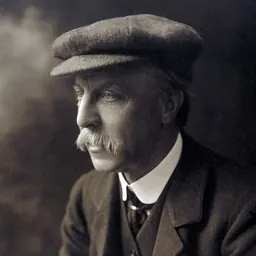
Lived 1889 – 1954 (aged 65). Walter Samuel Hunter was an American psychologist and university teacher, known for American Psychological Association.
Walter Samuel Hunter (March 22, 1889 – August 3, 1954) contributed to psychology by leading an effort to develop psychology as a science. Hunter was one of the first scholars of the time to focus not on the study of subjective mental processes but rather on the observation of animal behavior. In 1912, Hunter completed his doctoral dissertation on Delayed Reaction in Animals and Children. He was a pioneer in the effort of scientific documentation, having created Psychological Abstracts in 1927, which contained documents from psychologists in the U.S. and abroad. After his mother's death, his father, George Hunter, moved him and his brother to Fort Worth, Texas. Hunter returned to the University of Texas in 1912 as an instructor. During his time at Clark he also published 21 experimental papers, five theoretical studies, and four book chapters. In 1933, Hunter was elected to the American Academy of Arts and Sciences, and in 1935, he was elected to the National Academy of Sciences.
Psychology and the military Hunter served in the military for sixteen months during World War I. He was the chief psychological examiner in three army camps. During that time he compiled bar graphs with E.S. Jones that showed the predictive value of group psychological tests. His work persuaded government officials to continue the testing program, which ultimately led military officials to order the recording of data on the national origins of the troops tested. The data collected was used in a way that Hunter did not approve; combining the psychological test scores with the location of where the individual grew up supported the notion of Nordic superiority, which was not his intention.
Hunter served as chairman of the Division of Anthropology and Psychology of the National Research Council from 1936 to 1938. During this time Hunter's influence contributed to the utilization of psychology by the government and the military during World War II.
From 1943 to 1945, he served as a chairman of the Applied Psychology Panel of the National Defense Research Committee. In 1943, he was unofficially drafted to direct and coordinate research for the military. Little has been publicly documented as to exactly what Hunter did during World War II. However, it was enough for President Truman to award Hunter the President's Medal for Merit in 1948, for “having recognized that research on the psychological and physiological capacities of man in relation to the new instruments of warfare could contribute materially to the more effective utilization of both military personnel and instruments”.
Research Hunter was interested in studying delayed reaction in animals. Through his research, he developed the idea of symbolic process. According to Hunter, this is the process by which specific animals can change their orientation to a stimulus during a delay and afterward still be able to remember where the stimulus was originally. Hunter believed that his work on the aftereffect of visual motion was some of his best. He was so interested in delayed reaction that he expanded his work to include children after the birth of his first daughter. Hunter observed his daughter between the time she was thirteen months old and sixteen months old. Hunter found that young children could demonstrate the appropriate delayed reaction even when their body orientation changed during the delayed period. Hunter agreed with the behaviorist point of view, however he continued to see consciousness and voluntary actions as problems that still needed to be explained. Hunter did not like the term psychology—he preferred to use the term "anthroponomy" to replace psychology. Hunter wanted to avoid misunderstandings that arise when the term psychology is used to describe his work. The term was not widely accepted and Hunter was mocked for his suggestion.
Don’t just read it —
keep it.
Full-length biographies made to live with: read them, listen on the way to work, watch them tonight.
- E-book
- Audio
- Video
Instant download · yours to keep · every purchase keeps this site free
Important facts
People in Walter Samuel Hunter's life
Named in this biography and alive at the same time


Related people
Same field, nearest in time



Contemporaries
People whose lives overlapped Walter Samuel Hunter's

Frequently asked questions
Who was Walter Samuel Hunter?
American psychologist (1889-1954)
When was Walter Samuel Hunter born?
Walter Samuel Hunter was born on 22 March 1889 in Decatur.
When did Walter Samuel Hunter die?
Walter Samuel Hunter died on 3 August 1954 in Providence.
What was Walter Samuel Hunter's occupation?
Walter Samuel Hunter was a psychologist and university teacher.
What was Walter Samuel Hunter known for?
Walter Samuel Hunter was known for American Psychological Association.
What nationality was Walter Samuel Hunter?
Walter Samuel Hunter was American.
Sources & further reading
· Wikipedia: Walter Samuel Hunter
· DBpedia: Walter Samuel Hunter
Cite this page
APA: Biography.guide. (2026). Walter Samuel Hunter. https://biography.guide/walter-samuel-hunter/
MLA: "Walter Samuel Hunter." Biography.guide, https://biography.guide/walter-samuel-hunter/.
Chicago: "Walter Samuel Hunter." Biography.guide. https://biography.guide/walter-samuel-hunter/.
Data last updated: 2026-09-20 · Spot an error? Report a correction.
Page generated 2026-09-27 04:57 UTC