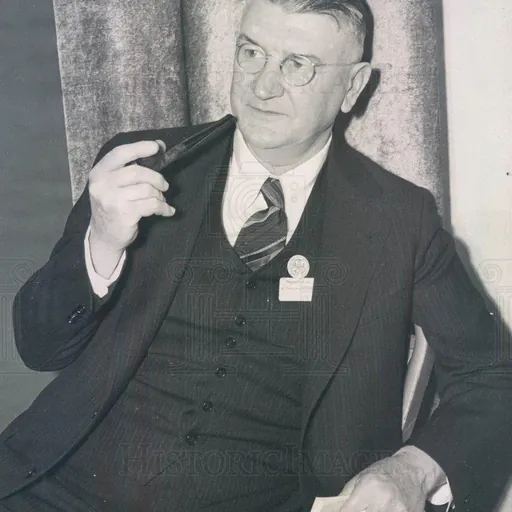
About Walter Rautenstrauch
Lived 1880 – 1951 (aged 70–71). Walter Rautenstrauch was an engineer and mechanical engineer.
Walter Rautenstrauch (1880–1951) was an American mechanical and consulting engineer, and Professor at Columbia University's Department of Industrial Engineering in the 1930s. and developing the break-even chart together with Charles Edward Knoeppel.
Rautenstrauch was instrumental in the creation of Columbia University's Department of Industrial Engineering, which is said to be the first such department in the United States. One of his most important students and colleagues was Seymour Melman, who went on to be a professor in this department.
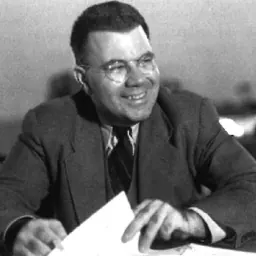
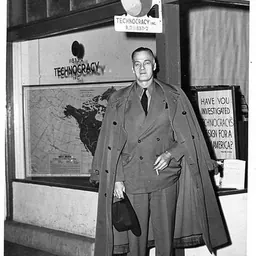
Rautenstrauch, together with Howard Scott, formed the Committee on Technocracy in 1932, which advocated a more rational and productive society headed by technical experts. However, Rautenstrauch and Scott soon found they held very different views. Scott advocated for complete control of society and the government by Engineers. Rautenstrauch was more moderate, wishing for Engineers to only be in charge of industrial and economic decisions and the government to maintain some level of democracy. Rautenstrauch also stressed the need for human and moral values. In 1933 the Committee disbanded, largely because of different views held by the two men.
Partially due to his involvement in Technocracy (despite his break up with the increasingly erratic Scott) and partially due to his other political views, Rautenstrauch gained animosity from more conservative staff members at Columbia up to his retirement in 1943. Despite this, he was remembered by most students as a "caring and insightful teacher".
Rautenstrauch remained active even after his retirement. He helped raise funds for refugees during World War II. He actively defended Edward Condon after the Condon was investigated by the House Un-American Activities Committee. Rautenstrauch also worked for the Progressive Party in the 1948 Presidential Election. He contributed to scientific journals and authored books on engineering up until his death. He died at the Lenox Hill Hospital on January 3, 1951. He was 70 years old.
Don’t just read it —
keep it.
Full-length biographies made to live with: read them, listen on the way to work, watch them tonight.
- E-book
- Audio
- Video
Instant download · yours to keep · every purchase keeps this site free
Important facts
People in Walter Rautenstrauch's life
Named in this biography and alive at the same time


Related people
Same field, nearest in time


Contemporaries
People whose lives overlapped Walter Rautenstrauch's




Frequently asked questions
Who was Walter Rautenstrauch?
American academic (1880–1951)
When was Walter Rautenstrauch born?
Walter Rautenstrauch was born in 1880.
When did Walter Rautenstrauch die?
Walter Rautenstrauch died on 3 January 1951.
What was Walter Rautenstrauch's occupation?
Walter Rautenstrauch was an engineer and mechanical engineer.
Sources & further reading
· Wikipedia: Walter Rautenstrauch
· DBpedia: Walter Rautenstrauch
Cite this page
APA: Biography.guide. (2026). Walter Rautenstrauch. https://biography.guide/walter-rautenstrauch/
MLA: "Walter Rautenstrauch." Biography.guide, https://biography.guide/walter-rautenstrauch/.
Chicago: "Walter Rautenstrauch." Biography.guide. https://biography.guide/walter-rautenstrauch/.
Data last updated: 2026-09-24 · Spot an error? Report a correction.
Portrait: Wikimedia Commons · author & licence
Page generated 2026-09-27 05:09 UTC