
About Edward Condon
Lived 1902 – 1974 (aged 72). Edward Condon was an American nuclear physicist and physicist.
Edward Uhler Condon (March 2, 1902 – March 26, 1974) was an American nuclear physicist, a pioneer in quantum mechanics, and a participant during World War II in the development of radar and, very briefly, of nuclear weapons as part of the Manhattan Project. The Franck–Condon principle and the Slater–Condon rules are co-named after him.
He was the fourth director of the National Bureau of Standards (NIST) from 1945 to 1951. In 1946, Condon was president of the American Physical Society, and in 1953 was president of the American Association for the Advancement of Science.
During the McCarthy period, Condon was one of the first prominent scientists to become a target of the House Un-American Activities Committee, charged publicly in 1948 with being "one of the weakest links in our atomic security" on account of his extensive knowledge of classified information, his connections with the development of the atomic bomb, and his alleged sympathies for communism and the Soviet Union. His case became a cause célèbre among those who opposed McCarthyism, especially scientists, and was one of the most prominent cases of its time, and he was defended by many prominent scientists, as well as President Harry Truman.
Condon became widely known in 1968 as principal author of the Condon Report, an official review funded by the United States Air Force that concluded that unidentified flying objects (UFOs) have prosaic explanations. The lunar crater Condon is named for him.
Background Figure 1. Franck–Condon principle energy diagram. Since electronic transitions are very fast compared with nuclear motions, vibrational levels are favored when they correspond to a minimal change in the nuclear coordinates. The potential wells are shown favoring transitions between v = 0 and v = 2 Edward Uhler Condon was born on March 2, 1902, in Alamogordo, New Mexico, to William Edward Condon and Carolyn Uhler. His father was supervising the construction of a narrow-gauge railroad,
He then attended the University of California, Berkeley, initially joining the College of Chemistry; when he learned that his high school physics teacher had joined the faculty, he switched majors to take classes in theoretical physics. Condon earned his bachelor's degree in three years and his doctorate in two.
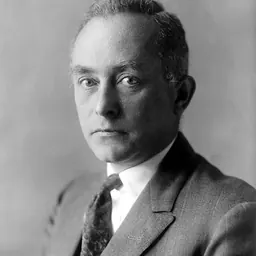
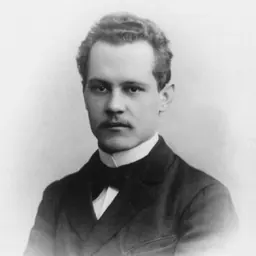
Thanks to a National Research Council fellowship, Condon studied at Göttingen under Max Born and at Munich under Arnold Sommerfeld. Under the latter, Condon rewrote his Ph.D. thesis using quantum mechanics, creating the Franck–Condon principle. After seeing an ad in Physical Review, Condon worked in public relations at Bell Telephone Laboratories in fall 1927, in particular promoting their discovery of electron diffraction.
Career
Early career
Condon taught briefly at Columbia University and was associate professor of physics at Princeton University from 1928 to 1937, |group=Note
He was associate director of research at the Westinghouse Electric Company in Pittsburgh, beginning in 1937, where he established research programs in nuclear physics, solid-state physics, and mass spectrometry. He then headed the company's research on microwave radar development. He also worked on the equipment used to isolate uranium for use in atomic bombs.
Government service J. Robert Oppenheimer (circa 1944) led the Manhattan Project, on which Condon briefly served in the early 1940s during WWII In 1943, Condon joined the Manhattan Project. Within six weeks, he resigned as a result of conflicts about security with General Leslie R. Groves, the project's military leader. General Groves had objected when Condon's superior J. Robert Oppenheimer held a discussion with the director of the project's Metallurgical Lab (Arthur Compton) at the University of Chicago. In his resignation letter, he said he felt he would be more useful to the war effort by staying at Westinghouse, explaining that the security measures he found at Los Alamos so concerned him that he would become depressed and ineffective. Condon was upset that Oppenheimer did not stand up to Groves, but he did not know that Oppenheimer had yet to receive his own security clearance.
From August 1943 to February 1945, Condon worked as a part-time consultant at Berkeley on the separation of U-235 and U-238. Condon was elected to the National Academy of Sciences in 1944. In June 1945, Condon was among many prominent American scientists invited to attend a celebration of the 220th anniversary of the founding of the Russian Academy of Sciences to be held in Moscow. He indicated his desire to attend. When Groves learned of this, he contacted Condon's employers at Westinghouse, and explained that he believed this would be dangerous from the perspective of possibly revealing information about the atomic bomb work that was still on-going. Condon attempted to contact the White House in protest. Subsequently, Groves requested that the State Department revoke Condon's passport, which they did.
Following the war, Condon played a leading role in organizing scientists to lobby for civilian control of atomic energy rather than military control under strict security. He worked as science adviser to Senator Brien McMahon, chairman of the Senate Special Committee on Atomic Energy, which wrote the McMahon-Douglas Act, enacted in August 1946, that created the Atomic Energy Commission, placing atomic energy under civilian control.
U.S. Commerce Secretary (and former U.S. vice president) Henry A. Wallace came to know Condon and in October 1945 recommended him as director of the National Bureau of Standards (NBS, now known as NIST). President Harry S. Truman agreed to nominate him. The Senate confirmed his nomination without opposition. Condon served as NBS director until 1951. Condon was also either a member or associated with the Independent Citizens Committee of the Arts, Sciences and Professions (ICCASP). He was elected to the American Philosophical Society in 1949.
Attacks
1940s
J. Edgar Hoover claimed Condon took part in a "Soviet network" in a 1946 letter During the 1940s, Condon's security clearance status was repeatedly questioned, reviewed, and re-established.
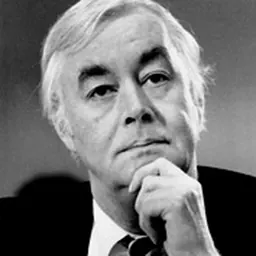
On May 29, 1946, FBI Director J. Edgar Hoover wrote a letter intended for President Truman that named several senior government officials as part of a Soviet network. It described Condon as "nothing more or less than an espionage agent in disguise". (Decades later Senator Daniel Patrick Moynihan called it "baseless corridor talk".) The Truman administration ignored Hoover's charges.
On March 21, 1947, Truman signed United States Executive Order 9835 AKA the "Loyalty Order". In the same month, Congressman J. Parnell Thomas, head of the House Un-American Activities Committee (HUAC), furnished information to the Washington Times-Herald that denigrated his loyalty in two articles published.
J. Parnell Thomas (1939) attacked Condon's reputation in 1947 and 1948 Nevertheless, a HUAC report dated March 2, 1948 stated, "It appears that Dr. Condon is one of the weakest links in our atomic security." Condon responded: "If it is true that I am one of the weakest links in atomic security that is very gratifying and the country can feel absolutely safe for I am completely reliable, loyal, conscientious and devoted to the interests of my country, as my whole life and career clearly reveal." On March 3, 1948, Senator Dennis Chávez (Dem-NM) read into the Congressional Record an article by Marquis Childs, which suggested that the committee actions against Condon were based on flimsy evidence and may have been motivated by political differences with Henry Wallace, the former Secretary of Commerce who appointed Condon to head the Bureau of Standards.
On March 5, 1948, Representative George MacKinnon (Rep-MN) stated: "Mr. Speaker, today's paper carries the story that the Secretary of Commerce, Mr. [W. Averell] Harriman, has refused to respond to a congressional subpoena to supply information with respect to one Dr. Condon. I am not presuming to pass on the facts in that case, but I do wish to point out that this follows the same pattern of Secrecy as the administration has been following with respect to congressional subpoenas throughout this entire session." On March 8, 1948, Representative Chester E. Holifield (Dem-CA) noted: "... calling the attention of the Members to H. R. 4641, a bill which I introduced December 4, 1947. The purpose of this bill is to prescribe the procedures of investigating committees of the Congress and to protect the rights of parties under investigation by such committees. If this bill could be enacted, it would extend to a world-famous scientist, such as Dr. E. U. Condon, the same protection which is now available to a chicken thief or a traffic violator; that is, the right of defense against his accusers. Character assassination under the cloak of congressional immunity by a Member of Congress or a Congressional committee is a dangerous and abominable travesty."
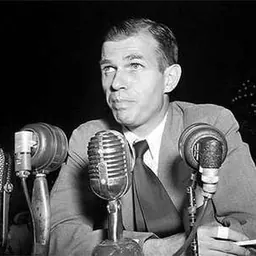
In 1949, Edward R. Murrow had colleague Don Hollenbeck contribute to the innovative media-review program, CBS Views the Press over the radio network's flagship station WCBS. Hollenbeck discussed Edward U. Condon, Alger Hiss, and Paul Robeson. Regarding Condon, Hollenbeck critiqued anti-communists for going about their business the wrong way:
Communists want nothing more than to be lumped with freedom-loving non-Communists [like Condon] ... This simply makes it easier for them to conceal their true nature, and to allege that the term 'Communist' is meaningless ... At the same time, we cannot let abuses deter us from the legitimate exposing of real Communists.
In 1951, Condon served as president of the Philosophical Society of Washington. On December 27, 1951, Condon was elected to head the AAAS in 1953. #tag:ref|The New York Times says he was to be president of the organization in 1954, but Wang, "Security", 265, establishes that the term was 1953. Condon withdrew his application for clearance and in December resigned from Corning because the company was seeking government research contracts and he lacked the clearance necessary for participating in military research. After citing the security reviews he had passed over the years, he said: "I am unwilling to continue a potentially indefinite series of reviews and re-reviews". Corning had paid Condon's clearance-related legal expenses while he worked there.
In 1958, Condon wrote that his decision reflected his belief that the Eisenhower administration "was committed by policy to the persecution of scientists, or, at the very least, to a callous indifference toward what others were doing to attack and discredit them. I decided the situation was hopeless, and that I had done all that could be reasonably expected of me in having resisted these forces for seven long years".
Years later, Carl Sagan reported how Condon described one encounter with a loyalty review board. A board member stated his concern: "Dr. Condon, it says here that you have been at the forefront of a revolutionary movement in physics called ... quantum mechanics. It strikes this hearing that if you could be at the forefront of one revolutionary movement ... you could be at the forefront of another". Condon said he replied: "I believe in Archimedes' Principle, formulated in the third century B.C. I believe in Kepler's laws of planetary motion, discovered in the seventeenth century. I believe in Newton's laws ..." and continued with a catalog of scientists from earlier centuries, including the Bernoulli, Fourier, Ampère, Boltzmann, and Maxwell. He once said privately: "I join every organization that seems to have noble goals. I don't ask whether it contains Communists."
Academia
Condon was professor of physics at Washington University in St. Louis from 1956 to 1963 and then at the University of Colorado Boulder from 1963, where he was also a fellow of the Joint Institute for Laboratory Astrophysics, until retiring in 1970.
Condon was also president of the American Institute of Physics On his retirement, his colleagues honored him with the publication of a Festschrift.
Global policy He was one of the signatories of the agreement to convene a convention for drafting a world constitution. As a result, for the first time in human history, a World Constituent Assembly convened to draft and adopt the Constitution for the Federation of Earth.
Personal life and death
In 1922, Condon married Chicago-born Emilie/Emma Honzik (1899–1974), who was a translator from the Czech language. They had two sons and a daughter.
Condon was a Quaker, and a self-described "liberal".
Condon died on March 26, 1974, twenty-four days after his 72nd birthday, in Boulder Colorado Community Hospital. His wife Emma died just over 7 months later.
Legacy
The National Institute of Standards and Technology (NIST) gives an annual award named for Condon. The Condon Award recognizes distinguished achievements in written exposition in science and technology at NIST. The award was initiated in 1974.
The crater Condon on the Moon is named in his honor.
Condon's colleague Lewis Branscomb said of him, "Watergate came as no surprise to Edward Condon, nor did its aftermath. I imagine he would like to have lived to see the outcome of the impeachment inquiry. But Condon understood and paid his share of the price of liberty. Somehow his idealism, his sense of humor and his inexhaustible energy made his relentless quest for a better world look like optimism."
In the 2023 film Oppenheimer, directed by Christopher Nolan, Condon was portrayed by actor Olli Haaskivi.
Selected publications
Don’t just read it —
keep it.
Full-length biographies made to live with: read them, listen on the way to work, watch them tonight.
- E-book
- Audio
- Video
Instant download · yours to keep · every purchase keeps this site free
Important facts
People in Edward Condon's life
Named in this biography and alive at the same time




Related people
Same field, nearest in time




Contemporaries
People whose lives overlapped Edward Condon's




Frequently asked questions
Who was Edward Condon?
American physicist (1902-1974)
When was Edward Condon born?
Edward Condon was born on 2 March 1902 in Alamogordo.
When did Edward Condon die?
Edward Condon died on 26 March 1974 in Boulder.
What was Edward Condon's occupation?
Edward Condon was a nuclear physicist and physicist.
What nationality was Edward Condon?
Edward Condon was American.
Sources & further reading
Cite this page
APA: Biography.guide. (2026). Edward Condon. https://biography.guide/edward-condon/
MLA: "Edward Condon." Biography.guide, https://biography.guide/edward-condon/.
Chicago: "Edward Condon." Biography.guide. https://biography.guide/edward-condon/.
Data last updated: 2026-09-25 · Spot an error? Report a correction.
Page generated 2026-09-27 05:12 UTC