
Walter Borlase
Cornish Anglican clergyman and stannary official
About Walter Borlase
Lived 1694 – 1776 (aged 81–82).
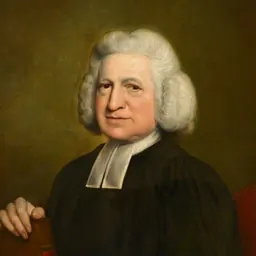
Walter Borlase (1694 – 26 April 1776) was a Cornish Anglican clergyman, landowner, magistrate and official of the Cornish stannaries. He was vicar of Madron from 1720 until his death, held Kenwyn in plurality from 1731, became a justice of the peace in 1743 and was appointed Vice-Warden of the Stannaries in 1756. He was also a prebendary of Exeter Cathedral and twice served as mayor of Penzance, in 1756 and 1765.
Borlase was the elder brother of the antiquary and naturalist William Borlase. Whereas William became prominent for his scholarship, Walter occupied a conspicuous position in the civil, ecclesiastical and economic administration of eighteenth-century west Cornwall. He is particularly remembered for his opposition, as a magistrate, to Methodist itinerant preachers during the 1740s. These actions were formerly sometimes attributed to William Borlase, but modern scholarship identifies the "Dr Borlase" encountered by John Wesley and Charles Wesley as Walter.
Family and education
Walter was the eldest surviving son of John Borlase of Pendeen, St Just in Penwith, and his wife Lydia Harris, daughter of Christopher Harris of Hayne in Devon and Kenegie in Gulval. His younger brother William, born in 1696, became one of the principal 18th-century antiquaries and natural historians of Cornwall. Their father was a substantial landowner and represented St Ives in the Parliament of England in 1705 and again in 1708.
The university records describe Walter as the son of John Borlase of St Just and record his baptism on 9 November 1694. He matriculated at Exeter College, Oxford, on 12 April 1712, aged 17. In May 1715 he was admitted to the Middle Temple, his family initially intending him for a career in law.
According to Peter Pool, the expense of maintaining Walter at the Middle Temple led his father to abandon this plan. In 1717 Walter went to Ireland as a gentleman of the bedchamber to Charles Powlett, 2nd Duke of Bolton, then Lord Lieutenant of Ireland. Unable to obtain a suitable appointment which did not require permanent residence in Ireland, he returned to England after about two years, abandoned the law and entered the church.
He entered King's College, Cambridge, as a fellow-commoner at Easter 1717 and graduated LL.B. in 1719 and LL.D. in 1725.
Marriage and Castle Horneck
By 1718 Walter's father had acquired Castle Horneck in Madron parish, near Penzance, intending it to become the seat of his eldest son. John Borlase's estate at that date also included property in St Just, Morvah, Sancreed, Madron, Zennor and St Buryan, together with interests in tin bounds. Peter Laws's architectural survey of Penzance records that Walter rebuilt the front of Castle Horneck about 1720.
In 1720 Borlase married his first cousin Margaret Pendarves, daughter of the Reverend Henry Pendarves, vicar of Paul, and Mary Borlase. In the same year he became vicar of Madron. Davies Gilbert likewise identifies Margaret as the daughter of Henry Pendarves and records Walter as the eldest son of John Borlase of Pendeen and brother of William Borlase.
Pool states that Walter and Margaret had 15 children between 1721 and 1742. Their eldest son, John Pendarves Borlase, later studied at Christ Church, Oxford, but died of smallpox in 1754. Their younger sons included Samuel Borlase, who eventually inherited the family estates; William Borlase, later vicar of Madron and Zennor; and George Borlase, who became Knightbridge Professor of Moral Philosophy and Registrary of the University of Cambridge.
Margaret died in April 1743, aged 42 leaving Walter with a large young family.
Clerical and public career
Borlase was instituted to the vicarage of Madron in 1720 and retained it for the remainder of his life. Madron parish then included the borough of Penzance, giving its vicar a prominent position in the religious and civic affairs of the town. In 1731 he also became vicar of Kenwyn, near Truro, which he held in plurality with Madron. He was appointed a justice of the peace in 1743.
Borlase was involved in Penzance civic affairs well before becoming mayor. In 1733 the borough corporation entrusted him with opposing an attempt by Penryn to obtain recognition as a coinage town, a proposal which Penzance regarded as prejudicial to its own commercial interests. Pool describes Borlase at this period as already a figure of sufficient influence to represent the corporation before the Duchy authorities.
In 1756 Borlase became Vice-Warden of the Stannaries, one of the principal administrative and judicial offices connected with the Cornish tin industry. In 1757 he was appointed a prebendary of Exeter Cathedral.
He twice served as mayor of Penzance, first in 1756 and again in 1765.
Shortly before leaving office in September 1766, Borlase arranged for the lessees of the borough revenues to attorn as tenants to the trustees, thereby placing collection of the revenues outside the direct control of succeeding mayors while the bonds remained unpaid. His successor, William John, challenged the arrangement, producing a conflict between rival collectors of the market and harbour dues. Borlase's opponents subsequently accused him of high-handed conduct, of allowing interest arrears to arise in order to activate the trust, and of refusing to cooperate with his successor. Litigation followed, and the revenues remained under the trustees until after Borlase's death.
Pool considered the legal and moral merits of the controversy difficult to determine, while rejecting the implication that Borlase had acted dishonestly or unlawfully.
Opposition to Methodism
Borlase became a prominent opponent of the early Methodist movement in west Cornwall. The Wesleys' preaching had attracted substantial support in the mining communities around St Just and elsewhere in Penwith by the mid-1740s. As vicar of Madron, a justice of the peace and heir to one of the principal landed estates in St Just, Walter possessed both ecclesiastical and magisterial authority in the district.
Between 1744 and 1746 Borlase issued warrants against Methodist preachers and adherents. The Dictionary of Methodism in Britain and Ireland records that, as a local magistrate, he employed the vagrancy laws against John Wesley and other itinerant preachers whom he suspected of Jacobite sympathies.
On 2 July 1745 Borlase's fellow magistrate and brother-in-law Stephen Usticke of Botallack arrested John Wesley at St Just on Borlase's warrant. Wesley was taken to Castle Horneck the following day, but Borlase was absent and Wesley was released without the anticipated confrontation.
The political context was significant. The activities of itinerant preachers occurred against a background of continuing fears of Jacobitism and, in 1745, the outbreak of the Jacobite rising of 1745. Rumours circulated in west Cornwall that Methodist preachers were Jacobite agents. During the same crisis Borlase personally searched Boskenna in St Buryan, with the owner's cooperation, after rumours that Charles Edward Stuart was concealed there; he established that the report was false.
Some older accounts attributed the magistrate "Dr Borlase" mentioned in Wesley's journals to Walter's better-known brother William. Pool rejected this identification, noting that Walter was both a doctor of laws and a magistrate at the relevant date, whereas William was not a magistrate and did not receive his doctorate until much later.
Cornish language
Borlase also contributed evidence to contemporary discussions about the survival of the Cornish language. His brother William had written in 1758 that Cornish had ceased to be used in ordinary conversation, but the antiquary Daines Barrington subsequently encountered the Cornish speaker Dolly Pentreath at Mousehole in 1768.
In 1772 Barrington obtained further information in a letter sent from Castle Horneck. Peter Pool and Oliver Padel identify Walter Borlase as Barrington's informant. Borlase reported that Pentreath was still living, that she could speak Cornish as readily as others spoke English, and that she claimed not to have learned English until she was more than 20 years old. Barrington used the evidence in the papers through which he drew scholarly attention to the continued survival of Cornish in the late 18th century.
Death and succession
Borlase died on 26 April 1776, aged 81. At his death he was still described as Vice-Warden of the Stannaries, a justice of the peace and vicar of Madron and Kenwyn. His memorial at Madron also commemorated his long tenure as vicar and his public offices.
His eldest son John Pendarves having predeceased him, the family estates, including Castle Horneck and Pendeen, passed first to his son Samuel Borlase. Samuel died unmarried in 1801, after which they passed to another son, the Reverend William Borlase, vicar of Madron and Zennor. Following the extinction of Walter's male line, the properties ultimately passed to descendants of his brother William.
A substantial body of Walter Borlase's papers survives in the Morrab Library at Penzance. Its Borlase collection includes his Castle Horneck letter books for 1742–43, 1745 and 1752–55, appointment diaries for several years between 1758 and 1775, stannary material and family and estate papers.
Don’t just read it —
keep it.
Full-length biographies made to live with: read them, listen on the way to work, watch them tonight.
- E-book
- Audio
- Video
Instant download · yours to keep · every purchase keeps this site free
Important facts
People in Walter Borlase's life
Named in this biography and alive at the same time


Contemporaries
People whose lives overlapped Walter Borlase's



Frequently asked questions
Who was Walter Borlase?
cornish Anglican clergyman and stannary official (1694–1776)
When was Walter Borlase born?
Walter Borlase was born in 1694.
When did Walter Borlase die?
Walter Borlase died on 26 April 1776.
Sources & further reading
Cite this page
APA: Biography.guide. (2026). Walter Borlase. https://biography.guide/walter-borlase/
MLA: "Walter Borlase." Biography.guide, https://biography.guide/walter-borlase/.
Chicago: "Walter Borlase." Biography.guide. https://biography.guide/walter-borlase/.
Data last updated: 2026-09-20 · Spot an error? Report a correction.
Page generated 2026-09-27 05:02 UTC