
W.A. Stewart
Exponent of modern technical education in the Middle East and painter
About W.A. Stewart
Lived 1882 – 1953 (aged 70). W.A. Stewart was a British painter.
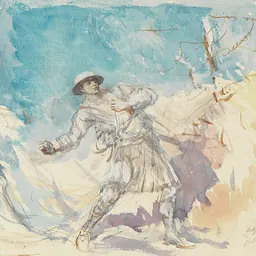
William Arnold Stewart, usually known as W.A. Stewart but also William A. Stewart, William Stewart or Will Stewart (17 July 1882 - 18 January 1953) was an artist and craftsman who reconstructed, from pieces thousands of years old, furniture found in the tomb of Queen Hetepheres near the Giza Pyramids. He was also an accomplished artist whose works were displayed at the Calton Gallery (Edinburgh, Scotland) in 1986,
Early life and study
Will Stewart was born on July 17, 1882, in Ilkley, England the son of John Reich Stewart and Naamah (Arnold) Stewart. One of 5 children (2 brothers and 2 sisters), he attended the local school, then Bradford Technical College, then the Royal College of Art where he studied under Augustus John. He worked in the design department of Listers at Manningham Mills. He was a founder of the Loft Arts Club in 1902, which changed its name in 1912 to the Bradford Arts Club, and which encouraged poetry, literature, music, life drawings and other arts. During this time he was introduced to several influential people including Arnold Priestman, Ernest Sichel, William Shackleton, William Rothenstein, Edward Wadsworth, and Father O'Connor (GK Chesterton's 'Father Brown'), and he became good friends with artist James Arundel. He met the Indian poet and philosopher Rabindranath Tagore and created a pastel portrait that was exhibited in 1909. His seems to have ceased exhibiting his photography around 1910, just before he moved to Egypt.
Work in Egypt and Palestine
Will Stewart emigrated to the Middle East in 1911, to become an Inspector of Arts and Crafts in the Egyptian Ministry of Education. There he set up the Cairo School of Arts and Crafts, becoming its first principal. He was positively influenced by Arab, Turkish, Syrian and Byzantine art. Many students of the Cairo School of Arts and Crafts became accomplished artists. Some made fine jewelry to Stewart's designs including copies of ornaments worn by the ancient Pharaohs.
After his work at the Cairo School of Arts and Crafts, in 1930 Will Stewart accepted a new post under the High Commissioner of Palestine as Supervisor of Technical Education. Along with his wife and 3 children he moved from Cairo to Jerusalem. The Governor of Sinai asked Stewart to take the journey via a new road that was just completed through the Sinai Desert and through Mitla Pass, and to write an article about the experience for the Egyptian press (The Sphynx magazine). His wife was the first woman to drive through Sinai. In 1948, Will Stewart retired to High Wycombe where he concentrated on his painting. He renewed his association with the Bradford Arts Club and was an art critic for The Yorkshire Herald. He had started to exhibit at Bradford's Cartwright Hall as early as 1906, both with the Arts Club and in his own right in The Bradford Spring Exhibition, a selected annual exhibition which showed the best of mainstream contemporary art. The titles of his pictures chart his move from typical Yorkshire subjects to the people and architecture of Palestine, along with the high-keyed oils and watercolors of his European trips. He effortlessly moved from portraiture to landscape, still life, and townscapes. Will Stewart continued painting until his death at High Wycombe in 1953.
Life impact An obituary was written by Keith Roach, a District Commissioner in Palestine, which included: "To the glassmakers of Hebron he introduced better methods of firing; to the weavers of Majdal he showed how their work could be improved by better looms; to the potters of Gaza and Ramallah he suggested fresh designs, and by himself turning out new types on the wheel, increased their sales. The workmen were astonished at his knowledge and skill, and admitted that he knew more of their craft than they did themselves. His colloquial Arabic, which never quite lost its Yorkshire burr, was readily understood, and with teachers and workmen alike he never failed to show patience and courtesy. It is small wonder that respect and admiration quickly developed into friendship and affection..."
Will Stewart's daughters Jean and Anne, and his granddaughter Niki Stewart, have followed in his footsteps as artists.
Don’t just read it —
keep it.
Full-length biographies made to live with: read them, listen on the way to work, watch them tonight.
- E-book
- Audio
- Video
Instant download · yours to keep · every purchase keeps this site free
Important facts
People in W.A. Stewart's life
Named in this biography and alive at the same time

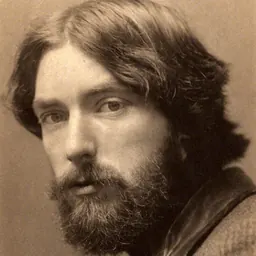

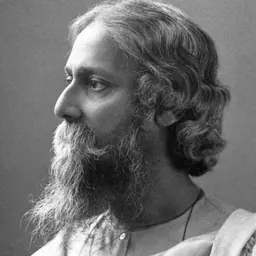

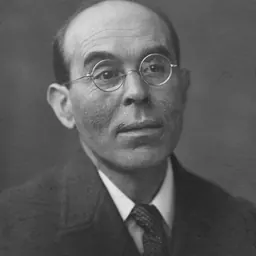

Related people
Same field, nearest in time
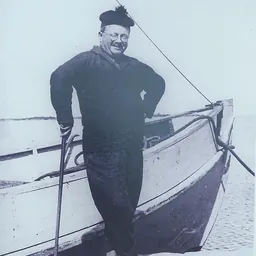


Contemporaries
People whose lives overlapped W.A. Stewart's



Frequently asked questions
Who was W.A. Stewart?
exponent of modern technical education in the Middle East and painter (1882–1953)
When was W.A. Stewart born?
W.A. Stewart was born on 17 July 1882 in Ilkley.
When did W.A. Stewart die?
W.A. Stewart died on 18 January 1953 in High Wycombe.
What was W.A. Stewart's occupation?
W.A. Stewart was a painter.
What nationality was W.A. Stewart?
W.A. Stewart was British.
Sources & further reading
Cite this page
APA: Biography.guide. (2026). W.A. Stewart. https://biography.guide/w-a-stewart/
MLA: "W.A. Stewart." Biography.guide, https://biography.guide/w-a-stewart/.
Chicago: "W.A. Stewart." Biography.guide. https://biography.guide/w-a-stewart/.
Data last updated: 2026-09-20 · Spot an error? Report a correction.
Page generated 2026-09-27 05:12 UTC