
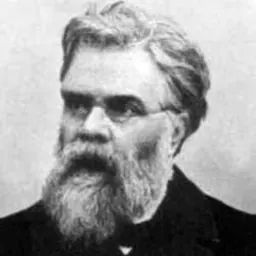
Volodymyr Vynnychenko
Ukrainian writer, playwright, artist, political activist, revolutionary, politician, and statesman
About Volodymyr Vynnychenko
Lived 1880 – 1951 (aged 70). Volodymyr Vynnychenko was a Russian and Ukrainian politician, writer, playwright, science fiction writer and screenwriter.
Biography Early life Volodymyr Vynnychenko was born in a village, Vesely Kut (today – Hryhorivka, Novoukrainka Raion), in the Kherson Governorate of the Russian Empire, in a family of peasants. His father Kyrylo Vasyliovych Vynnychenko earlier in his life was a serf who moved from a village to the city of Yelisavetgrad, where he married a widow, Yevdokia Pavlenko (nee: Linnyk). From her previous marriage Yevdokia had three children: Andriy, Maria, and Vasyl; Volodymyr was her only child from the marriage with Kyrylo. Upon his graduation from a local public school, the Vynnychenko family managed to enroll Volodymyr at the Yelyzavetgrad Male Gymnasium at Kiev University, but in 1902 Later, after forming the Directorate of Ukraine, he took an active part in organizing a revolt against the Hetman. The revolt was successful and Vynnychenko returned to the capital on December 19, 1918. The Directorate, a temporary executive council of five, proclaimed the restoration of the Ukrainian People's Republic. The Directorate was put in charge by the Labour Congress until the Ukrainian Constituent Assembly would convene to elect a permanent body of government.
Resignation On his post, Vynnychenko was unable to restore order or to overcome his disagreement with Petliura.
Exile Vynnychenko spent 30 years in Europe, residing in Germany in the 1920s and then moving to France. As an émigré, Vynnychenko resumed his career as a writer. In 1919, his works were republished in an eleven-volume edition in the 1920s.
In 1928 he published a science fiction novel, Soniashna mashyna ["The Solar Machine"], which has been described as "best-selling" despite facing hardships from the Soviet censors, who criticized it for not mentioning the existence of the USSR in its future history.
In 1934, Vynnychenko moved from Paris to Mougins, near Cannes, on the Mediterranean coast, where he lived on a homestead type residence as a self-supporting farmer and continued to write, notably a philosophical exposition of his ideas about happiness, Concordism. Vynnychenko called his place Zakoutok.
During the German occupation of France, for refusing to cooperate with the Nazis, Vynnychenko was thrown into a concentration camp, which affected his health severely. After the end of the war, he called for general disarmament and peaceful coexistence of the East and West.
He died in Mougins, near Cannes, France in 1951. Rosalia Lifshitz after her death passed the estate to Ivanna Nyzhnyk-Vynnykiv (1912–1993), who emigrated to France after World War II and lived with Vynnychenko since 1948.
Political views
Vynnychenko’s political awakening arose, he claimed, at the intersection of social and national experience. Writing in his diary in 1919, he recalled that “from the time the landowner Bodisko beat my father on his estate, fooled him, exploited him, chased him from his plot into the field, where I was tending livestock, from that moment I already took into my soul the seed of hatred for social exploitation, for Bodiskos of all types.” Other youthful experiences added feelings of national humiliation and anger to these social emotions. He recalled, for example, how, as a gymnasium student, teachers and other students (“young gentlemen”) treated him as a “little muzhik” [peasant] and a “little khokhol” [a derisive term for Ukrainian]. Vynnychenko demanded respect and recognition for Ukraine and Ukrainians as a nation. In 1913, he published in Russian an “Open Letter to Russian Writers” that criticized the “unconscious” tendency in a great deal of Russian literature to stereotype Ukrainians and others. The Ukrainian characters who appear in Russian literature, he argued, are much like the stereotypes of Jews and Armenians that Russians also have “a weakness for.” “Always and everywhere [in Russian literature] the ‘khokhol’ is a little stupid, a little cunning, a little lazy, melancholic and sometimes good-natured.” These stereotypes are “shameful” not only for Ukrainians whose equal humanity is not recognized but for Russian writers themselves and Russian literature.
During the First World War, which brought fighting and occupation onto Ukrainian lands, Vynnychenko rhetorically wondered why our “brother” Russians show little concern with the suffering of Ukrainians? Why does “the love among Ukrainians for their own nation [narod] and sorrow for its fate elicit…wrath, indignation, and feelings of spite, or, at best, sarcasm or indifference?” The answer, he argued (writing in Russian, so again addressing Russians as much as Ukrainians), is that Ukrainians are becoming strong and aware as a nation, and “they fear us.” But nothing can stop the development of Ukrainian “consciousness,” he declared, which is already manifest in its intelligentsia. “Just as you cannot stop the formation of clouds, arising from the earth and returning to it, so it is impossible to stop the formation of a nationally conscious stratum in a people. We emerge from the raw earth, from the soil, from the depths of our nation, and we again return to it, and we again arise.”
Vynnychenko believed that it was not enough to change structures of power in freeing the Ukrainian nation. Liberation demanded changes in people’s mentalities and values, in their moral and spiritual lives, in their selves. A true revolution needed to be, Vynnychenko insisted, all-sided, all-embracing, universal liberation (vsebichne vyzvolennia). To explore and promote this vision, he examined in his fiction questions of sexuality, emotion, will, and character. Ultimately, the point was to ask the most important question: how to realize a fully human and fully free personality, especially in the face of the crushing conditions and legacies of unfreedom?
Writings Prose stories
Vynnychenko first became famous as a writer in 1902. His naturalistic short stories gained popularity due to their contrast with the narodnik prose. In his writings Vynnychenko described the life of the lower social strata such as labour migrants, hired servants at noble estates and marginalized elements (most notably - The Beggars , 1904). He demonstrated the picture of social and moral decay of traditional villages and devoted his attention to the life of provincial bourgeoisie, soldiers, prisoners and revolutionary intelligentsia. Vynnychenko's realism was combined with impressionistic elements.
Vynnychenko's plays revolutionized the Ukrainian theatre, contrasting with works of earlier authors and their predominantly ethnographic character. His theatrical works were especially popular during the revolutionary period, with two new Ukrainian theatres - Molodyy Theatre and the National Theatre - opening their inaugural seasons with dramas by Vynnychenko in 1917. Vynnychenko has not been as popular as Mykhailo Hrushevsky as a political figure, but is widely known as writer; his work was adapted for screen numerous times since the 1990s by Dovzhenko Film Studios directors.
Vynnychenko's archives are housed in Columbia University, New York City and supervised by a commission of the Ukrainian Academy of Arts and Sciences. 1991 Sin (Oleh Biyma, Ukrtelefilm) 1995 TV-series Island of Love: Episode 8 "Engagement" (Oleh Biyma, Ukrtelefilm) after the novel "Engagement"
Depiction of Vynnychenko in cinema 1939 Shchors (Oleksandr Dovzhenko and Yuliya Solntseva, Kiev Film Studios) by Dmytro Milyutenko 1957 Truth (Viktor Dobrovolsky and Isaak Shmaruk, Dovzhenko Film Studios) by Heorhiy Babenko 1970 Peace to huts – War to palaces (Isaak Shmaruk, Dovzhenko Film Studios) by Vladislav Strzhelchik 1970 Kotsyubynsky family (Tymofiy Levchuk, Dovzhenko Film Studios) by Harijs Liepiņš 2018 Secret diary of Symon Petliura (Oles Yanchuk, Dovzhenko Film Studios) by Yevhen Nyshchuk
Don’t just read it —
keep it.
Full-length biographies made to live with: read them, listen on the way to work, watch them tonight.
- E-book
- Audio
- Video
Instant download · yours to keep · every purchase keeps this site free
Important facts
Family & relationships
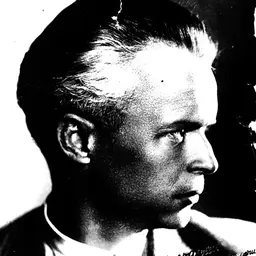
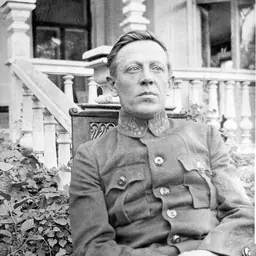
People in Volodymyr Vynnychenko's life
Named in this biography and alive at the same time



Related people
Same field, nearest in time




Contemporaries
People whose lives overlapped Volodymyr Vynnychenko's




Frequently asked questions
Who was Volodymyr Vynnychenko?
Ukrainian writer, playwright, artist, political activist, revolutionary, politician, and statesman (1880–1951)
When was Volodymyr Vynnychenko born?
Volodymyr Vynnychenko was born on 16 July 1880 in Kropyvnytskyi.
When did Volodymyr Vynnychenko die?
Volodymyr Vynnychenko died on 6 March 1951 in Mougins.
What was Volodymyr Vynnychenko's occupation?
Volodymyr Vynnychenko was a politician, writer, playwright, science fiction writer and screenwriter.
What nationality was Volodymyr Vynnychenko?
Volodymyr Vynnychenko was Russian and Ukrainian.
Sources & further reading
· Wikipedia: Volodymyr Vynnychenko
· DBpedia: Volodymyr Vynnychenko
Cite this page
APA: Biography.guide. (2026). Volodymyr Vynnychenko. https://biography.guide/volodymyr-vynnychenko/
MLA: "Volodymyr Vynnychenko." Biography.guide, https://biography.guide/volodymyr-vynnychenko/.
Chicago: "Volodymyr Vynnychenko." Biography.guide. https://biography.guide/volodymyr-vynnychenko/.
Data last updated: 2026-09-20 · Spot an error? Report a correction.
Page generated 2026-09-27 05:26 UTC