
About Vladimír Mandl
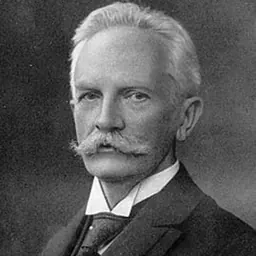
Lived 1899 – 1941 (aged 41). Vladimír Mandl was a Czech university teacher, jurist, teacher and technician.
Vladimír Mandl (20 March 1899 – 8 January 1941) was a Czech lawyer and university lecturer. In 1932, he authored (Space Law: A Problem of Space Travel), the first stand-alone treatise on space law, which preceded the launch of Sputnik 1 by 25 years. For this work, some scholars consider him as the "father of space law".
Born in Plzeň in Bohemia, then part of Austria-Hungary, Mandl studied law in Prague and Erlangen–Nuremberg. He practised as a lawyer from the 1920s and taught law at the Czech Technical University, until all Czech universities were closed following the Nazi occupation of Czechoslovakia in 1939. According to research by Michal Plavec of the National Technical Museum in Prague, Mandl held strong antisemitic views and published antisemitic articles in the nationalist newspaper from December 1938, though no evidence of collaboration with Nazi Germany has been found.
Mandl published on a wide range of legal topics in Czech, German, French and English, with a particular focus on private law, transportation law and aviation law. He died of tuberculosis on 8 January 1941, aged 41.
Life Early life and education Vladimír Mandl was born on 20 March 1899 in Plzeň in Bohemia, then part of Austria-Hungary. He was the son of , who later became the mayor of Plzeň (1917–1919), and Růžena Mandlová née Čiperová. He was one of three siblings, but his brother Matouš Mandl died shortly after birth. His uncle was the painter . Before Mandl reached his fourteenth birthday, he is said to have built his first Blériot-type monoplane thus showing a keen interest in modern transportation from an early age.
After his high school education, Mandl entered the Faculty of Law of the Charles University in Prague. There he studied under , an expert on civil procedure, and graduated on 24 November 1921 with a doctorate in law.
Lawyer and author on legal topics After his graduation, Mandl practised law from 1921 to 1927 in the law office of in Prague and his father's law office in Plzeň. After completing his bar exam, he opened his own law office on 1 March 1927.
Following graduation, Mandl became a prolific writer on a range of legal topics, with a particular focus on private law issues and the legal aspects of technological innovations. In 1925, he authored a paper on evidence for the congress of Czechoslovak lawyers and in 1926, he penned a self-published monograph on Czechoslovak marriage law. He then turned to transportation law and first wrote a treatise on aviation law, published by the (the West Bohemia Aeroclub) in 1928, and then in 1929, a tome on the Automobile Act of 9 August 1908 and its reform. His work on aviation law was the first work on this area of law in Czech and dealt with a variety of topics ranging from air transportation contracts to aerial warfare. It was awarded the state prize of the Czechoslovak Ministry of Justice in 1928.thumb In 1929, Mandl turned his legal interests into practice and obtained a private pilot licence. Mandl continued his writings on the law of aviation and published his first book in German in the same year; it dealt with the Czechoslovak law of aviation.
Probably to focus more on his scholarly interests, Mandl pursued an academic career from the late 1920s onwards. To obtain a Habilitation, a necessity for a professorship, he submitted his 1928 work on aviation law as a Habilitation thesis to the Czech Technical University in Prague. His thesis was unanimously approved and his test lecture on the liability of contractors for damage was held successfully on 30 April 1930; the Czechoslovak minister of education then confirmed him as a on 30 September 1932 with a for the law of industrial enterprises.
Concurrently, Mandl successfully obtained a German doctorate in law: He received his PhD on 20 June 1931 from the University of Erlangen–Nuremberg with a dissertation on tort law titled (Civilian Construction of Tort Law).
During this time Mandl continued to publish new works: For example, in 1932 he authored a work on the 1919 Paris Convention in Czech and in 1935, he published an article on the parachute in French.
Spaceflight and space law
Mandl had a keen interest in the possibility of spaceflight, in which he firmly believed, and from the 1930s began to publish in this area as well: In 1932, he published a work in Czech on the problem of interstellar transport. It dealt, , with the works of Konstantin Tsiolkovski, Robert H. Goddard, Franz von Hoefft and Hermann Oberth on rocketry and contained a description of Mandl's own patent for a rocket, which was granted in Czechoslovakia in 1933. There is no evidence that the patented rocket was ever constructed.
He then turned to his pioneer work on space law: 25 years before Sputnik 1, the first artificial Earth satellite, was launched into space in October 1957, he contemplated the legal issues which would arise out of spaceflight in his 50-page book (Space Law: A Problem of Space Travel) written in German. To find a publisher for this work proved difficult: In Czechoslovakia, Mandl did not find one and his German publisher only agreed to publish it at his own cost. Only twenty-five copies of the work were eventually sold, but this monograph is now remembered – and praised – as the first stand-alone volume on space law.
The work is separated into two parts: The present and the future . In the first part Mandl discusses how air law could be applied by analogy to space. In this part he deals with overflight rights over real property, he strongly argues for the application of strict liability, and he considers the sovereignty of states over their airspace.
In his speculations about future developments, he foresees the legislators becoming active in this field of law and argues for licencing of space flights and the application of strict liability. Going further, Mandl discusses the future exploitation of raw materials in space and argues that the sovereignty of states over their airspace will end at the point where space begins; in space no sovereignty exists according to Mandl . The final passage of Mandl's considerations on the future discusses the implications of regular spaceflight and the colonization of new worlds on statehood and national sovereignty. According to Mandl, many humans would opt to live on new worlds. In these newly settled worlds, no state could use methods of legal compulsion and citizens could escape legal consequences on earth by going to these celestial bodies. Mandl thinks that this will result in a new private society , where state and citizens are equal, and no method of state sovereignty will be left to compel the individual – essentially resulting in the breakdown of modern notions of statehood and law.
Later work, university lecturing and antisemitism After his work on space and its law, Mandl again focused on private law and adjacent fields: In 1936, he published a short work on legal theory titled (A Causal Theory of Law) in German. And in 1938, on the eve of World War II, Mandl self-published a work titled (War and Peace).
Concurrently with his publications, Mandl taught at the Czech Technical University in Prague as an associate professor. He began teaching a course on the law of industrial enterprises in the academic year 1933–1934 and kept teaching through the academic year 1938–1939. After the Nazi occupation of Czechoslovakia all Czech universities were, however, closed in November 1939 and he accordingly had to cease his academic work.
According to research by Michal Plavec of the National Technical Museum, Mandl held strong antisemitic views. He started publishing antisemitic articles after the Munich Crisis in the nationalist newspaper from December 1938. For collaboration with Nazi Germany, there is, however, no evidence.
Illness and death Mandl contracted tuberculosis and stayed in a sanatorium in Nová Ves pod Pleší (near Příbram) in 1940. He died of the disease aged 41 on 8 January 1941 and was buried in his family's tomb at the Central Cemetery in Plzeň.
Family Mandl married Bohumila Mandlová née Charvátová (born 5 April 1907) on 2 July 1930 in Plzeň. They had two children, Markéta and Petr. Petr, born on 5 November 1933, became a renowned mathematician.
Reception of his work on space law Contemporaneous views Contemporaneously, Mandl's 1932 treatise on space law was received sceptically. The legal scholar – and later member of the German resistance – Rüdiger Schleicher remarked in a 1933 review of the work in the , an important German law journal, positively on the quality of the legal arguments but was of the strong opinion that hypothetical legal issues which had not yet arisen and were not likely to arise in the foreseeable future should not be discussed by legal scholars.
Modern assessment In modern times Mandl's 1932 publication has been received much more positively: , a German space law scholar, has argued that Mandl's pleading "for new rules […], for a regime of strict liability, jurisdiction in outer space, and for nationality" was "all based on the assessment of outer space being legally different from the sovereignty-based system of the airspace". Hobe thus considered Mandl's work to be "a remarkable achievement in the year 1932". and Mahulena Hofmann opined that Mandl has "entered the history of astronautics and particularly that of space law" with his work, while others go further and consider him to be the "father" or the "founding father of space law".
Published works A bibliography of his major published works is provided by Vladimír Kopal and Mahulena Hofmann.
English translation:
Don’t just read it —
keep it.
Full-length biographies made to live with: read them, listen on the way to work, watch them tonight.
- E-book
- Audio
- Video
Instant download · yours to keep · every purchase keeps this site free
Important facts
People in Vladimír Mandl's life
Named in this biography and alive at the same time



Related people
Same field, nearest in time


Contemporaries
People whose lives overlapped Vladimír Mandl's


Frequently asked questions
Who was Vladimír Mandl?
Czechoslovak jurist (1899–1941)
When was Vladimír Mandl born?
Vladimír Mandl was born on 20 March 1899 in Plzeň.
When did Vladimír Mandl die?
Vladimír Mandl died on 8 January 1941 in Plzeň, Nová Ves pod Pleší.
What was Vladimír Mandl's occupation?
Vladimír Mandl was a university teacher, jurist, teacher and technician.
What nationality was Vladimír Mandl?
Vladimír Mandl was Czech.
Sources & further reading
Cite this page
APA: Biography.guide. (2026). Vladimír Mandl. https://biography.guide/vladimir-mandl/
MLA: "Vladimír Mandl." Biography.guide, https://biography.guide/vladimir-mandl/.
Chicago: "Vladimír Mandl." Biography.guide. https://biography.guide/vladimir-mandl/.
Data last updated: 2026-09-25 · Spot an error? Report a correction.
Page generated 2026-09-27 05:11 UTC