
About Hermann Oberth
Lived 1894 – 1989 (aged 95). Hermann Oberth was a Romanian and German physicist, inventor, essayist, screenwriter, engineer and military flight engineer.
Hermann Julius Oberth (; 25 June 1894 – 28 December 1989) was an Austro-Hungarian-born German physicist and rocket pioneer of Transylvanian Saxon descent. and besides his native German, he was fluent in Hungarian and Romanian as well. At the age of 11, Oberth's interest in rocketry was sparked by the novels of Jules Verne, especially From the Earth to the Moon and Around the Moon. He was fond of reading them over and over until they were engraved in his memory. As a result, Oberth constructed his first model rocket as a school student at the age of 14. In his youthful experiments, he arrived independently at the concept of the multistage rocket. During this time, however, he lacked the resources to put his ideas into practice.
In 1912, Oberth began studying medicine in Munich, Germany, but after World War I broke out, he was drafted into the Imperial German Army, assigned to an infantry battalion, and sent to the Eastern Front against Russia. In 1915, Oberth was moved into a medical unit at a hospital in Segesvár (German: Schäßburg; Romanian: Sighișoara), Transylvania, in Austria-Hungary (Romania). There he found the spare time to conduct a series of experiments concerning weightlessness, and later resumed his rocketry designs. By 1917, he showed designs of a missile using liquid propellant with a range of to Hermann von Stein, the Prussian Minister of War.
On 6 July 1918, Oberth married Mathilde Hummel, with whom he had four children. Among Oberth's children, one lost his life as a soldier during World War II. His daughter Ilse (born 1924), died on August 28, 1944, in an accidental explosion at the Redl-Zipf V-2 rocket engine test facility and liquid oxygen plant where she worked as a rocket technician.
In 1919, Oberth once again moved to Germany, this time to study physics, initially in Munich and later at the University of Göttingen. In 1922, Oberth's doctoral dissertation on rocket science was rejected as "utopian". However, professor Augustin Maior of the University of Cluj in Romania offered Oberth the opportunity to defend his dissertation there in order to receive a doctorate. He did so successfully on 23 May 1923. (The Rocket into Planetary Space). By 1929, Oberth had expanded that work to a 429-page book Wege zur Raumschiffahrt (Ways to Spaceflight). Oberth commented later that he made the deliberate choice not to write another doctoral dissertation. He wrote, "I refrained from writing another one, thinking to myself: Never mind, I will prove that I am able to become a greater scientist than some of you, even without the title of Doctor." Oberth criticized the German system of education, saying "Our educational system is like an automobile which has strong rear lights, brightly illuminating the past. But looking forward, things are barely discernible." The volume is dedicated to Lang and von Harbou. was demonstrated to the public and world media on September 30, 1929, piloted by von Opel. Valier's and von Opel's demonstrations had a strong and long-lasting impact on later spaceflight pioneers, in particular on another of Oberth's students, Wernher von Braun.
Shortly after the Opel RAK team's successful liquid-fuel rocket launches of April 10 and 12, 1929 by Friedrich Wilhelm Sander at Opel Rennbahn in Rüsselsheim, Oberth conducted in the autumn of 1929 a static firing of his first liquid-fueled rocket motor, which he named the Kegeldüse. The engine was built by Klaus Riedel in a workshop space provided by the Reich Institution of Chemical Technology, and although it lacked a cooling system, it did run briefly. He was helped in this experiment by an 18-year-old student Wernher von Braun, who would later become a giant in both German and American rocket engineering from the 1940s onward, culminating with the gigantic Saturn V rockets that made it possible for man to land on the Moon in 1969 and in several following years. Indeed, Von Braun said of him:
Basic research and technical drafts The rocket in spaceflight
In 1923, Oberth's book The Rocket to the Planetary Spaces was published. The work sparked heated debates, known at the time as the Battle of the Many Formulas. The second edition appeared in 1925, and it was also sold out after a short time. Oberth thought of interplanetary space travel, of a multiplanetary humanity. In his first book in 1923 he gives the first "outlook": He goes into more detail on physical and physical-chemical, as well as physiological experiments in weightless space, on the space telescope, research into the solar corona, the space station for Earth observation and the space mirror in Earth orbit for influencing the weather In this book, Oberth describes possible uses of his two-stage rocket, among other things on pages 285 to 333 the crewed space flight including space suit for external use, the space telescope for Earth observation and the duration of interplanetary flights, on pages 333 to 350 his ideas and the theoretical basis for space stations in near Earth orbit from 700 to 1200 km above the ground for Earth and weather observation and as a starting point for flights to the Moon and to the planets, on pages 336 to 351 he explains the construction and function of the space mirror
In 2023, the space mirror devised by Oberth is categorized within the field of Climate Engineering, specifically under Solar Radiation Management (SRM) as a subset of Space-Mirrors. The associated risks of these deliberate interventions in weather and climate are also examined and deliberated upon within this classification.
The Moon Car Hermann Oberth published his concept of a moving and jumping lunar vehicle for future, extensive lunar exploration in 1953. In his considerations, he assumed that large distances should be covered quickly and that extensive fissures/ravines or impassable terrain that block the way should be overcome so that large detours can be avoided. The vehicle, which would weigh about 10000 kg on Earth and only 1654 kg on the Moon due to the weak gravitational pull, would be built on Earth, transported to the Moon and dropped on the lunar surface. The tower-like structure has only one leg and it stands on a tracked chassis with a footprint of 2.5 m x 2.5 m. A motor with 51.5 kW of power is sufficient to drive at a speed of up to 150 km/h, depending on the terrain. The required energy in the form of electrical current is supplied by the solar power plant above the crew cabin and the gyroscope. The leg is a gas-tight cylinder in which the 4.5 m long "jumping leg" can move up and down like a piston in a shock absorber and can be extended and retracted for jumping. The powerful gyroscope above the crew cabin keeps the vehicle vertical and ensures that the vehicle can never tilt more than 45 degrees. The jumps could be up to 125 m high and several 100 m wide. Jumping would occur if the vehicle had to overcome an impassable area or fissures/ravines, or if it had to get from a higher location (e.g. a mountain terrace) to a lower location or vice versa. Oberth writes: "I wanted to present my readers not just with a rough sketch of the lunar car, but with drawings and descriptions based on precise calculations and designs. So I racked my brains over hundreds of details, calculated, compared, constructed, rejected and re-planned until the design was such that I could present it with a clear conscience. Now I can say: I am sure that my moon car can be built." Feasibility studies or development work on Oberth's lunar vehicle have not begun by 2023 because there are no concrete plans for lunar exploration in which such a large vehicle could be used.
Ion propulsion for interplanetary spaceflight The principle of ion propulsion was first presented in 1929 by the space pioneer Hermann Oberth in his work Ways to Spaceflight, Quote: "My proposal concerns an electric spaceship that does not emit ions and electrons, but rather nebula droplets that are 1,000 to 100,000 times larger in size depending on the project and to form an ion or electron as a condensation nucleus."
Tasks in World War II From 1923 to 1938 Oberth worked — with short breaks in 1929 and 1930 — as a high school teacher for physics and mathematics in his home region, Transylvania in Romania. When he wanted to return to Transylvania in May 1941, he received German citizenship and was conscripted in August 1941 under the alias "Friedrich Hann" to the Army Research Institute Peenemünde, where the V-2 rocket was developed under the direction of Wernher von Braun. Oberth was not involved in this work, but placed in the patent review, In December 1943 Oberth asked for his transfer He also published in the second edition of Flying Saucer Review, an article titled, "They Come From Outer Space". He discussed the history of reports of "strange luminous objects" in the sky, mentioning that the earliest historical case is of "Shining Shields" reported by Pliny the Elder. He wrote, "Having weighed all the pros and cons, I find the explanation of flying discs from outer space the most likely one. I call this the "Uraniden" hypothesis, because from our viewpoint the hypothetical beings appear to come from the sky (Greek – 'Uranos')."
Later life Wernher von Braun holds the coveted Hermann Oberth award presented to him by Oberth during the banquet hosted by the Alabama Section of the American Rocket Society (ARS), on October 19, 1961. Hermann Oberth wears Order of Merit of the Federal Republic of Germany.
Oberth retired in 1962 at the age of 68. From 1965 to 1967 he was a member of the National Democratic Party of Germany, a far right party. In July 1969, Oberth returned to the United States to witness the launch of the Apollo project's Saturn V rocket from the Kennedy Space Center in Florida that carried the Apollo 11 crew on the first landing mission to the Moon.
The 1973 oil crisis inspired Oberth to look into alternative energy sources, including a plan for a wind power station that could utilize the jet stream. However, his primary interest during his retirement years was to turn to more abstract philosophical questions. Most notable among his several books from this period is Primer For Those Who Would Govern.
Oberth returned to the United States to view the launch of STS-61-A, a mission carried out by the Space Shuttle Challenger, on 30 October 1985.
Oberth died in Nuremberg, West Germany, on 28 December 1989, shortly after the fall of the Iron Curtain.
Oberth was described as a "loyal supporter and donor" by Stille Hilfe, a Nazi support organisation, in its obituary of him.
Awards and honors Member of the Coetus Chlamydatorum Schaessburgiensis (Assembly of the Schaeßburg Gymnasium) List from the Oberth biography by Hans Barth 1969: Medal of the International Academy for Astronautics (IAA) 1969: The Hermann Oberth Society donates the Hermann Oberth Ring of Honor and a Hermann Oberth Award 1969: Honorary Member of the American Institute of Aeronautics and Astronautics (AIAA) and AIAA Medal of Honor 1969: Honorary member of the Österreichischen Gesellschaft für Weltraumforschung und Flugkörpertechnik (Austrian Society for Space Research and Missile Technology), Vienna 1969: Honorary Member of the Centro de Estudios Interplanetaios, Madrid 1969: Golden Key of the City of Cleveland, Ohio, US 1969: Badge of honor from the Ostdeutschen Kulturrats. Stiftung für kulturelle Zusammenarbeit (East German Cultural Council. Foundation for Cultural Cooperation), Bonn 1969: Founding of the Internationaler Förderkreis für Raumfahrt Hermann Oberth - Wernher von Braun (International Promotional Group for Astronautics, Hermann Oberth – Wernher von Braun), Nuremberg, Germany 1970: The Hermann Oberth-Geselllschaft donates the Hermann Oberth Medal in Gold 1970: Wilhelm Exner Medal in gold from the Österreichischen Gewerbeverband (Austrian Trade Association), Vienna 1970: Culture Award of the Transylvanian Saxons Landsmannschaft in Germany and Austria 1971: Opening of the Hermann Oberth Raumfahrt-Museum (Hermann Oberth Space Flight Museum) in Feucht/Nuremberg, Germany 1972: Honorary doctorate from the Babeș Bolyai University in Cluj-Napoca (Klausenburg), Romania 1974: Scientific Order of Merit 1st Class of the Socialist Republic of Romania 1974: Dozens of 80th birthday medals and honors 1976: Hermann Oberth monument in the city park of Feucht/Nuremberg, Germany 1976: Oberth department in the Technical Museum, Bucharest, Romania 1979: Jubilee Congress in Salzburg on the occasion of the 85th birthday 1981: Relief portrait in the main hall of Berlin-Tegel Airport 1982: Tsiolkovsky Medal from the USSR Academy of Sciences 1984: Honorary doctorate from the Technische Universität Graz, Austria 1984: Cross of Merit of the Bavarian Order of Merit, Munich, Germany 1984: Golden Ring of Honor of the Deutsches Museum, Munich, Germany 1984: Leibnitz plaque of honor from the Akademie der Wissenschaften der DDR (Academy of Sciences, GDR) 1985: Order of Merit of the Federal Republic of Germany, Grand Cross of Merit with star, Order of Merit of FRG 1997: A moon crater is named after Hermann Oberth. 1999: An asteroid is named after Hermann Oberth: (9253) Oberth Hermann Oberth School in Mediaș, Romania Hermann Oberth kindergarten and high school in Bucharest, Romania Hermann Oberth Faculty of Engineering in Hermannstadt at the Lucian Blaga University, Romania Hermann-Oberth-Place in Schaeßburg, Romania Oberth effect – the effect for fuel-saving maneuvers in interplanetary space travel is named after him. He was the first to describe it.
Legacy
Hermann Oberth is memorialized by the Hermann Oberth Space Travel Museum in Feucht, Germany, and by the Hermann Oberth Society. The museum brings together scientists, researchers, engineers, and astronauts from the East and the West to carry on his work in rocketry and space exploration.
In 1980, Oberth was inducted into the International Air & Space Hall of Fame at the San Diego Air & Space Museum.
The Danish Astronautical Society has named Hermann Oberth an honorary member.
In Romania, the Faculty of Engineering of Lucian Blaga University of Sibiu is named after him. In 1994, a memorial house was established in Mediaș on the 100th anniversary of his birth. It exhibits various items related to rocket technology and space travel, and also has an audio-video room for documentary films.
He discovered the Oberth effect (powered flyby or Oberth maneuver), a fuel-saving strategy for interplanetary space flight that is commonly used today. There are also a crater on the Moon and asteroid 9253 Oberth named after him.
In Star Trek III: The Search for Spock, the USS Grissom was classified as an Oberth-class starship. Several other Oberth-class starships also appeared in subsequent Star Trek films and television series.
Books Die Rakete zu den Planetenräumen (1923) (The Rocket into Planetary Space) (in German) The Rocket into Planetary Space (2014) (English translation of Die Rakete zu den Planetenräumen) de Gruyter Wege zur Raumschiffahrt (1929) Ways to Spaceflight (1972) (English translation of Wege zur Raumschiffahrt) Menschen im Weltraum (1957) (in German) ECON-VeERLAG Dusseldorf The Moon Car (1959) The Electric Spaceship (1960) Primer for Those Who Would Govern (1987) Georgiy Stepanovich Vetrov, S. P. Korolyov and space. First steps. – 1994 M. Nauka. S. P. Korolev. Encyclopedia of life and creativity" – edited by C. A. Lopota, RSC Energia. S. P. Korolev, 2014
Don’t just read it —
keep it.
Full-length biographies made to live with: read them, listen on the way to work, watch them tonight.
- E-book
- Audio
- Video
Instant download · yours to keep · every purchase keeps this site free
Important facts
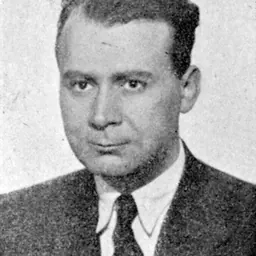
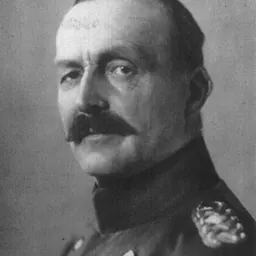
People in Hermann Oberth's life
Named in this biography and alive at the same time




Related people
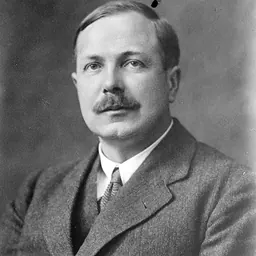
Same field, nearest in time

Contemporaries
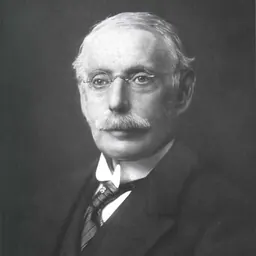
People whose lives overlapped Hermann Oberth's


Frequently asked questions
Who was Hermann Oberth?
Austro-Hungarian-born German physicist and rocketry pioneer (1894-1989)
When was Hermann Oberth born?
Hermann Oberth was born on 25 June 1894 in Sibiu.
When did Hermann Oberth die?
Hermann Oberth died on 28 December 1989 in Nuremberg.
What was Hermann Oberth's occupation?
Hermann Oberth was a physicist, inventor, essayist, screenwriter, engineer and military flight engineer.
What nationality was Hermann Oberth?
Hermann Oberth was Romanian and German.
Sources & further reading
Cite this page
APA: Biography.guide. (2026). Hermann Oberth. https://biography.guide/hermann-oberth/
MLA: "Hermann Oberth." Biography.guide, https://biography.guide/hermann-oberth/.
Chicago: "Hermann Oberth." Biography.guide. https://biography.guide/hermann-oberth/.
Data last updated: 2026-09-20 · Spot an error? Report a correction.
Page generated 2026-09-27 05:31 UTC