
About Vittorio Emanuele Orlando
Lived 1860 – 1952 (aged 92). Vittorio Emanuele Orlando was an Italian politician, diplomat, jurist, university teacher, head of government and member of parliament.
Vittorio Emanuele Orlando (; 19 May 1860 – 1 December 1952) was an Italian statesman, who served as the prime minister of Italy from October 1917 to June 1919. Orlando is best known for representing Italy in the 1919 Paris Peace Conference with his foreign minister Sidney Sonnino. He was also known as "Premier of Victory" for defeating the Central Powers along with the Entente in World War I. Italy entered into World War I in 1915 with the aim of completing national unity: for this reason, it is also considered the Fourth Italian War of Independence, in a historiographical perspective that identifies in the latter the conclusion of the unification of Italy, whose military actions began during the revolutions of 1848 with the First Italian War of Independence.
Orlando was the provisional president of the Chamber of Deputies between 1943 and 1945, and a member of the Constituent Assembly that changed the Italian form of government into a republic. Aside from his prominent political role, Orlando was a professor of law and is known for his writings on legal and judicial issues, which number over a hundred works.
Early life and career Orlando was born in Palermo, Sicily. His father, a landed gentleman, delayed venturing out to register his son's birth for fear of Giuseppe Garibaldi's Expedition of the Thousand, who had just stormed into Sicily on the first leg of their march to build an Italian nation. Orlando taught law at the University of Palermo and was recognized as an eminent jurist. In 1897, he was elected in the Italian Chamber of Deputies for the district of Partinico for which he was constantly reelected until 1925. He aligned himself with Giovanni Giolitti, who was Prime Minister of Italy five times between 1892 and 1921.
Prime minister A liberal, Orlando served in various roles as a minister. In 1903, he served as Minister of Education under Prime Minister Giolitti. In 1907, he was appointed Minister of Justice, a role he retained until 1909. He was re-appointed to the same ministry in November 1914 in the government of Antonio Salandra until his appointment as Minister of the Interior in June 1916 under Paolo Boselli. After the Italian military disaster in World War I at Caporetto on 25 October 1917, which led to the fall of the Boselli government, Orlando became prime minister, and he continued in that role through the rest of the war. He had been a strong supporter of Italy's entry in the war. He successfully led a patriotic national front government, the Unione Sacra, and reorganized the army. He then reasserted civilian control over military affairs, which Cadorna had always resisted. His government instituted new policies that treated Italian troops less harshly and instilled a more efficient military system, which were enforced by Diaz. The Ministry for Military Assistance and War Pensions was established, soldiers received new life insurance policies to help their families in the case of their deaths, more funding was put into propaganda efforts aimed at glorifying the common soldier, and annual paid leave was increased from 15 to 25 days. On his own initiative Diaz also softened the harsh discipline practiced by Cadorna, increased rations, and adopted more modern military tactics which had been observed on the Western Front. All of these had the net effect of greatly increasing the formerly-crumbling army's morale. Orlando's government quickly proved popular among the general population and successfully reconstituted national morale after the disaster of Caporetto, with Orlando even publicly pledging to retreat to "my Sicily" if necessary and resist the Austrian invaders from there, though he was also assured that there would be no military collapse.
With the Austro-Hungarian offensive stopped by Diaz at the Second Battle of the Piave River, a lull in fighting ensued on the Italian front as both sides brought up their logistical elements. Orlando ordered an investigation into the causes of the defeat at Caporetto, which confirmed that it was the fault of the military leadership. While he continued to reform the military, he refused demands from both sides of the political aisle calling for mass trials of generals and ministers. The Italian front stabilized enough under his leadership that Italy was able to send hundreds of thousands of troops to the Western Front to buttress their allies while themselves preparing for a major offensive to knock Austria-Hungary out of the war. This offensive materialized in November 1918, the Italians launched the Battle of Vittorio Veneto and routed the Austro-Hungarians, a feat that coincided with the collapse of Austro-Hungarian Army and the end of the First World War on the Italian Front, as well as the end of the Austro-Hungarian Empire. The fact that Italy recovered and ended up on the winning side in 1918 earned for Orlando the title "Premier of Victory." Although, as prime minister, he was the head of the Italian delegation, Orlando's inability to speak English and his weak political position at home allowed the conservative foreign minister, the half-Welsh Sidney Sonnino, to play a dominant role.
Their differences proved to be disastrous during the negotiations. Orlando was prepared to renounce territorial claims for Dalmatia to annex Rijeka (or Fiume as the Italians called the town) — the principal seaport on the Adriatic Sea — while Sonnino was not prepared to give up Dalmatia. Italy ended up claiming both and received neither, running up against Wilson's policy of national self-determination. Orlando supported the Racial Equality Proposal introduced by Japan at the conference.
Orlando dramatically left the conference early on April 24, 1919. He returned briefly the following month, but was forced to resign just days before the signing of the resultant Treaty of Versailles. The fact he was not a signatory to the treaty became a point of pride for him later in his life. French prime minister Georges Clemenceau dubbed him "The Weeper", and Orlando himself recalled proudly: "When ... I knew they would not give us what we were entitled to ... I writhed on the floor. I knocked my head against the wall. I cried. I wanted to die." until 1935, when Mussolini's march into Ethiopia stirred Orlando's nationalism. He reappeared briefly in the political spotlight when he wrote Mussolini a supportive letter. but no court ever investigated the issue. A Mafia pentito and state witness, Tommaso Buscetta, claimed that Orlando was himself actually a member of the Mafia, a man of honour. In Partinico, he was supported by the Mafia boss Frank Coppola, who had been deported back to Italy from the US.
In 1925, Orlando stated in the Italian senate that he was proud of being mafioso and intended it to mean a "man of honor" but making no admission of links to organized crime, saying that "if by the word 'mafia' we understand a sense of honour pitched in the highest key; a refusal to tolerate anyone's prominence or overbearing behaviour... a generosity of spirit which, while it meets strength head on, is indulgent to the weak; loyalty to friends ... If such feelings and such behaviour are what people mean by 'the mafia'... then we are actually speaking of the special characteristics of the Sicilian soul: and I declare that I am a mafioso, and proud to be one." He maintained a strong rivalry with the prominent statesman and party colleague Francesco Saverio Nitti. French Prime Minister Georges Clemenceau and US President Woodrow Wilson criticized his behavior at the Paris Peace Conference.
Works
Della riforma elettorale, Milano, 1881
Le fratellanze artigiane in Italia, Firenze, 1884 Della resistenza politica individuale e collettiva, Torino, 1885 Principi di diritto costituzionale, Firenze, 1889 Principi di diritto amministrativo, Firenze, 1890
Teoria giuridica delle guarentigie della libertà, Torino, 1890
La giustizia amministrativa, Milano, 1901 Le régime parlamentaire en Italie, Parigi, 1907 Lo Stato e la realtà, Milano, 1911 Discorsi per la guerra, Roma, 1919 Crispi, Palermo, 1923 Discorsi per la guerra e per la pace, Foligno, 1923 Diritto pubblico generale e diritto pubblico positivo, Milano, 1924 Recenti indirizzi circa i rapporti fra diritto e Stato, Tivoli, 1926 L'opera storica di Michele Amari, Milano, 1928 Su alcuni miei rapporti di governo con la Santa Sede, Napoli, 1929 Immunità parlamentari e organi sovrani, Tivoli, 1933 Diritto pubblico generale, Milano, 1940 Scritti vari di diritto pubblico e scienza politica, Milano, 1940 Discorsi parlamentari, Bologna, 2002
Don’t just read it —
keep it.
Full-length biographies made to live with: read them, listen on the way to work, watch them tonight.
- E-book
- Audio
- Video
Instant download · yours to keep · every purchase keeps this site free
Important facts
People in Vittorio Emanuele Orlando's life
Named in this biography and alive at the same time
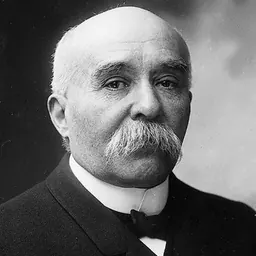
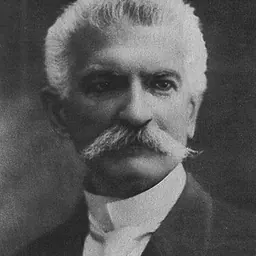





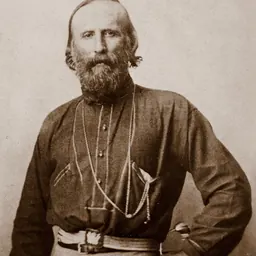
Related people
Same field, nearest in time
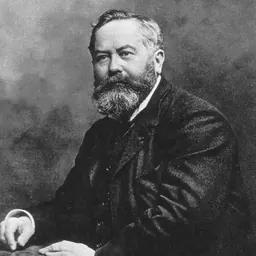



Contemporaries
People whose lives overlapped Vittorio Emanuele Orlando's



Frequently asked questions
Who was Vittorio Emanuele Orlando?
Italian diplomat (1860–1952)
When was Vittorio Emanuele Orlando born?
Vittorio Emanuele Orlando was born on 19 May 1860 in Palermo.
When did Vittorio Emanuele Orlando die?
Vittorio Emanuele Orlando died on 1 December 1952 in Rome.
What was Vittorio Emanuele Orlando's occupation?
Vittorio Emanuele Orlando was a politician, diplomat, jurist, university teacher, head of government and member of parliament.
What nationality was Vittorio Emanuele Orlando?
Vittorio Emanuele Orlando was Italian.
Sources & further reading
· Wikipedia: Vittorio Emanuele Orlando
· DBpedia: Vittorio Emanuele Orlando
Cite this page
APA: Biography.guide. (2026). Vittorio Emanuele Orlando. https://biography.guide/vittorio-emanuele-orlando/
MLA: "Vittorio Emanuele Orlando." Biography.guide, https://biography.guide/vittorio-emanuele-orlando/.
Chicago: "Vittorio Emanuele Orlando." Biography.guide. https://biography.guide/vittorio-emanuele-orlando/.
Data last updated: 2026-09-25 · Spot an error? Report a correction.
Page generated 2026-09-27 05:12 UTC