
About Antonio Salandra
Lived 1853 – 1931 (aged 78). Antonio Salandra was an Italian politician, lawyer, head of government and minister.
Antonio Salandra (; 13 August 1853 – 9 December 1931) was a conservative Italian politician, journalist, and writer who served as the 21st prime minister of Italy between 1914 and 1916. He ensured the entry of Italy in World War I on the side of the Triple Entente (the United Kingdom, France, and the Russian Empire) to fulfil Italy's irredentist claims.
Early life and political career Born in Troia (Province of Foggia, Apulia), he graduated from the University of Naples in 1875 and then became instructor and later professor of administrative law at the University of Rome.
He was Minister of Agriculture (1899–1900) in the conservative government of Luigi Pelloux and subsequently Minister of the Treasury (1906) and Italian Minister of Finance (1909–1910) in the governments of Sidney Sonnino.
Prime minister In March 1914, the conservative Salandra was brought into the national cabinet upon the fall of the government of Giovanni Giolitti, as the choice of Giolitti himself, who still commanded the support of most Italian parliamentarians. Salandra's government was the most conservative one that Italy had seen for a long time. Salandra soon fell out with Giolitti over the question of Italian participation in World War I.
At the outbreak of World War I in August 1914, Salandra declared that Italy would not commit its troops, maintaining that the Triple Alliance had only a defensive stance and Austria-Hungary had been the aggressor. In reality, both Salandra and his ministers of Foreign Affairs, Antonino Paternò Castello, who was succeeded by Sidney Sonnino in November 1914, began to probe which side would grant the best reward for Italy's entrance in the war and to fulfil Italy's irredentist claims.
Entering World War I
Salandra used the term "sacred egoism" (sacro egoismo) to define Italy's outlook on which side Italy would enter the war. Expecting the war would be short – over by the late summer of 1915 – there was some pressure on the decision to make.
Negotiations had been started between Sonnino, the British Foreign Secretary Edward Grey and the French Foreign Minister Jules Cambon.
The secret pact, the Treaty of London or London Pact , was signed between the Triple Entente (the United Kingdom, France, and the Russian Empire) and the Kingdom of Italy. According to the pact, Italy was to leave the Triple Alliance and join the Triple Entente. Italy was to declare war against Germany and Austria-Hungary within a month in return for territorial concessions at the end of the war.
On 23 May 1915, Italy declared war on Austria-Hungary. Salandra had expected that Italy's entrance on the allied side would bring the war to a quick solution. However the stalemated bloody war lasted far longer than anticipated. This weakened Salandra's ministry, especially when he refused to appoint neutralists to important positions. Five unsuccessful Italian offensives on the Isonzo and the Austro-Hungarian Trentino Offensive in May to July 1916 contributed to a military crisis that led to the collapse of Salandra's government on 10 June 1916, due to a combination of neutralist deputies and those who believed that Salandra had not been effective enough in the war effort. He played no further role in the war but was a member of the Italian delegation to the Paris Peace Conference in 1919.
After World War I, Salandra moved further to the right, and supported Mussolini's accession to power in 1922. Nine years later he died in Rome.
He was awarded the Serbian Order of Karađorđe's Star.
Works
He is the author of a considerable number of works on economics, finance, history, law, and politics (New International Encyclopedia). These include:
Tratto della giustizia amministrativo (1904) La politica nazionale e il partito liberale (1912) Lezioni di diritto amministrativo (two volumes, 1912) Politica e legislazione : saggi, raccolti da Giustino Fortunato (1915) Il discorso contro la malafede tedesca (1915) Italy and the Great War: From Neutrality to Intervention (London: Edward Arnold, 1932),
Don’t just read it —
keep it.
Full-length biographies made to live with: read them, listen on the way to work, watch them tonight.
- E-book
- Audio
- Video
Instant download · yours to keep · every purchase keeps this site free
Important facts
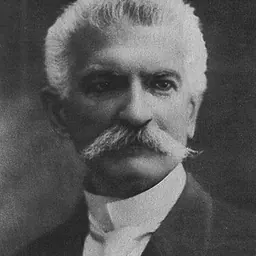
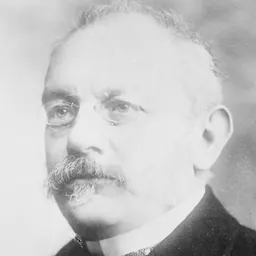
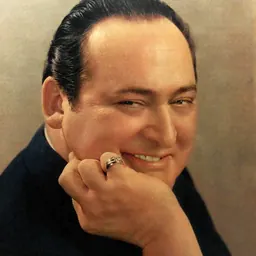
People in Antonio Salandra's life
Named in this biography and alive at the same time



Related people
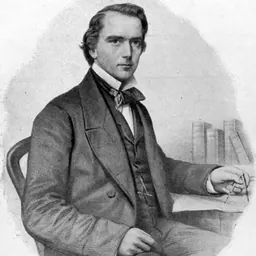
Same field, nearest in time





Contemporaries
People whose lives overlapped Antonio Salandra's



Frequently asked questions
Who was Antonio Salandra?
Prime Minister of Italy (1853-1931)
When was Antonio Salandra born?
Antonio Salandra was born on 13 August 1853 in Troia.
When did Antonio Salandra die?
Antonio Salandra died on 9 December 1931 in Rome.
What was Antonio Salandra's occupation?
Antonio Salandra was a politician, lawyer, head of government and minister.
What nationality was Antonio Salandra?
Antonio Salandra was Italian.
Sources & further reading
Cite this page
APA: Biography.guide. (2026). Antonio Salandra. https://biography.guide/antonio-salandra/
MLA: "Antonio Salandra." Biography.guide, https://biography.guide/antonio-salandra/.
Chicago: "Antonio Salandra." Biography.guide. https://biography.guide/antonio-salandra/.
Data last updated: 2026-09-20 · Spot an error? Report a correction.
Page generated 2026-09-27 05:22 UTC