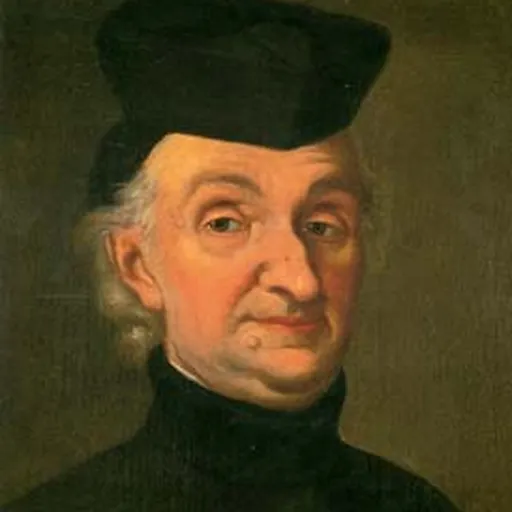
About Vincenzo Riccati
Lived 1707 – 1775 (aged 68). Vincenzo Riccati was an Italian mathematician and physicist, known for Hyperbolic functions.
Vincenzo Riccati (Castelfranco Veneto, 11 January 1707 – Treviso, 17 January 1775) was a Venetian Catholic priest, mathematician, and physicist. He is credited with introducing hyperbolic functions.
Life Vincenzo Riccati was born in 1707 in Castelfranco Veneto, a small town about 30 km north of Padua. He was the brother of Giordano Riccati, and the second son of Jacopo Riccati. He began his studies at the College of St. Francis Xavier in Bologna, under the guidance of Luigi Marchenti, a pupil of the French mathematician Pierre Varignon. He entered the Society of Jesus on December 20, 1726. He taught belles lettres in the colleges of the Order in Piacenza (1728), Padua (1729), and Parma (1734). He then went to Rome to study theology. In 1739 he was assigned to the College of St. Francis Xavier of Bologna, where he taught mathematics for thirty years, succeeding his former teacher Luigi Marchenti. He was among the first members of the Italian National Academy of Sciences. In 1760 he was elected Honorary Fellow of the Russian Academy of Sciences.
Riccati's main research continued the work of his father in mathematical analysis, especially in the fields of the differential equations and physics. In 1746 and 1749 Riccati published two works, in which he discussed the question of the parallelogram of forces in the context of the vis viva controversy. In 1752, he published the short treatise De usu motus tractorii in constructione aequationum differentialium, in which he proved that all first-order (ordinary) differential equations conceivable at the time could be constructed using tractional motion.
Riccati's main contributions to mathematics and physics were published in two volumes, Opusculorum ad res physicas mathematicas pertinentium (Bologna, 1757-1762), where he introduced the use of hyperbolic functions. Vincenzo edited, in collaboration with his brother Giordano, the Works of his father and published, in collaboration with his friend and student Girolamo Saladini, the three-volume treatise Institutiones analyticae, an important textbook on calculus printed in Bologna in 1765-67. Ten years later Saladini produced an Italian translation of the work under the title Instituzioni Analitiche. Riccati's Institutiones analyticae is the fullest 18th-century Italian treatise on analytic methods in mathematics.
After the suppression of the Society of Jesus, Riccati retired to his family home in Treviso, where he died on January 17, 1775. Riccati was a friend and correspondent of Maria Gaetana Agnesi and Ramiro Rampinelli.
Contributions His contributions were in hyperbolic functions for solutions of cubics, their derivatives and exponential fiunctions. Lambert is sometimes incorrectly credited as the first to introduce the hyperbolic functions, however, he did this subsequent to Riccati's contributions in 1770. Riccati not only introduced these new functions but also derived the integral formulas connected with them. He then went on to derive the integral formulas for the trigonometric functions. Riccati with Saladini also worked on the rose curves, which was first postulated by Grandi. Like his father, Vincenzo Riccati was skilled in hydraulic engineering. His efforts and implementations of flood control projects saved the regions around Venice and Bologna.
Riccati's hyperbolic addition laws
Vincenzo Riccati (1757) introduced hyperbolic functions cosh and sinh, which he denoted as Ch. and Sh. related by with r being set to unity in modern publications, and formulated the addition laws of hyperbolic sine and cosine:
He furthermore showed that and follow by setting and in the above formulas.
Works
Lettera di Vicenzio Riccati della Compagnia di Gesù alla Signora D. Gaetana Maria Agnesi intorno alla costruzione di alcune formule senza la separazione delle indeterminate. In: Gori, Antonio Francesco (ed.), Symbolae litterariae opuscula varia, vol. 10, Florence, 1753, pp. 62–72.
Dialogo, dove ne' congressi di più giornate delle forze vive e dell'azioni delle forze morte si tien discorso, Bologna, 1749
Don’t just read it —
keep it.
Full-length biographies made to live with: read them, listen on the way to work, watch them tonight.
- E-book
- Audio
- Video
Instant download · yours to keep · every purchase keeps this site free
Important facts
People in Vincenzo Riccati's life
Named in this biography and alive at the same time
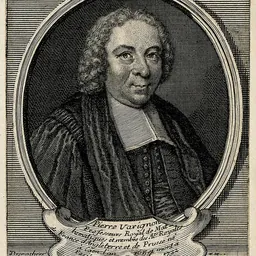

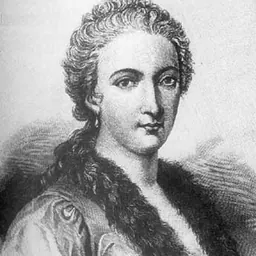


Related people
Same field, nearest in time



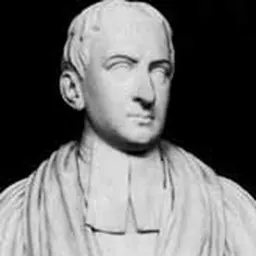
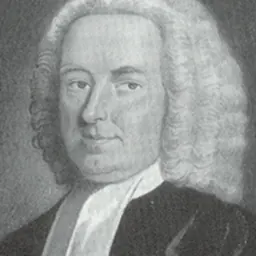
Contemporaries
People whose lives overlapped Vincenzo Riccati's
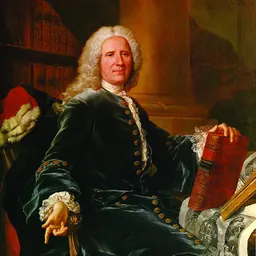



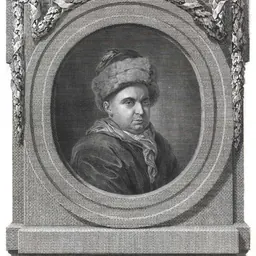
Frequently asked questions
Who was Vincenzo Riccati?
Italian mathematician and physicist (1707-1775)
When was Vincenzo Riccati born?
Vincenzo Riccati was born on 11 January 1707 in Castelfranco Veneto.
When did Vincenzo Riccati die?
Vincenzo Riccati died on 17 January 1775 in Treviso.
What was Vincenzo Riccati's occupation?
Vincenzo Riccati was a mathematician and physicist.
What was Vincenzo Riccati known for?
Vincenzo Riccati was known for Hyperbolic functions.
What nationality was Vincenzo Riccati?
Vincenzo Riccati was Italian.
Sources & further reading
Cite this page
APA: Biography.guide. (2026). Vincenzo Riccati. https://biography.guide/vincenzo-riccati/
MLA: "Vincenzo Riccati." Biography.guide, https://biography.guide/vincenzo-riccati/.
Chicago: "Vincenzo Riccati." Biography.guide. https://biography.guide/vincenzo-riccati/.
Data last updated: 2026-09-21 · Spot an error? Report a correction.
Portrait: Wikimedia Commons · author & licence
Page generated 2026-09-27 04:59 UTC