
Maria Gaetana Agnesi
Italian mathematician and philanthropist
About Maria Gaetana Agnesi
Lived 1718 – 1799 (aged 80). Maria Gaetana Agnesi was an Austrian and Italian philosopher, mathematician, philanthropist, theologian, pedagogue and polyglot.
Maria Gaetana Agnesi (16 May 1718 – 9 January 1799) was a Milanese mathematician, philosopher, theologian, and humanitarian. She was the first woman to write a mathematics handbook, the first woman appointed as a mathematics professor at a university and the second woman appointed as a professor overall.
She is credited with writing the first book discussing both differential and integral calculus and was a member of the faculty at the University of Bologna, although she never served.
She devoted the last four decades of her life to studying theology (especially patristics) and to charitable work and serving the poor. She was a devout Catholic and wrote extensively on the marriage between intellectual pursuit and mystical contemplation, most notably in her essay Il cielo mistico (The Mystic Heaven). She saw the rational contemplation of God as a complement to prayer and contemplation of the life, death and resurrection of Jesus Christ.
Maria Teresa Agnesi Pinottini, harpsichordist and composer, was her sister.
Early life Maria Gaetana Agnesi was born in Milan, to a wealthy and literate family. Her father Pietro Agnesi, a wealthy silk merchant, wanted to elevate his family into the Milanese nobility. In order to achieve his goal, he married Anna Fortunato Brivio of the Brivius de Brokles family in 1717. Her mother's death provided her the excuse to retire from public life. She took over the management of the household. She was one of 21 children.
Maria was recognized early on as a child prodigy; she could speak both Italian and French at five years of age. At the age of nine, she composed and delivered a speech arguing for the education of women.
Agnesi suffered a mysterious illness at the age of twelve that was attributed to her excessive studying and reading, so she was prescribed vigorous dancing and horseback riding. This treatment did not work; she began to experience extreme convulsions, after which she was encouraged to pursue moderation. By age fourteen, she was studying ballistics and geometry. In addition to her performances and lessons, her responsibility was to teach her siblings. This task kept her from her own goal of entering a convent, as she had become strongly religious. Although her father refused to grant this wish, he agreed to let her live from that time on in an almost conventual semi-retirement, avoiding all interactions with society and devoting herself entirely to the study of mathematics. of the Marquis Guillaume de l'Hôpital, she was fully introduced into the field in 1740 by Ramiro Rampinelli, an Olivetan monk who was one of the most notable Italian mathematicians of that time. The work was dedicated to Empress Maria Theresa, who thanked Agnesi with the gift of a diamond ring, a personal letter, and a diamond and crystal case. Many others praised her work, including Pope Benedict XIV, who wrote her a complimentary letter and sent her a gold wreath and a gold medal.
Witch of Agnesi
Graphical construction of the Witch of Agnesi In Instituzioni analitiche, Agnesi discussed a curve earlier studied and constructed by Pierre de Fermat and Guido Grandi.
Agnesi described the curve as versiera in Italian, which is a synonym for the adjective versoria meaning "turning in every direction". At the same time versiera was used as a term for a "she-devil" or "witch", from Latin Adversarius, an alias for "devil" (Adversary of God). Future translations and publications of the Instituzioni analitiche carried forward the former meaning either as a translation error or possibly as a pun. The curve has become known as the "Witch of Agnesi".
Other Agnesi also wrote a commentary on the Traité analytique des sections coniques du marquis de l'Hôpital which, though highly praised by those who saw it in manuscript, was never published.
Later life In 1750, on the illness of her father, she was appointed by Pope Benedict XIV to the chair of mathematics and natural philosophy and physics at Bologna, though she never served. In 1751, she became ill again and was told not to study by her doctors. After the death of her father in 1752 she carried out a long-cherished purpose by giving herself to the study of theology, and especially of the Fathers and devoted herself to the poor, homeless, and sick, giving away the gifts she had received and begging for money to continue her work with the poor. Finally, thanks to a donation from Prince Antonio Tolomeo Trivulzio, the Pio Albergo Trivulzio was established in Milan in 1771, and Cardinal Giuseppe Pozzobonelli invited Agnesi to serve as the "visitor and director of women, especially the sick." On 9 January 1799, Maria Agnesi died poor and was buried in a mass grave for the poor with fifteen other bodies.
Recognition
In 1996, an asteroid, 16765 Agnesi, was named after Agnesi.
There is a crater on Venus named Agnesi after her.
She is included in a deck of playing cards featuring notable women mathematicians published by the Association of Women in Mathematics.
Poet Jessy Randall's 2022 collection Mathematics for Ladies includes a poem honoring Agnesi.
Don’t just read it —
keep it.
Full-length biographies made to live with: read them, listen on the way to work, watch them tonight.
- E-book
- Audio
- Video
Instant download · yours to keep · every purchase keeps this site free
Important facts
People in Maria Gaetana Agnesi's life
Named in this biography and alive at the same time
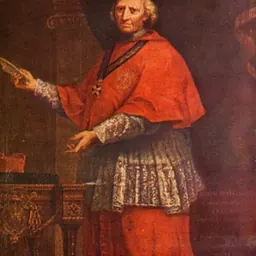


Related people
Same field, nearest in time


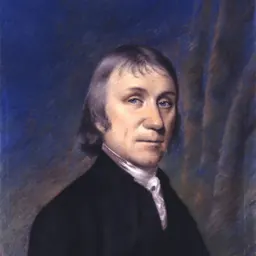
Contemporaries
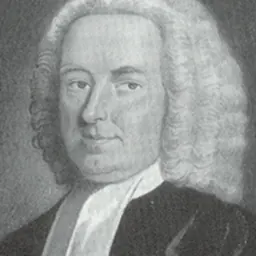
People whose lives overlapped Maria Gaetana Agnesi's



Frequently asked questions
Who was Maria Gaetana Agnesi?
Italian mathematician and philanthropist (1718–1799)
When was Maria Gaetana Agnesi born?
Maria Gaetana Agnesi was born on 16 May 1718 in Milan.
When did Maria Gaetana Agnesi die?
Maria Gaetana Agnesi died on 9 January 1799 in Milan.
What was Maria Gaetana Agnesi's occupation?
Maria Gaetana Agnesi was a philosopher, mathematician, philanthropist, theologian, pedagogue and polyglot.
What nationality was Maria Gaetana Agnesi?
Maria Gaetana Agnesi was Austrian and Italian.
Sources & further reading
· Wikipedia: Maria Gaetana Agnesi
· DBpedia: Maria Gaetana Agnesi
Cite this page
APA: Biography.guide. (2026). Maria Gaetana Agnesi. https://biography.guide/maria-gaetana-agnesi/
MLA: "Maria Gaetana Agnesi." Biography.guide, https://biography.guide/maria-gaetana-agnesi/.
Chicago: "Maria Gaetana Agnesi." Biography.guide. https://biography.guide/maria-gaetana-agnesi/.
Data last updated: 2026-09-27 · Spot an error? Report a correction.
Page generated 2026-09-27 05:17 UTC