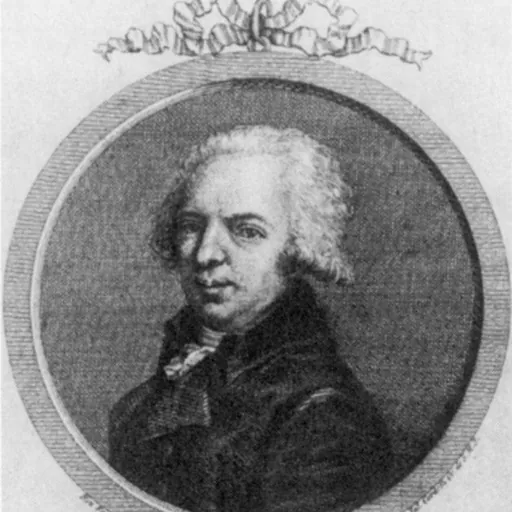
About Vincenzo Brenna
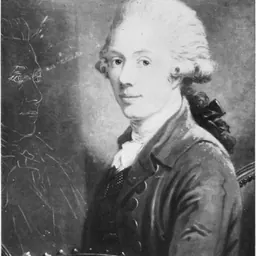
Lived 1747 – 1820 (aged 72). Vincenzo Brenna was an Italian painter, architect and designer.
Vincenzo Brenna (August 20, 1747 – May 17, 1820) was an Italian architect and painter who was the house architect of Paul I of Russia. Brenna was hired by Paul and his spouse Maria Fyodorovna as interior decorator in 1781 and by the end of 1780s became the couple's leading architect. Brenna worked on Pavlovsk Palace and Gatchina palaces, rebuilt Saint Isaac's Cathedral, and most notably created Saint Michael's Castle in Saint Petersburg. Most of his architectural works were created concurrently during Paul's brief reign (November 1796 – March 1801). Soon after Paul was murdered in a palace coup Brenna, renowned for fraud and embezzlement barely tolerated by his late patron, Nikolay Lanceray The other branch produced three brothers Brenni (born in the 1730s), fresco painters. Vincenzo Brenna, son of Francesco, was born in 1747 Brenna himself did not have luck in tangible architecture; instead, commissioned by Lodovico Mirri under auspices of Pope Clement XIII, he surveyed the relics of Rome together with Franciszek Smuglewicz. Their drawings, engraved by Marco Carloni, were published in the late 1770s as Vestigia delle Terme di Tito. Another set of Brenna's drawings, created not later than 1781 and engraved by Giovanni Cassini, was published in three folios (380 sheets) from 1781 to 1788.
From Poland to Russia
Back in Italy Brenna met Stanisław Kostka Potocki, a well-educated and rich amateur in need of professional artists. Brenna followed Potocki to Poland where he prepared two drafts of a church in Ujazdow. He received commissions to decorate Potocki's palace in Natolin, for which "compensated" himself from his patron's art collection. The two parted in a bitter conflict; "Brenna's thievery, double-dealing and desertion of his benefactor Potocki for the future czar seem the unkindest cuts of all".
In the end of 1781 Russian heir apparent Paul (reigned as Paul I of Russia) and his spouse Maria, travelling on a Grand Tour of Europe under the thin guise of Comte du Nord, noticed Brenna's work in Warsaw. Most recent sources (Shvidkovsky) date Brenna's arrival in Russia as the beginning of 1784; Lanceray described Brenna's Russian drafts dated 1783.
Meanwhile, when Paul and Maria were in Europe, Cameron began displaying signs of aversion to their interference with his work. Court intermediaries suppressed the conflict for a while, but by 1785 Maria herself grew tired of Cameron's alleged inefficiency and warned him, through Count Kuchelbecker, that he will not see any new commissions. Cameron's influence faded, influence of his assistants, including Brenna, rose, powered in part by the Italians' assertive, self-confident behaviour. Catherine made the first move, razing Bazhenov's gothic towers of Tsaritsyno Palace. In 1794 Brenna was rewarded with a lot of land near to Pavlovsk palace. Paul's trusted barber Count Ivan Kutaisov, another Pavlovsk landlord, became Brenna's first private customer; he commissioned a summer dacha in "medieval style". By this time Brenna earned 750 roubles p.a., but when Paul ascended to the throne in 1796, Brenna's salary reached 3,550 roubles.
Gatchina
Gatchina Palace, completed by Antonio Rinaldi in 1781, became Paul's residence in 1783; formally, it was his property and Pavlovsk became property of Maria Fyodorovna. Paul associated Rinaldi's style with Orlov brothers, murderers of his fathers, and immediately launched remodeling of the palace.
In 1793 Brenna designed Connetable Square, modelled after Château de Chantilly. In 1796 Paul launched construction of a military base for his trusted Gatchina troops; the project, led by Brenna, also employed Bazhenov, Ivan Starov, Andreyan Zakharov and Nikolay Lvov, architect of the Priory Palace. At about the same time Brenna expanded the palace itself, completing two square side wings of the palace. According to Lanceray's studies of archived architectural drawings, initially Paul instructed Brenna to design these wings as single-story buildings, then two storey, and finally three storey, level with Rinaldi's central core. Archive evidence does not allow reliable attribution of other Gatchina buildings to Brenna; after Paul's ascension he retained overall management over Gatchina project, but spent most time working on Saint Michael's Castle.
Brenna also completed a series of new, at time fantastic, palace drafts reflecting Paul's visions. Some of these drafts, dated 1783–1785, are direct predecessors of Saint Michael's Castle; according to Lanceray, these early experiments explain the "mind-bogging fast" pace of design stage for the Castle. Pavlovsk interiors retained, to a varying degree, signs of Cameron's style and cannot be reliably attributed to a particular architect, with the exception of empress Maria's suite unconditionally attributed to Brenna and Andrey Voronikhin's repairs after the 1803 fire.
Bip Fortress, built on site of actual Swedish forts of Great Northern War, was Paul's favorite folly since 1778. Paul even listed Bip as a real fortress in the official Army register. Existing structure was completed by Brenna in 1797 and housed Maltese Order offices.
Saint Michael's Castle
In May 1782 Paul, Comte du Nord, met Charles-Louis Clérisseau in Chantilly. Clerisseau, who knew he was admired by Paul's mother, reprimanded the Russian heir for not paying him attention before and promised to report Paul's "disrespect" to Catherine. The bitter exchange further alienated Paul from the Enlightenment Classicism practiced by Catherine; Paul formed an opinion of neoclassic art as dry, emotionally inadequate reproduction of antiques. According to Dmitry Shvidkovsky, the architect and the emperor shared the Romantic vision of art; this emotional bond explains Brenna's survival at the court of an irrational tsar. Paul, in his usual manner, assigned Bazhenov to be Brenna's mentor, but all creative and business issues were handled by Brenna alone. The castle turned out to be not a Neoclassical building, but "a rare example of an imperial palace genuinely redolent of the Romantic era." but actual work commenced in earnest on March 11, exactly four years before Paul's murder. Initial cost budget reached 1.5 million roubles in gold, not including interior finishes
Paul shut down Catherine's projects in Tsarskoye Selo and placed the redundant workforce at Brenna's disposal. He wanted to see the castle externally complete by the end of 1797, so work on site, employing up to 6,000 men, continued day at night while all other residents of Saint Petersburg were ordered to sleep after dusk. Indeed, walls of the castle and nearby Exerzierhaus (Riding House) were built (but not finished in stone) by the end of October 1797. Brenna, realizing that existing project management controls will delay completion, demanded elimination of all financial controls and intermediaries between Paul and himself. Paul agreed and allowed Brenna unchecked access to state finances; in the end, total cost of the Castle reached six million roubles in gold.
While Paul and Brenna spent millions on finishes and artwork, they placed unnecessary cost controls on essential works like roofing and site drainage; the castle was topped out with an iron roof only in 1799. The structure was declared ready for occupancy only in the beginning of 1800, fourteen months before Paul's death, but "moving in" ceremony was delayed until November 1800. Moisture inside the ballroom was so high that candlelight could not break through the wall of fog; Paul and Maria left and returned to the castle only on February 1, 1801.
Despite all setbacks, four-year construction period was unprecedented for a large palace; contemporaries and modern historians agree that Brenna proved himself a capable project manager. In addition to Saint Michael's Castle, he was still responsible for works performed at Gatchina, Pavlovsk, Petergof and Tsarskoye Selo; he managed hundreds of suppliers and contractors, hired European artists, squeezed discounts out of merchants, arranged geological expedition scouting for proper granite deposits. Another idealistic image of Brenna was painted in the plafond of Saint Michael's Castle by a mediocre assistant who used the same model for cupids and statesmen.
Brenna married Maria Trauenfeld, whose father was employed by Frederick Eugene, father of empress Maria. Exact date of the marriage is unknown; it probably took place soon after Brenna's arrival in Russia.
Brenna, as chief procurer of arts to Paul's court, amassed a remarkable collection of arts, including works by Michelangelo, Rembrandt and Titian. Brenna's unscrupulous handling of state treasury irreparably tarnished his reputation. Paul himself was aware of Brenna's misconduct and was credited with a pun, in French language: "Voila l'architecte qui vole" (voler can be interpreted as soar as well as steal). Vladimir Stasov accused Brenna of physically stealing art from the Hermitage collection. In August 1802 Brenna left Saint Petersburg for Dresden, accompanied by faithful Rossi.
Brenna did no further work as a practical architect. Russian travelers who visited him after the end of Napoleonic Wars noted apparent mediocrity of his works of this period. Sculptor Samuil Galberg wrote, "Wicked old man! He is not aware how poor his paintings are". After Brenna's death in Dresden in 1820 his widow pleaded Russian foreign minister Karl Nesselrode for assistance, but Nesselrode reasoned that she retained at least some of Brenna's fortune made in Russia, and denied help. and noted that his naturalism resurfaced in the middle of the 19th century, but the eclectic architects of this period failed in reproducing Brenna's wholesome realism; only Rossi managed to combine the virtues of Brenna and Quarenghi. and praised him for nearly perfect facades of Saint Michael's Castle.
Dmitry Shvidkovsky elaborated on the "watershed" theory, linking Brenna's art to his Roman studies: "No partisan of strict Antiquity like Cameron, he was able to combine the solemn image of Imperial Rome with heightened pre-Romantic emotionalism. Time almost seems sublimated in his work in Russia because of the impact of an imperial patron who wanted a complete break with Catherinian tradition... Paul was the first emperor of the Romantic era, Brenna was the precursor of Romantic Neoclassicism."
Brenna in fiction
Brenna, played by Alexander Grigoryants, appears in the 2003 Russian film Poor, Poor Pavel featuring Viktor Sukhorukov as Paul and late Oleg Yankovsky as Count Pahlen. The film is loosely based on a 1908 play Pavel I by Dmitry Merezhkovsky.
In the film, Brenna is portrayed far younger than he actually was during Paul's reign, and bears no resemblance to the real Brenna's portrait. His calls for "more gold!" reflect real Brenna's generous use of gold paint, although the film omits the topic of Brenna's embezzlement.
References and notes
Don’t just read it —
keep it.
Full-length biographies made to live with: read them, listen on the way to work, watch them tonight.
- E-book
- Audio
- Video
Instant download · yours to keep · every purchase keeps this site free
Important facts
People in Vincenzo Brenna's life
Named in this biography and alive at the same time





Related people
Same field, nearest in time



Contemporaries
People whose lives overlapped Vincenzo Brenna's




Frequently asked questions
Who was Vincenzo Brenna?
Italian architect and painter (1747-1820)
When was Vincenzo Brenna born?
Vincenzo Brenna was born on 20 August 1747 in Florence.
When did Vincenzo Brenna die?
Vincenzo Brenna died on 17 May 1820 in Dresden.
What was Vincenzo Brenna's occupation?
Vincenzo Brenna was a painter, architect and designer.
What nationality was Vincenzo Brenna?
Vincenzo Brenna was Italian.
Sources & further reading
Cite this page
APA: Biography.guide. (2026). Vincenzo Brenna. https://biography.guide/vincenzo-brenna/
MLA: "Vincenzo Brenna." Biography.guide, https://biography.guide/vincenzo-brenna/.
Chicago: "Vincenzo Brenna." Biography.guide. https://biography.guide/vincenzo-brenna/.
Data last updated: 2026-09-23 · Spot an error? Report a correction.
Portrait: Wikimedia Commons · author & licence
Page generated 2026-09-27 05:06 UTC