
About Viktor Reimann
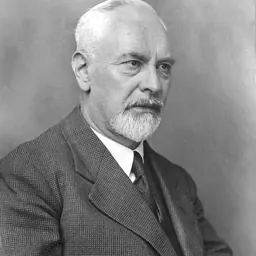
Lived 1915 – 1996 (aged 81). Viktor Reimann was an Austrian politician, journalist, writer and editing staff.
Viktor Riemann (25 January 1915 – 7 October 1996) was an Austrian author, commentator, journalist and politician (VdU). He sat as a member of the "Nationalrat" ("National Parliament") between 1949 and 1956.
Despite his involvement in liberation activism and subsequent imprisonment following the country's incorporation into Hitler's Germany, Riemann found himself identified as a controversialist, or on occasion more simply as an embarrassment, by representatives of the consensual centrist Austrian political mainstream during the postwar decades. A succession of political biographies and his newspaper contributions may have contributed to this.
Biography Early years Viktor Reimann was born and died in Vienna. Their political objectives were to start by educating people about the true nature of National Socialism, and then to accomplish the downfall of the Nazi regime. This should be accompanied by the extraction of the Danube and Alpine provinces from the recently enlarged German state, and the re-establishment of an independent Austria, which should also incorporate Bavaria, thereby extending in a northerly direction all the way to the River Main. In the end, there were around 300-400 members, many of whom had been taught by Scholz at the monastery school an hour's walk downriver from Vienna. The group was also networked with other resistance groups, notably in former Czechoslovakia, and maintained contacts with agents of the allied powers. Such contacts were not without their own risks, however. The "Austrian Freedom Movement" was smashed thanks to betrayal by one of its members, the government spy and Burgtheater stage actor Otto Hartmann. The authorities arrested Riemann towards the end of 1940.
During his time at the Salzburger Nachrichten Viktor Reimann rediscovered an appetite for political activism more generally. With Herbert Kraus, he was a co-founder, in March 1949, of the "Verband der Unabhängigen" ("Federation of Independents" / VdU) party. When a Salzburg party branch was set up on 1 September 1949 Reimann became its chairman, as well as head of the party press department.
Politician-journalist Viktor Reimann became a member of the "Nationalrat" ("National Parliament") in 1949. His was one of 16 seats allocated to the "Wahlpartei der Unabhängigen" (as the VdU was briefly known) which had won nearly 12% of the national vote. In the previous election, which had taken place in 1945, approximately 556,000 former members of the National Socialist party had been deprived of the right to vote. These people regained their voting rights ahead of the 1949 election. There were strong inferences drawn from the pattern of the election results, that the former National Socialists voted in disproportionately high numbers for the VdU rather than for the mainstream centre-right and centre-left ÖVP and SPÖ parties (with respectively 44% and 39% of the national vote). Attitudes towards Reimann, a relatively high-profile VdU member of parliament, were affected by those perceptions, both during his political career and subsequently.
During the build-up to the ("anti-communist") Vienna Brecht boycott which took hold in the city's theatres for ten years between 1953 and 1963, Reimann joined in the criticism of the iconic playwright. In a contribution which he made in October 1951 to the bimonthly periodical Neue Front under the headline "Wer schmuggelte das Kommunistenpferd in das deutsche Rom?" (loosely, "Who smuggled the communist wooden horse into the German Rome?"), Reimann wrote that "giving Bertolt Brecht Austrian citizenship [in 1950] shows that our country is still undermined by communism and the Americans are continuing to fund the spiritual Bolshevisation of Austria, exploiting the eager collaboration of certain socialist intellectuals along with the uncertainties and weaknesses of the cultural power-brokers of the [governing (in coalition)] ÖVP ("centre-right Austrian People's Party"), "Die Einbürgerung Bert Brechts zeigt, wie durch den Übereifer einzelner intellektueller Sozialisten und durch die Unwissenheit und Schwäche der kulturellen Machthaber der Volkspartei unser Land kommunistisch unterminiert wird und die Amerikaner die geistige Bolschewisierung Österreichs noch finanzieren." The party's weekly newspaper, Neue Front, fared better, printed in Salzburg alongside the Salzburger Nachrichten for seven years between 25 February 1949 and 1956. Reimann's own contributions to Neue Front did much to burnish his credentials as a polemicist. Neue Front contained frequent articles criticising the activities of the Austrian People's Courts which had been established in 1945 (and which are not to be confused with the National Socialist era special People's Court that had concentrated on "political cases"). The post-1945 Austrian People's Courts were condemned and, some felt, defamed by "Neue Front" over their continuing attention to denunciations received concerning alleged "Nazi-era crimes". Sometimes the condemnations published had been written by Reimann himself. Those who saw Neue Front, its editor in chief, and indeed the VdU itself, as apologists for former National Socialist members and collaborators could be sharply critical, not simply within Austria, but also across the frontier in West Germany where some of the same concerns still resonated.
Journalist and author Between 1956 and 1960 Reimann was employed as the head of the Press Department of the National Theatre Administration. In 1970 he became a regular columnist with the mass-market Kronen Zeitung. His columns were not uncontentious.
Under the title Die Dritte Kraft in Österreich (The Third Force in Austria), Viktor Reimann published a history of the political Austrian "Third estate" since 1945. This study of the frequently overlooked classes drew praise from Wolfgang Purtscheller who found it a "deeply apologetic and for that reason deeply interesting book over the re-emergence of a national identity".
Publications (selection)
Don’t just read it —
keep it.
Full-length biographies made to live with: read them, listen on the way to work, watch them tonight.
- E-book
- Audio
- Video
Instant download · yours to keep · every purchase keeps this site free
Important facts
People in Viktor Reimann's life
Named in this biography and alive at the same time



Related people
Same field, nearest in time





Contemporaries
People whose lives overlapped Viktor Reimann's



Frequently asked questions
Who was Viktor Reimann?
Austrian politician (1915-1996)
When was Viktor Reimann born?
Viktor Reimann was born on 25 January 1915 in Vienna.
When did Viktor Reimann die?
Viktor Reimann died on 7 October 1996 in Vienna.
What was Viktor Reimann's occupation?
Viktor Reimann was a politician, journalist, writer and editing staff.
What nationality was Viktor Reimann?
Viktor Reimann was Austrian.
Sources & further reading
Cite this page
APA: Biography.guide. (2026). Viktor Reimann. https://biography.guide/viktor-reimann/
MLA: "Viktor Reimann." Biography.guide, https://biography.guide/viktor-reimann/.
Chicago: "Viktor Reimann." Biography.guide. https://biography.guide/viktor-reimann/.
Data last updated: 2026-09-20 · Spot an error? Report a correction.
Page generated 2026-09-27 05:20 UTC