
About Victor Vignon
Lived 1847 – 1909 (aged 61). Victor Vignon was a French painter, printmaker and impressionism.
Victor Alfred Paul Vignon (25 December 1847– 15 March 1909) was a French Impressionist landscape painter and graphic artist. He was involved with the Impressionism movement and its protagonists, as he exhibited at the fifth, sixth, seventh, and eight Paris Impressionist Exhibitions from 1880 to 1886.
Biography His mother was Marie-Noémi Cadiot, a sculptor who worked under the name "Claude Vignon" (after a character from the novel Béatrix by Balzac). When he was born, she was the proprietor of a hotel which was decorated by Puvis de Chavannes in the 1850s, so he had an early introduction to art. He studied with Camille Corot and Adolphe-Félix Cals. Originally, he worked in the Val-d'Oise, supplemented with trips to Clamart, Bougival, and La Celle-Saint-Cloud.
In the 1870s, he formed a friendship with Camille Pissarro and associated with his circle in Auvers-sur-Oise, including Paul Cézanne and Armand Guillaumin among the others. They frequently painted in each other's company while also sharing similar subjects. During this period his work embraced the brighter color palette and the brushstroke technique of Impressionism, thus leaving behind the style of the Barbizon School which characterized his formation and early production.
In 1878, besides having a large sale of works at , he exhibited for the first time at the Salon, where he showed two paintings. In 1880, he moved to Nesles-la-Vallée then, a short time later, settled in L'Isle-Adam, where he made friends with Vincent van Gogh and Dr. Paul Gachet became one of his best customers. critic Sallanches noted that the source of inspiration for Vignon is the same as the one of his friend Camille Pissarro, but he assessed Vignon as being less strong in composition while being more brilliant in colours. In 1886, Vignon participated in the 8th and last Impressionist Exhibition. Critic Félix Fénéon, an ardent promoter of the pointillism and the neo-impressionism movement led by Georges Seurat, negatively assessed Vignon's landscape compositions as generally invariable and dull. On the other hand, critics Fevre and Geffroy appreciated Vignon's painting style and the "emotional and sincere" aspect of his landscapes. critic noted some influences from the old Dutch Masters but he significantly diminished the influence of Corot and the Barbizon school, as the extent of these influences constituted a common criticism against Vignon and his impressionistic style. At the end of his review, refers to Vignon as "a link between two schools that have succeeded one another, fought with one another", and also as "a transition between what has been and what will be, from the art of yesterday to the art of tomorrow".
Already afflicted by a heart condition and serious vision problems in the late 1880s, he never really had the chance to evolve into Post-Impressionism, and at the end of the 1890s he started to lose his sight. In 1900, Dr. Georges Viau, an oral surgeon who was an enthusiastic art collector, helped Vignon to get his works displayed at the Exposition Universelle. Three years later, Pierre-Auguste Renoir and Paul Durand-Ruel helped organize a retrospective of his work. After his death, Renoir and Julie Manet-Rouart (the daughter of Berthe Morisot) organized another exhibition. Among the others, other posthumous solo exhibitions took place in 1921 at the Bernheim-Jeune Gallery, 1923 at the Durant-Ruel Gallery in New York, and 1938 at Huinck & Scherjon in Amsterdam.
Very popular with art collectors, his works were and continue nowadays to be part of important private collections. Among the others, auctions held in the 1900s and 1910s, revealed a significant presence of his paintings within the collections of Dr. Georges Viau, F. Stumpf, Count Armand Doria, Louis Flornoy, Georges Feydeau, Albert Bernier, Nicholas Auguste Hazard, as well as art critics and Arsene Alexandre.
Selected paintings
Don’t just read it —
keep it.
Full-length biographies made to live with: read them, listen on the way to work, watch them tonight.
- E-book
- Audio
- Video
Instant download · yours to keep · every purchase keeps this site free
Important facts
People in Victor Vignon's life
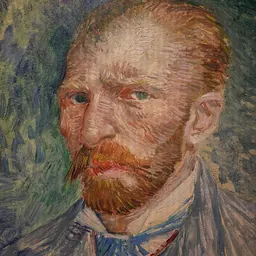
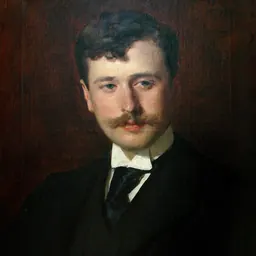
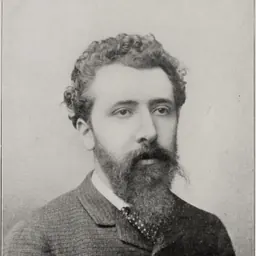
Named in this biography and alive at the same time




Related people
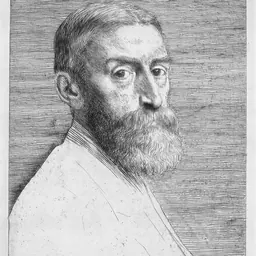
Same field, nearest in time
Contemporaries
People whose lives overlapped Victor Vignon's




Frequently asked questions
Who was Victor Vignon?
French painter (1847-1909)
When was Victor Vignon born?
Victor Vignon was born on 25 December 1847 in Villers-Cotterêts.
When did Victor Vignon die?
Victor Vignon died on 15 March 1909 in Meulan-en-Yvelines.
What was Victor Vignon's occupation?
Victor Vignon was a painter, printmaker and impressionism.
What nationality was Victor Vignon?
Victor Vignon was French.
Sources & further reading
Cite this page
APA: Biography.guide. (2026). Victor Vignon. https://biography.guide/victor-vignon/
MLA: "Victor Vignon." Biography.guide, https://biography.guide/victor-vignon/.
Chicago: "Victor Vignon." Biography.guide. https://biography.guide/victor-vignon/.
Data last updated: 2026-09-22 · Spot an error? Report a correction.
Page generated 2026-09-27 05:20 UTC