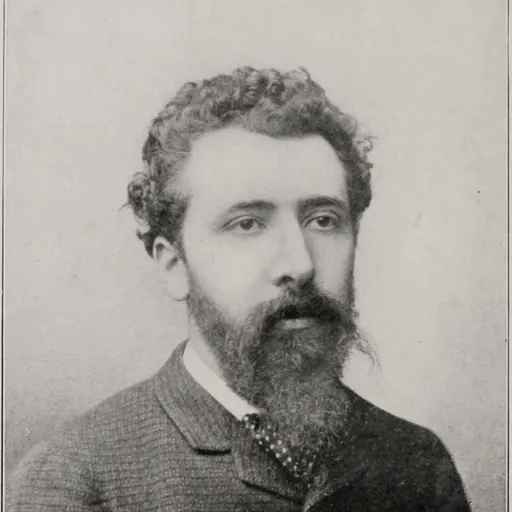
About Georges Seurat
Lived 1859 – 1891 (aged 31). Georges Seurat was a French painter, draftsperson and architectural drafter.
Georges Pierre Seurat ( , ; ; 2 December 1859 – 29 March 1891) was a French post-Impressionist artist. He devised the painting techniques known as chromoluminarism and pointillism and used conté crayon for drawings on paper with a rough surface.
Seurat's artistic personality combined qualities that are usually thought of as opposed and incompatible: on the one hand, his extreme and delicate sensibility, on the other, a passion for logical abstraction and an almost mathematical precision of mind. His large-scale work A Sunday Afternoon on the Island of La Grande Jatte (1884–1886) altered the direction of modern art by initiating Neo-Impressionism, and is one of the icons of late 19th-century painting.
Biography
Family and education Seurat was born on 2 December 1859 in Paris, at 60 rue de Bondy (now rue René Boulanger). The Seurat family moved to 136 boulevard de Magenta (now 110 boulevard de Magenta) in 1862 or 1863. His father, Antoine Chrysostome Seurat, originally from Champagne, was a former legal official who had become wealthy from speculating in property, and his mother, Ernestine Faivre, was from Paris. Georges had a brother, Émile Augustin, and a sister, Marie-Berthe, both older. His father lived in Le Raincy and visited his wife and children once a week at boulevard de Magenta.
Georges Seurat first studied art at the École Municipale de Sculpture et Dessin, near his family's home in the boulevard Magenta, which was run by the sculptor Justin Lequien. In 1878, he moved on to the École des Beaux-Arts where he was taught by Henri Lehmann, and followed a conventional academic training, drawing from casts of antique sculpture and copying drawings by old masters. His formal artistic education came to an end in November 1879, when he left the École des Beaux-Arts for a year of military service.
After a year of infantry training with the 19th Line Regiment, stationed at Brest, north-western France, he returned to Paris where he shared a studio with his friend Aman-Jean, while also renting a small apartment at 16 rue de Chabrol. For the next two years, he worked at mastering the art of monochrome drawing. His first exhibited work, shown at the Salon, of 1883, was a Conté crayon drawing of Aman-Jean. He also studied the works of Eugène Delacroix carefully, making notes on his use of color.
The painting was the inspiration for James Lapine and Stephen Sondheim's musical Sunday in the Park with George and played a significant symbolic role in John Hughes' Ferris Bueller's Day Off.
Later career and personal life
Seurat concealed his relationship with Madeleine Knobloch (or Madeleine Knoblock, 1868–1903), an artist's model whom he portrayed in his painting Jeune femme se poudrant. In 1889, she moved in with Seurat in his studio on the seventh floor of 128 bis Boulevard de Clichy.
When Madeleine became pregnant, the couple moved to a studio at 39 passage de l'Élysée-des-Beaux-Arts (now rue André Antoine). There she gave birth to their son, who was named Pierre-Georges, on 16 February 1890. His last ambitious work, The Circus, was left unfinished at the time of his death.
On 30 March 1891 a funeral Mass was held in the Church of Saint-Vincent-de-Paul.
Colour theory Contemporary ideas
During the 19th century, scientist-writers such as Michel Eugène Chevreul, Ogden Rood and David Sutter wrote treatises on colour, optical effects and perception. They adapted the scientific research of Hermann von Helmholtz and Isaac Newton into a form accessible to laypeople. Artists followed new discoveries in perception with great interest. He heard lectures in the 1880s by the mathematician Charles Henry at the Sorbonne, who discussed the emotional properties and symbolic meaning of lines and colour. There remains controversy over the extent to which Henry's ideas were adopted by Seurat.
Seurat's theories can be summarized as follows: The emotion of gaiety can be achieved by the domination of luminous hues, by the predominance of warm colours, and by the use of lines directed upward. Calm is achieved through an equivalence/balance of the use of the light and the dark, by the balance of warm and cold colours, and by lines that are horizontal. Sadness is achieved by using dark and cold colours and by lines pointing downward. Seurat in his few years of activity, was able, with his observations on irradiation and the effects of contrast, to create afresh without any guiding tradition, to complete an esthetic system with a new technical method perfectly adapted to its expression.
"With the advent of monochromatic Cubism in 1910–1911," writes art historian Robert Herbert, "questions of form displaced color in the artists' attention, and for these Seurat was more relevant. Thanks to several exhibitions, his paintings and drawings were easily seen in Paris, and reproductions of his major compositions circulated widely among the Cubists. The Chahut [Rijksmuseum Kröller-Müller, Otterlo] was called by André Salmon 'one of the great icons of the new devotion', and both it and the Cirque (Circus), Musée d'Orsay, Paris, according to Guillaume Apollinaire, 'almost belong to Synthetic Cubism'."
Paintings
Drawings
Exhibitions
From 1883 until his death, Seurat exhibited his work at the Salon, the Salon des Indépendants, Les XX in Brussels, the eighth Impressionist exhibition, and other exhibitions in France and abroad. Salon, Paris, 1 May–20 June 1883The Salon showed Seurat's drawing of Edmond Aman-Jean. Salon des Indépendants, Paris, 15 May–30 June 1884Seurat showed Une Baignade, Asnières, after the official Salon had rejected it. Seurat's debut as a painter. Salon des Indépendants, Paris, 10 December 1884 – 17 January 1885 Works in Oil and Pastel by the Impressionists of Paris, American Art Association, New York, April and May 1886.Organised by Paul Durand-Ruel. Impressionist exhibition, Paris, 15 May–15 June 1886Un dimanche après-midi à l'Île de la Grande Jatte shown for the first time. Salon des Indépendants, Paris, 21 August–21 September 1886 Les impressionnistes, Palais du Cours Saint-André, Nantes, 10 October 1886 – 15 January 1887 Galerie Martinet, Paris, December 1886 – January 1887 Les XX, Brussels, February 1887 Salon des Indépendants, Paris, 26 March–3 May 1887 Théâtre Libre, Paris, November 1887 – January 1888Works by Seurat, Signac and van Gogh. Exposition de Janvier, La Revue indépendante, Paris, January 1888 Exposition de Février, La Revue indépendante, Paris, February 1888 Hôtel Drouot, Paris, 1–3 March 1888 (sales exhibition) Salon des Indépendants, Paris, 22 March–3 May 1888 Tweede Jaarlijksche Tentoonstelling der Nederlandsche Etsclub, Arti et Amicitiae, Amsterdam, June 1888Drawing Au café concert, lent by Theo van Gogh. Les XX, Brussels, February 1889 Salon des Indépendants, Paris, 3 September–4 October 1889 Salon des Indépendants, Paris, 20 March–27 April 1890Showed Le Chahut, Jeune femme se poudrant and 9 other works. Les XX, Brussels, 7 February–8 March 1891Showed Le Chahut and 6 other paintings. Salon des Indépendants, Paris, 20 March–27 April 1891Showed Le Cirque and four paintings from Gravelines.
Posthumous exhibitions: Solomon R. Guggenheim Collection of Non-Objective Paintings, South Carolina, 1938, Gibbes Memorial Art Gallery Seurat’s Circus Sideshow, 2017, Metropolitan Museum of Art Seurat and the Sea, 2026, Courtauld Gallery
Don’t just read it —
keep it.
Full-length biographies made to live with: read them, listen on the way to work, watch them tonight.
- E-book
- Audio
- Video
Instant download · yours to keep · every purchase keeps this site free
Important facts
more
geo. seurat, Georges Pierre Seurat, Hsiu-la, Zhorzh Sera, geo seuratPeople in Georges Seurat's life
Named in this biography and alive at the same time


Related people
Same field, nearest in time
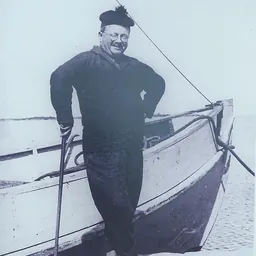
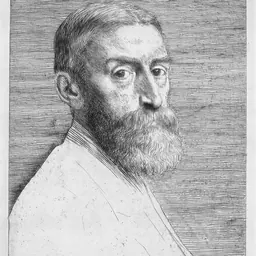


Contemporaries
People whose lives overlapped Georges Seurat's

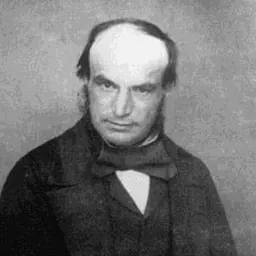
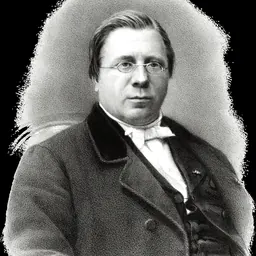

Frequently asked questions
Who was Georges Seurat?
French painter (1859-1891)
When was Georges Seurat born?
Georges Seurat was born on 2 December 1859 in Paris, former 5th arrondissement of Paris.
When did Georges Seurat die?
Georges Seurat died on 29 March 1891 in Paris, boulevard de Magenta.
What was Georges Seurat's occupation?
Georges Seurat was a painter, draftsperson and architectural drafter.
What nationality was Georges Seurat?
Georges Seurat was French.
Sources & further reading
Cite this page
APA: Biography.guide. (2026). Georges Seurat. https://biography.guide/georges-seurat/
MLA: "Georges Seurat." Biography.guide, https://biography.guide/georges-seurat/.
Chicago: "Georges Seurat." Biography.guide. https://biography.guide/georges-seurat/.
Data last updated: 2026-09-22 · Spot an error? Report a correction.
Portrait: Wikimedia Commons · author & licence
Page generated 2026-09-27 05:03 UTC