
About Vicente Lukbán
Lived 1860 – 1916 (aged 56). Vicente Lukbán was a Filipino politician.
Vicente Lukbán y Rilles or Vicente Lucbán Rilles (February 11, 1860 – November 16, 1916) was a Philippine general in the Philippine Republican Army and politician who served as the governor of Tayabas (now Quezon) from 1912 to 1916.
He was also an officer in Emilio Aguinaldo's staff during the Philippine Revolution and the politico-military chief of Samar and Leyte during the Philippine–American War. Some sources credit him as the strategist of the Battle of Balangiga, in which more than 50 American troopers were ambushed and killed.
Early life
Lukbán was born in Labo, Ambos Camarines (now part of Camarines Norte), on February 11, 1860, to Agustin Lukbán of Ambos Camarines and Andrea Rilles of Lucban, Tayabas. He is the brother of Justo Lukbán. He completed his early education at Escuela Pia in Lucban, continued his studies at Ateneo Municipal de Manila, and took up Bachelor of Laws at the University of Santo Tomas and Colegio de San Juan de Letran.
In 1886, he resigned his position as a justice of the peace to form Coorporation Popular, an agricultural and commercial cooperative based in Bicol aimed at promoting the business activities of small and medium scale producers in order to increase their income from the lands by selling their products without passing through middle men. He married Sofía Dízon Barba and the union produced four children: Cecilia, Félix, Agustín, and Vicente Jr. Sofía died after their last child was born. Lukbán then left his children in the care of his siblings so that he could devote his time to the cause of the revolution.
Philippine Revolution
Lukbán had been inducted into Freemasonry, Luz de Oriente ("Light of the Orient") in 1884. The organization had attracted many intellectuals and middle-class Filipinos to its ranks. Part of the profits of the cooperatives were secretly remitted to the revolutionary movement of Andrés Bonifacio, the Katipunan. The cooperative also served as an effective covert means of spreading the ideals of the revolution. Their members could move around freely without arousing the suspicion of the Spanish authorities.
By 1896, Lukbán had centralized the funds of the cooperatives into the coffers of the revolution. He periodically remitted money to the evolving revolutionary movement. At the same time, he acted as an emissary of the Katipunan unit in Bicol to gather information about the Spanish movements in Manila and to determine how such movements affected Bicol provinces. On one of his trips to Manila, he was arrested by the guardia civiles, ("civil guards") and charged with conspiring to overthrow the government, imprisoned in Bilibid prison, and tortured at Fort Santiago. He was released from prison on August 18, 1897. Samar, under Lukbán's leadership, remained one of the few areas of Philippine resistance. American troops encountered few enemies to fight in the open, finding themselves constantly harassed by Philippine soldiers. Some sources credit Lukban as the strategist behind the September 1901 Balangiga massacre, in which more than 50 American troopers were ambushed and killed. Other sources, surmise that, although Lukbán may not have played an actual part in the planning of the attack, he approved the operation which was planned by his Chief of Staff Captain Eugenio Daza.
After two prisoners of war revealed the location of Lukbán's headquarters along the Cadac-an River, Basey, Samar, warning that the fort was impregnable, Major Littleton Waller sent scouts to investigate. On November 17, 1901, Waller attacked with an amphibious assault team up the river, as Captains Hiram Bearss and David Porter attacked by land with forces from Basey and Balangiga. The amphibious assault was thwarted by a carefully laid out ambush by Philippine forces, and Porter attacked alone. The Philippine soldiers retreated when they started to receive heavy machine gun fire from American Gatling guns, leaving scaling ladders behind for the Americans. It was a victory for the Americans, with 30 Philippine soldiers dead. The war on Samar, however, would not truly be over until the rugged interior, controlled by the Pulahanes was conquered.
Lukbán was captured on 18 February 1902 in Catubig, Samar.
Post-captivity
Lukbán's career did not end with his captivity. He was elected governor of Tayabas (now Quezon) in 1912 and re-elected in 1916. He died at his Manila residence on November 16, 1916.
Memorials Camp Lukban, military base of the Philippine Army's 8th Infantry Division (8ID) in Maulong, Catbalogan, Samar, is named after him. A street in Gagalangin, Tondo in Manila is named after him. A species of Philippine lizard, Brachymeles lukbani, is named after him. A monument in honor of him was built inside the Philippine National Police Samar Provincial Office.
Footnotes
Don’t just read it —
keep it.
Full-length biographies made to live with: read them, listen on the way to work, watch them tonight.
- E-book
- Audio
- Video
Instant download · yours to keep · every purchase keeps this site free
Important facts
People in Vicente Lukbán's life
Named in this biography and alive at the same time

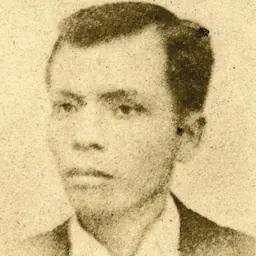
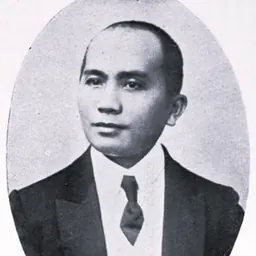
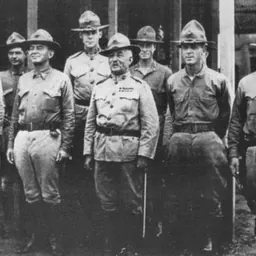

Related people
Same field, nearest in time
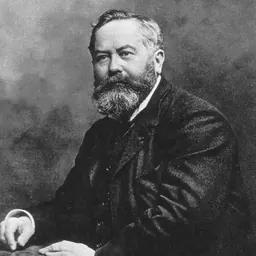




Contemporaries
People whose lives overlapped Vicente Lukbán's



Frequently asked questions
Who was Vicente Lukbán?
Filipino general, revolutionary leader (1860-1916)
When was Vicente Lukbán born?
Vicente Lukbán was born on 11 February 1860 in Labo.
When did Vicente Lukbán die?
Vicente Lukbán died on 16 November 1916 in Manila.
What was Vicente Lukbán's occupation?
Vicente Lukbán was a politician.
What nationality was Vicente Lukbán?
Vicente Lukbán was Filipino.
Sources & further reading
Cite this page
APA: Biography.guide. (2026). Vicente Lukbán. https://biography.guide/vicente-lukban/
MLA: "Vicente Lukbán." Biography.guide, https://biography.guide/vicente-lukban/.
Chicago: "Vicente Lukbán." Biography.guide. https://biography.guide/vicente-lukban/.
Data last updated: 2026-09-20 · Spot an error? Report a correction.
Page generated 2026-09-27 05:19 UTC