
Emilio Aguinaldo
President of the Philippines from 1899 to 1902
About Emilio Aguinaldo
Lived 1869 – 1964 (aged 94). Emilio Aguinaldo was a Filipino politician, autobiographer, military personnel and revolutionary.
Early life and career Emilio Aguinaldo was born on March 22, 1869 (1=The exact date of Aguinaldo's birthdate was March 22, 1869.) It can be seen in National Historical Institute's marker in Aguinaldo Shrine, Kawit, Cavite. The Aguinaldo family was quite well-to-do as his father, Carlos Aguinaldo, was the community's appointed Gobernadorcillo (municipal governor) in the Spanish Viceregal administration. He studied at Colegio de San Juan de Letran, but could not finish his studies due to an outbreak of cholera in 1882. On April 30, 1888, he entered the lottery of the Spanish auxiliary conscription with number 221.
He became a cabeza de barangay in 1893, before the Maura Law called for the reorganization of local governments. At the age of 25, Aguinaldo became Cavite el Viejo's first Gobernadorcillo Capitan Municipal (municipal governor-captain) while he was on a business trip in Mindoro.
Philippine Revolution
President Aguinaldo at Malolos, Bulacan wearing the Rayadillo uniform and in horseback, with the Aguirre sword, a trophy of the Battle of Imus. Circa 1898.
On January 1, 1895, Aguinaldo became a Freemason, joining Pilar Lodge No. 203, Imus, Cavite by the codename "Colon".
On March 7, 1895, Santiago Alvarez, whose father was a Capitan Municipal (Mayor) of Noveleta, encouraged Aguinaldo to join the "Katipunan", a secret organization led by Andrés Bonifacio that was dedicated to the expulsion of the Spanish and the independence of the Philippines through armed force. Aguinaldo joined the organization and used the nom de guerre Magdalo in honor of Mary Magdalene. The local chapter of Katipunan in Cavite was established and named Sangguniang Magdalo, and Aguinaldo's cousin Baldomero Aguinaldo was appointed leader.
The Katipunan-led Philippine Revolution against the Spanish began in the last week of August 1896 in San Juan del Monte (now part of Metro Manila). However, Aguinaldo and other Cavite rebels initially refused to join in the offensive for lack of arms. Bonifacio and other rebels were forced to resort to guerrilla warfare, but Aguinaldo and the Cavite rebels won major victories in carefully planned and well-timed set-piece battles and temporarily drove the Spanish out of their area. On August 31, 1896, Aguinaldo started the assault by beginning as a skirmish to the full-blown revolt Kawit Revolt. He marched with his army of bolomen to the town center of Kawit. Prior to the battle, Aguinaldo had strictly ordered his men not to kill anyone in his hometown. Upon his men's arrival at the town center, the guards, armed with Remingtons and unaware of the preceding events, were caught completely by surprise and surrendered immediately. The guns there were captured by the Katipuneros, and the revolt was a major success for Aguinaldo and his men. Later that afternoon, they raised the Magdalo flag at the town hall to a large crowd of people from Kawit that had assembled after it heard of the city's liberation.
The Magdalo faction of the Katipunan, which also operated in Cavite under Gen. Aguinaldo, used flags similar to those used by the Magdiwang faction and featuring a white sun with a red baybayin symbol for Ka.
The symbol has recently been revived by a breakaway group of army officers to show the end of war with Spain after the peace agreement. The flag became the first official banner of the revolutionary forces and was blessed in a crowd celebrating at Imus. Aguinaldo referred to this flag in his proclamation of October 31, 1896: "Filipino people!! The hour has arrived to shed blood for the conquest of our liberty. Assemble and follow the flag of the Revolution – it stands for Liberty, Equality and Fraternity."
Battle of Imus
In August 1896, as coordinated attacks broke out and sparked the revolution beginning in Manila. Aguinaldo marched from Kawit with 600 men and launched a series of skirmishes at Imus that eventually ended in open hostilities against Spanish troops stationed there. On September 1, with the aid of Captain Jose Tagle of Imus, they laid siege against Imus to draw the Spanish out. A Spanish relief column commanded by Brigadier-General Ernesto de Aguirre had been dispatched from Manila to aid the beleaguered Spanish defenders of Imus. Supported only by 100 troops and by cavalry, Aguirre gave the impression that he had been sent out to suppress a minor disturbance. Aguinaldo and his men counterattacked but suffered heavy losses that almost cost his own life. Despite the success, Aguirre did not press the attack, felt the inadequacy of his troops, and hastened back to Manila to get reinforcements. During the lull in the fighting, Aguinaldo's troops reorganized and prepared for another Spanish attack. On September 3, Aguirre came back with a much larger force of 3,000 men. When Spanish troops arrived at the Isabel II Bridge, they were fired upon by the concealed rebels. The Spanish force was routed, withdrawing in disorder with substantial casualties. Among the abandoned Spanish weapons was Aguirre's sword, which was carried by Aguinaldo in future battles.
Battles of Binakayan–Dalahican
Alarmed by a previous siege, led by General Aguinaldo in Imus, in September 1896, Governor-General Ramón Blanco y Erenas ordered the 4th Battalion of Cazadores from Spain to aid him in quelling the rebellion in Cavite. On November 3, 1896, the battalion arrived carrying a squadron of 1,328 men and some 55 officers.
Biak-na-Bato and exile
The Spanish Army launched an attack that forced the revolutionary forces under Aguinaldo into a retreat. On June 24, 1897, Aguinaldo arrived at Biak-na-Bato, San Miguel, Bulacan, and established a headquarters there in what is now called "Aguinaldo Cave" in Biak-na-Bato National Park. In late October 1897, Aguinaldo convened an assembly of generals at Biak-na-Bato that decided to establish a constitutional republic. A constitution, patterned closely after the Cuban Constitution, was drawn up by Isabelo Artacho and Felix Ferrer and provided for the creation of a Supreme Council composed of a president, a vice president, a Secretary of War, and a Secretary of the Treasury. Aguinaldo was named president.
In March 1897, Fernando Primo de Rivera, 1st Marquis of Estella, the Spanish Governor-General of the Philippines, had been encouraging prominent Filipinos to contact Aguinaldo for a peaceful settlement of the conflict. On August 9, the Manila lawyer Pedro Paterno met with Aguinaldo at Biak-na-Bato with a proposal for peace based on reforms and amnesty. In the succeeding months, Paterno conducted shuttle diplomacy, acting as an intermediary between de Rivera and Aguinaldo. On December 14–15, 1897, Aguinaldo signed the Pact of Biak-na-Bato under which Aguinaldo effectively agreed to end hostilities and to dissolve his government in exchange for amnesty and "₱800,000 (Mexican)" (Aguinaldo's description of the $MXN800,000
Don’t just read it —
keep it.
Full-length biographies made to live with: read them, listen on the way to work, watch them tonight.
- E-book
- Audio
- Video
Instant download · yours to keep · every purchase keeps this site free
Important facts
Family & relationships
People in Emilio Aguinaldo's life
Named in this biography and alive at the same time
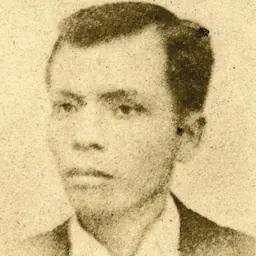

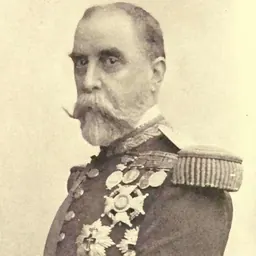
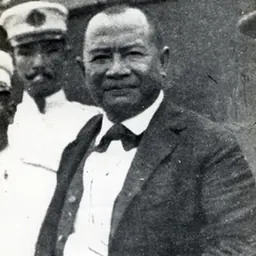


Related people
Same field, nearest in time





Contemporaries
People whose lives overlapped Emilio Aguinaldo's



Frequently asked questions
Who was Emilio Aguinaldo?
President of the Philippines from 1899 to 1902
When was Emilio Aguinaldo born?
Emilio Aguinaldo was born on 22 March 1869 in Kawit.
When did Emilio Aguinaldo die?
Emilio Aguinaldo died on 6 February 1964 in Manila.
What was Emilio Aguinaldo's occupation?
Emilio Aguinaldo was a politician, autobiographer, military personnel and revolutionary.
What nationality was Emilio Aguinaldo?
Emilio Aguinaldo was Filipino.
Sources & further reading
Cite this page
APA: Biography.guide. (2026). Emilio Aguinaldo. https://biography.guide/emilio-aguinaldo/
MLA: "Emilio Aguinaldo." Biography.guide, https://biography.guide/emilio-aguinaldo/.
Chicago: "Emilio Aguinaldo." Biography.guide. https://biography.guide/emilio-aguinaldo/.
Data last updated: 2026-09-20 · Spot an error? Report a correction.
Page generated 2026-09-27 05:24 UTC