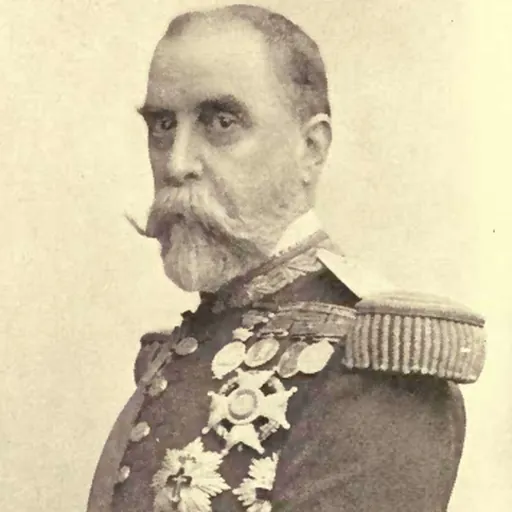
Ramón Blanco y Erenas
Spanish colonial governor, General of Spain
About Ramón Blanco y Erenas
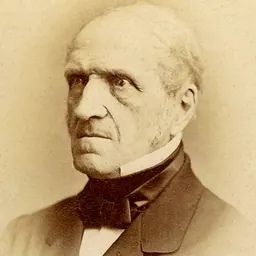
Lived 1833 – 1906 (aged 72). Ramón Blanco y Erenas was a Spanish and Cuban military personnel, politician, governor General of the Philippines and list of colonial governors of Cuba.
Ramón Blanco Erenas Riera y Polo, 1st Marquess of Peña Plata (September 15, 1833 – April 4, 1906) was a Spanish brigadier and colonial administrator. Born in San Sebastián, he was sent to the Caribbean in 1858 and governed Cuba and Santo Domingo. In 1861, he returned to Spain but was then sent to the Philippines (1866–1871).
Afterwards, he returned to Spain and served in the Third Carlist War, where he attained the rank of brigadier. He served as captain-general of Navarre after taking part in the 1876 offensive in the valley of Baztan; he acquired his marquessate during this time. Blanco was forced to deal with the independence movement led by the Katipunan. On the whole, Blanco adopted a conciliatory stance, seeking to improve Spain's image in the face of world opinion. Nevertheless, he placed eight provinces under martial law. These were Manila, Bulacan, Cavite, Pampanga, Tarlac, Laguna, Batangas, and Nueva Ecija. They would later be represented in the eight rays of the sun in the Philippine flag. Arrests and interrogations were intensified and many Filipinos died from torture.
When the revolution broke out, a prominent figure José Rizal was living as a political exile in Dapitan and had just volunteered to serve as a doctor in Cuba, where a similar revolution was taking place. Blanco permitted Rizal, who wished to dissociate himself from the Philippine Revolution, to serve in Cuba to minister to victims of yellow fever. Rizal nevertheless was arrested en route. Blanco could do nothing about it, for he had been forced out of office on December 13. The governor had been attacked by conservative forces (which included the so-called frailocracia—the Dominican friars exercising more power than the civilian government) for being too conciliatory towards the Filipinos who sought independence; these parties had sent a complaint to Madrid. Blanco was replaced by Camilo Polavieja (r. 1896–1897) as Governor-General.
Rizal was executed on December 30, an act to which Blanco objected. After the sinking of the Maine on February 15, 1898, Charles Dwight Sigsbee had written that "many Spanish officers, including representatives of General Blanco, now with us to express sympathy." In a cable, the Spanish Minister of Colonies, Segismundo Moret, had advised Blanco "to gather every fact you can to prove the Maine catastrophe cannot be attributed to us." Blanco proposed a joint Spanish-American investigation of the sinking.
On March 5, 1898, Blanco proposed to Máximo Gómez that the Cuban generalissimo and troops join him and the Spanish army in repelling the United States in the face of the Spanish–American War. Blanco appealed to the shared heritage of the Cubans and Spanish, and promised the island autonomy if the Cubans would help fight the Americans. Blanco had declared: "As Spaniards and Cubans we find ourselves opposed to foreigners of a different race, who are of a grasping nature. ... The supreme moment has come in which we should forget past differences and, with Spaniards and Cubans united for the sake of their own defense, repel the invader. Spain will not forget the noble help of its Cuban sons, and once the foreign enemy is expelled from the island, she will, like an affectionate mother, embrace in her arms a new daughter amongst the nations of the New World, who speaks the same language, practices the same faith, and feels the same noble Spanish blood run through her veins." Gómez refused to adhere to Blanco's plan.
During Blanco's governorship, the remains of Christoper Columbus were moved back to the Cathedral of Seville in Spain, where they were placed on an elaborate catafalque.
Blanco returned to Spain after the end of the Spanish–American War.
Honours Grand Cross of the Military Merit Order, 1874 (Spain) Grand Cross of the Order of the Red Eagle, January 4, 1886 (Kingdom of Prussia)
In popular culture Portrayed by Allan Perez in the 2012 Filipino film, El Presidente. Portrayed by Bon Vibar in the 1998 Filipino film, José Rizal, and the 2014 Filipino film, Bonifacio: Ang Unang Pangulo.
Don’t just read it —
keep it.
Full-length biographies made to live with: read them, listen on the way to work, watch them tonight.
- E-book
- Audio
- Video
Instant download · yours to keep · every purchase keeps this site free
Important facts
People in Ramón Blanco y Erenas's life
Named in this biography and alive at the same time

Related people
Same field, nearest in time


Contemporaries
People whose lives overlapped Ramón Blanco y Erenas's




Frequently asked questions
Who was Ramón Blanco y Erenas?
Spanish colonial governor, General of Spain
When was Ramón Blanco y Erenas born?
Ramón Blanco y Erenas was born on 15 September 1833 in San Sebastián.
When did Ramón Blanco y Erenas die?
Ramón Blanco y Erenas died on 4 March 1906 in Madrid.
What was Ramón Blanco y Erenas's occupation?
Ramón Blanco y Erenas was a military personnel, politician, governor General of the Philippines and list of colonial governors of Cuba.
What nationality was Ramón Blanco y Erenas?
Ramón Blanco y Erenas was Spanish and Cuban.
Sources & further reading
· Wikipedia: Ramón Blanco y Erenas
· DBpedia: Ramón Blanco, 1st Marquess of Peña Plata
Cite this page
APA: Biography.guide. (2026). Ramón Blanco y Erenas. https://biography.guide/ramon-blanco-y-erenas/
MLA: "Ramón Blanco y Erenas." Biography.guide, https://biography.guide/ramon-blanco-y-erenas/.
Chicago: "Ramón Blanco y Erenas." Biography.guide. https://biography.guide/ramon-blanco-y-erenas/.
Data last updated: 2026-09-21 · Spot an error? Report a correction.
Portrait: Wikimedia Commons · author & licence
Page generated 2026-09-27 05:00 UTC