
Veronica Seton-Williams
Australian anthropologist and archaeologist
About Veronica Seton-Williams
Lived 1910 – 1992 (aged 82). Veronica Seton-Williams was an Australian anthropologist and archaeologist, known for Barkhale Camp, Buto and Jericho.
Veronica Seton-Williams (20 April 1910 – 29 May 1992) FSA, was a British-Australian archaeologist who excavated in Egypt and the Near East, as well as in Britain. She studied history and political science at the University of Melbourne and then Egyptology and prehistory at University College London.
Early life and education Marjory Veronica Seton-Williams was born in Melbourne, Australia, the daughter of Seton Gordon Nixon Williams (1856–1927), a lawyer, and Eliza Mary (Ellie) Staughton (1875–1947). As a child she was taught to hunt, and made money selling rabbit pelts. She also learned Judo, which she said came in handy later in life when she was working in the Middle East. Her maternal grandfather was Samuel Staughton.
She was educated at home until 1925 when she attended Clyde Girls Grammar School. In 1934, she graduated from the University of Melbourne with an undergraduate degree in history and political science. During that time she excavated at Maiden Castle, Dorset (1934–1936) with Wheeler, and went on to excavate at Sheikh es-Zuweid at the Sinai Peninsula (1935–1936) with Flinders Petrie, in Palestine and Turkey (1936–1937) with John Garstang, and Tell el-Duweir (1937–1938). She also worked with E. Cecil Curwen on the 1935 excavation of Whitehawk Camp, in Brighton.
She learned to speak Arabic in order to supervise Arab workmen on dig sites. Riots and civil disturbances sometimes disrupted the work and one of her fellow archaeologists, James Starkey, was shot dead.
World War II service During the Second World War, she worked as an ambulance driver and in the Postal Censorship Department and in the British Council's Ministry of Information.
Post war career In 1949, Seton-Williams worked on renewed excavations at Sakçe Gözü, in Turkey, a site previously excavated by John Garstang. In 1956,1960 and 1964, she excavated at Tell Rifa'at in Syria. In 1964, she was appointed field director of the Egypt Exploration Society's excavations at Buto (1964–1968), where she worked alongside Dorothy Charlesworth who became field director in 1969.
She completed her PhD on Syrian Archaeology in 1957.
Seton-Williams taught Egyptian and Mesopotamian archaeology for 25 years at the University of London, during which time she frequently collaborated with colleagues Joan du Plat Taylor and John Waechter on field projects in Cyprus, Syria and Turkey. She also taught Egyptology at the City Literary Institute. She continued to teach until 1977.
Death She was living in Balsham, Cambridgeshire when she died on 29 May 1992.
Published works
She published in English and French.
Books Britain and the Arab States; a survey of Anglo-Arab relations, 1920-1948. London: Luzac, 1948. Ptolemaic Temples. Cambridge: The Author, 1977. Le Tresor de Toutankhamon, la fombe dans la Vallee des rois. Paris: Editions Princesse, 1979. Swan‘s 600-mile Nile cruise handbook. 10th ed. London: Swan (Hellenic), 1980. Les Tresors de Babylone. Paris: Editions Princesse, 1981. Blue Guide to Egypt, with Peter Stocks. London: Benn, 1983. El-Amarna. London: Privately published by the author, 1984. Egyptian Poems. London: Merlin Books, 1987. Egyptian legends and Stories. London: The Rubicon Press, 1988. The Road to El-Aguzein: BlueGuide to Egypt. 2nd ed. London/New York: Kegan Paul International, 1988. A Short History of Egypt. London: The Rubicon Press, 1989. Greek Poems. London: Merlin Books, 1991. Greek Legends and Stories. London: Rubicon, 1993.
Journal articles Third Report on the Excavations at Sakje-Genzi, 1908-1911. with John Garstang and W.J. Phythian-Adams. (1937) Annals of Archaeology and Anthropology. University of Liverpool. XXIV, 119–140. Excavations at the Wadi Dhobai, 1937/38. with J. d' A. Waechter. (1938) Journal of the Palestine Oriental Society. 18,172-85. Neolithic Burnished Wares in the Near East. (1948) Iraq. 10, 34–50. Palestinian Temples. (1949) Iraq. 11, 79–89. The Excavations at Sakce Gozu. with J. du Plat Taylor and J. Waechter. (1950) Iraq. 12, 53–138. Painted Pottery of the Second Millennium from Southern Turkey and Northern Syria. (1953) Iraq. 15, 57–68. Report on the Cilicean Survey. (1954) Journal for Anatolian Studies. 4, 121–174. Preliminary Report on the Excavations at Tell Rifa'at. (1961) Iraq. 23, 68–87. The Tell El-Fara'in Expedition, 1964-1965. (1965) Journal of Egyptian Archaeology. 51, 9–15. The Town of the Cobra Goddess of Lower Egypt. (1966) Archaeology. 19, 208–13. The Tell el-Fara'in Expedition, 1966. (1966) Journal of Egyptian Archaeology. 52, 163–171. The Tell el-Fara'in Expedition. (1966) Journal of Egyptian Archaeology. 53, 146–155. The Excavation at Tell Rifa'at: Second Preliminary Report. (1967) Iraq. 29, 16–33. The Tell El-Fara'in Expedition (1968) Journal of Egyptian Archaeology. 55, 5-22. Review of Treasures of the Cairo Museum by Edward L. B. Terrace and Henry G. Fischer. (1971) The Antiquaries Journal LI, 1971. London: 1970, 338–339. Review of Egypt and the East Mediterranean World, 2200 to 1900 B.C. by William A. Ward. (1974) The Antiquaries Journal, LIV, 1974. Beirut: 1971, 316. Review of Principles of Egyptian Art by Heinrich Schafer. (1978) The Antiquaries Journal, LVIII. English Edition, Oxford 1974, 175.
Don’t just read it —
keep it.
Full-length biographies made to live with: read them, listen on the way to work, watch them tonight.
- E-book
- Audio
- Video
Instant download · yours to keep · every purchase keeps this site free
Important facts
People in Veronica Seton-Williams's life
Named in this biography and alive at the same time


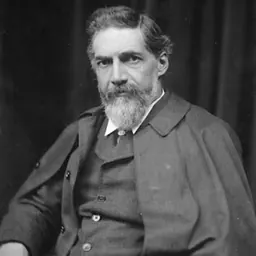
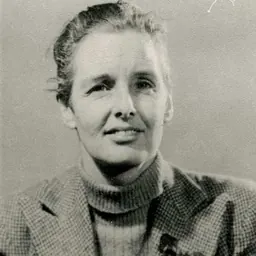



Related people
Same field, nearest in time


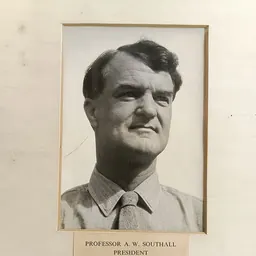
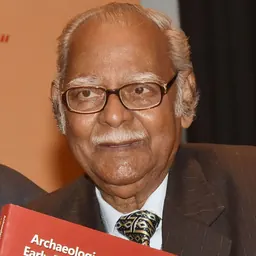
Contemporaries
People whose lives overlapped Veronica Seton-Williams's





Frequently asked questions
Who was Veronica Seton-Williams?
Australian anthropologist and archaeologist (1910-1992)
When was Veronica Seton-Williams born?
Veronica Seton-Williams was born on 20 April 1910 in Melbourne.
When did Veronica Seton-Williams die?
Veronica Seton-Williams died on 29 May 1992 in Jersey, St Helier.
What was Veronica Seton-Williams's occupation?
Veronica Seton-Williams was an anthropologist and archaeologist.
What was Veronica Seton-Williams known for?
Veronica Seton-Williams was known for Barkhale Camp, Buto, Jericho, Maiden Castle, Dorset, Mersin and Sheikh es-Zuweid.
What nationality was Veronica Seton-Williams?
Veronica Seton-Williams was Australian.
Sources & further reading
· Wikipedia: Veronica Seton-Williams
· DBpedia: Veronica Seton-Williams
Cite this page
APA: Biography.guide. (2026). Veronica Seton-Williams. https://biography.guide/veronica-seton-williams/
MLA: "Veronica Seton-Williams." Biography.guide, https://biography.guide/veronica-seton-williams/.
Chicago: "Veronica Seton-Williams." Biography.guide. https://biography.guide/veronica-seton-williams/.
Data last updated: 2026-09-20 · Spot an error? Report a correction.
Page generated 2026-09-27 05:23 UTC