
About B. B. Lal
Lived 1921 – 2022 (aged 101). B. B. Lal was an Indian anthropologist, archaeologist, writer and archaeological Survey of India, known for Indus Valley civilization, Kalibangan and Mahabharat.
Braj Basi Lal (2 May 1921 – 10 September 2022) was an Indian archaeologist, Professor and author. He served as the Director General of the Archaeological Survey of India (ASI) from 1968 to 1972 and has served as Director of the Indian Institute of Advanced Studies, Shimla. Lal also served on various UNESCO committees.
His later publications have been noted and criticised for their historical revisionism, taking a controversial stance in the Ayodhya dispute, claiming to have found the remains of a columned Hindu temple beneath the subsequently destroyed Babri Masjid mosque.
He received the Padma Bhushan Award by the President of India in 2000,
Early life and education Lal was born in Jhansi, Uttar Pradesh, India, on 2 May 1921. Lal obtained his master's degree in Sanskrit from Allahabad University, India.
Career After his studies, Lal developed interest in archaeology and in 1943, became a trainee in excavation under a veteran British archaeologist, Mortimer Wheeler, starting with Taxila,
Archaeological work Between 1950 and 1952, Lal worked on the archaeology of sites accounted for in the Hindu epic Mahabharata, including Hastinapura, the capital city of the Kurus. He made discoveries of many Painted Grey Ware (PGW) sites in the Indo‑Gangetic Divide and upper Yamuna‑Ganga doab.
In Nubia, the Archaeological Survey of India, Lal and his team discovered Middle and Late Stone Age tools in the terraces of the river Nile near Afyeh. The team excavated a few sites at Afyeh and cemetery of C-group people, where 109 graves would be located. Lal worked on the Mesolithic site of Birbhanpur (West Bengal), Chalcolithic site of Gilund (Rajasthan) and Harappan site of Kalibangan (Rajasthan).
In 1975–76, Lal worked on the "Archaeology of Ramayana Sites" project funded by the ASI, which excavated five sites mentioned in the Hindu epic Ramayana – Ayodhya, Bharadwaj ashram, Nandigram, Chitrakoot and Shringaverapur.
Prof. B. B. Lal has published over 20 books and over 150 research papers and articles in national and international scientific journals. while Julian Droogan writes that Lal "has used the term blut und boden [sic], a patriotic connection between one's blood and the soil of one's homeland, in connection with supposed religious continuity in the archaeological record of the subcontinent." Ram Sharan Sharma characterized Lal's later work as driven by communalism and irrationalism, disembodied from "objective and scientific criteria." Irfan Habib exposed a clear case of pseudoarchaeology in his 1997 essay. He cited examples of cover-ups and deliberate re-interpretations B.B. Lal, among others, aimed at constructing a version of Indian history that appealed to Hindutva supporters.
Ayodhya dispute
Lal took a controversial stance in the Ayodhya dispute. Between 1975 and 1980 excavations took place at Ayodhya, with Lal writing in 1977, in the official ASI journal, that finds were "devoid of any special interest." In a seven-page preliminary report submitted to the Archaeological Survey of India (ASI) in 1989, Lal "only mentioned" that his team found "pillar bases," immediately south of the Babri mosque structure in Ayodhya. In 1990, after his retirement, he wrote in a RSS magazine that he had found the remains of a columned temple under the mosque, and "embarked on a spree of lectures all over the country propagating th[is] evidence from Ayodhya." In Lal's 2008 book, Rāma, His Historicity, Mandir and Setu: Evidence of Literature, Archaeology and Other Sciences, he writes (that):
Lal's conclusions have been contested by multiple scholars, questioning both the stratigraphic information and the kind of structure envisioned by Lal. According to Hole,
Hole concludes that "the structural elements he had previously thought insignificant suddenly became temple foundations only in order to manufacture support for the nationalists' cause." This accusation has been countered by KK Mohammed, who was a student archaeologist accompanying BB Lal. KK Mohammed claims that BB Lal didn't highlight his findings related to the issue because temple was not a big issue back then and he didn't want to provoke people. He claims, that after a decade, leftist historians, suo moto gave a statement that BB Lal hadn't found any evidence of temple. This, as per KK Mohammed, forced BB Lal to highlight his earlier findings from excavations. KK Mohammed claims that the criticism of Lal's work in Ayodhya was an attempt by leftist historians in connivance with extremist Muslim groups with a view to mislead Muslims.
Indigenous Aryanism
In his 2002 book, The Saraswati Flows On, Lal rejected the widely accepted Indo-Aryan migration theory, arguing that the Rig Vedic description of the Sarasvati River as "overflowing" contradicts the mainstream view that the Indo-Aryan migration started at ca. 1500 BCE, after the Sarasvati River had dried up. In his book ‘The Rigvedic People: ‘Invaders’? ‘Immigrants’? or Indigenous?’, Lal argues that the Rigvedic People and the authors of the Harappan civilisation were the same, Girish Shahane (14 September 2019), in response to Narasimhan et al. (2019): "Hindutva activists, however, have kept the Aryan Invasion Theory alive, because it offers them the perfect strawman, 'an intentionally misrepresented proposition that is set up because it is easier to defeat than an opponent's real argument' ... The Out of India hypothesis is a desperate attempt to reconcile linguistic, archaeological and genetic evidence with Hindutva sentiment and nationalistic pride, but it cannot reverse time's arrow ... The evidence keeps crushing Hindutva ideas of history." Koenraad Elst (10 May 2016): "Of course, it is a fringe theory, at least internationally, where the Aryan Invasion Theory (AIT) is still the official paradigm. In India, though, it has the support of most archaeologists, who fail to find a trace of this Aryan influx and instead find cultural continuity." Michael Witzel, the "indigenous Aryans" position is not scholarship in the usual sense, but an "apologetic, ultimately religious undertaking."
Awards and honors Awarded the title of Vidyā Vāridhi by the Nava Nālandā Mahāvihāra, Nālandā University in 1979 Awarded the title of Mahāhopādhyāya by Mithila Vishwavidyalaya in 1982 Honorary Fellowship for Life, Asiatic Society of Bengal, 1991 D. Litt. (Honoris Causa) by St. Petersburg Academy of Sciences, Russia, 1994 D. Litt. (Honoris Causa) by the Deccan college, 2014
List of publications
Braj Basi Lal. (1956). Paleoliths from Beas and Banganga Valleys. Ancient India. No.12. pp. 58–92. Braj Basi Lal. (1958). Birbhanpur: Microlith site in Damodar Valley., West Bengal. Ancient India. No..14. pp 4–40. Braj Basi Lal. (1960). From the Megalith to the Harappan: Tracing Back the Graffiti on Pottery, Ancient India. No. 16. Pp 4–24 Braj Basi Lal. (1962) Indian Archaeological Expedition to Qasr Ibrim (Nubia) 1961–62. .
Braj Basi Lal. (2003). Should One Give up All Ethics for Promoting One's Theory? East and West. Vol. 53. . Nos. 1–4. pp285–88.
Braj Basi Lal. (2013) Historicity of the Mahabharata: Evidence of Art, Literature and Archaeology. Aryan Books International. (HB), 978-81-7305-459-4 (PB)
Braj Basi Lal. (2015) Excavations at Kalibangan (1961–69): The Harappans. Archaeological Survey of India. Braj Basi Lal. (2017a) Kauśāmbī Revisited. Aryan Books International Braj Basi Lal. (2017b) Testing Ancient Traditions on the Touchstone of Archaeology. Aryan Books International Braj Basi Lal. (2019) Agony of an Archaeologist. Aryan Books International. BR Mani; Rajesh Lal; Neera Misra; Vinay Kumar (2019) Felicitating a Legendary Archaeology Prof B. B. Lal. Vols. III. BR Publishing Corporation. (Set of 3 Vols.) Braj Basi Lal. (2019). From the Mesolithic to the Mahājanapadas: The Rise of Civilisation in the Ganga Valley. Aryan Books International.
Don’t just read it —
keep it.
Full-length biographies made to live with: read them, listen on the way to work, watch them tonight.
- E-book
- Audio
- Video
Instant download · yours to keep · every purchase keeps this site free
Important facts
People in B. B. Lal's life
Named in this biography and alive at the same time


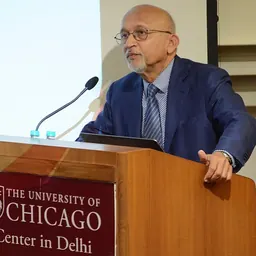


Related people
Same field, nearest in time
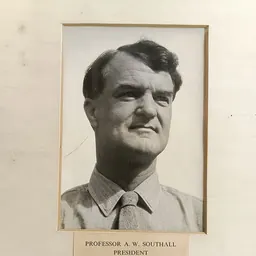


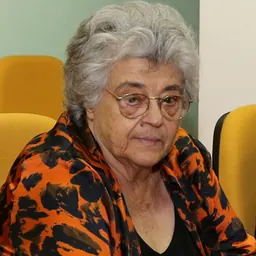

Contemporaries
People whose lives overlapped B. B. Lal's




Frequently asked questions
Who was B. B. Lal?
Indian archaeologist (1921–2022)
When was B. B. Lal born?
B. B. Lal was born on 2 May 1921 in Jhansi.
When did B. B. Lal die?
B. B. Lal died on 10 September 2022 in New Delhi.
What was B. B. Lal's occupation?
B. B. Lal was an anthropologist, archaeologist, writer and archaeological Survey of India.
What was B. B. Lal known for?
B. B. Lal was known for Indus Valley civilization, Kalibangan, Mahabharat and Ramayana.
What nationality was B. B. Lal?
B. B. Lal was Indian.
Sources & further reading
Cite this page
APA: Biography.guide. (2026). B. B. Lal. https://biography.guide/b-b-lal-anthropologist/
MLA: "B. B. Lal." Biography.guide, https://biography.guide/b-b-lal-anthropologist/.
Chicago: "B. B. Lal." Biography.guide. https://biography.guide/b-b-lal-anthropologist/.
Data last updated: 2026-09-26 · Spot an error? Report a correction.
Page generated 2026-09-27 05:15 UTC