
About Ujō Noguchi
Lived 1882 – 1945 (aged 62). Ujō Noguchi was a Japanese composer, poet, lyricist and songwriter.
was a Japanese poet and lyricist of children's songs and traditional Min'yō folk music. He wrote some of the most beloved and familiar pieces for children and youth choirs, such as "Akai Kutsu (Red Shoes)". He, along with Hakushū Kitahara, and Yaso Saijō are considered to be the three great poets and children's songwriters in Japan.
Early life Ujō Noguchi was born or 栄吉, in the former town of Isohara, Ibaraki, which is now incorporated into the central part of Kitaibaraki city. )
After completing his 4-year elementary and 4-year senior elementary schooling in his home town, the teenage Eikichi moved to the capital in 1897, where he attended Tōkyō Middle School. It was there he began composing haiku. He continued on to Tōkyō Senmon Gakkō, the precursor of Tōkyō Senmon Gakkō, where he was mentored by novelist Tsubouchi Shōyō.
The family had earlier arranged a marriage for Eikichi to the daughter of a wealthy financier from Tochigi Prefecture as a way to salvage the languishing family fortune. Eikichi's married in 1904, when both were 23. The marriage was a reluctant one, and was ultimately doomed. He had traveled to Ōdomari with a geisha, where she then ran off with most of his investment capital. He tried to make a profit by shipping a train-car load of apples to Tōkyō, but to his misfortune, the apples had rotted by the time they arrived.
Noguchi moved to , and worked for three other newspapers before moving to Hokkaido. before he left Hokkaido, he returned briefly to his hometown, eventually returning to Tōkyō. Noguchi then took custody of and raised his two children. struck chord with he audience with its melancholic strains, with its use of the pentatonic minor scale (五音短音階). This song was turned into a film in 1923 (Shōchiku studio), the year the 1923 Great Kantō earthquake struck the Kantō area. Another song lyric that Noguchi wrote that year was set to music by Nakamura in 1928, and became the hit song set in the port of the Izu Ōshima island, it was recorded by Chiyako Sato and by tenor Yoshie Fujiwara.
Noguchi's children's pieces have a distinct "lonely, melancholic note" (compared with other songwriters of the period), as evident in such works as (the old nanny was given her leave, younger sister was sent away, I wish I could meet mother again), (why does the crow cry, because it has seven dear children it has left in its old nest in the mountains), (I am a doll from America came to port in Japan, I don't know what I'll do if I lose my way; will the darling girl from Japan play with me?), (When going off to be married, I will be going all alone holding the karakasa umbrella).
Noguchi was one of the major exponents of the "first literary movement for improvised children's tales and children's songs (fairy tales and nursery rhymes)" (童話と童謡を創作する最初の文学的運動), to borrow the oft quoted words from the manifesto of Akai tori (although that publication was not where Noguchi published his works). The movement was part of a tide of liberal reforms to children's literature, art, and music, reacting against what musicologist has called the "moralistic and individuality-suppressing, government-brand type of songs and tunes". The movement was not dismissive of the traditional warabe-uta, but respectful of it. For this reason, educators such as characterize the movement merely as the "creation of new songs infused with the modernist spirit [and] drawing on existing traditions of Japanese folksong and children's song".
Noguchi resurrected the Nihon Minyō Kyōkai in 1935, becoming its chair (note that this is a different group from the eponymous society active today, which was founded in 1950). He traveled widely throughout Japan, composing pieces that were set locally. In January, the Buddhist music society was founded, and Noguchi was selected as a peer. He also had a hand in creating new Buddhist music, and aiding in its propagation. In 1943 he suffered a mild brain hemorrhage, and died in 1945 in the suburbs of Utsunomiya, Tochigi, where he had been evacuated during the bombing of Tokyo in World War II.
Memorials
List of other works
Kogane mushi
Don’t just read it —
keep it.
Full-length biographies made to live with: read them, listen on the way to work, watch them tonight.
- E-book
- Audio
- Video
Instant download · yours to keep · every purchase keeps this site free
Important facts
People in Ujō Noguchi's life
Named in this biography and alive at the same time


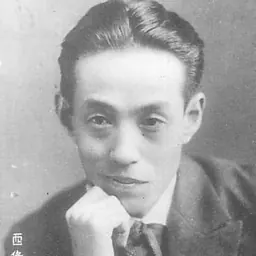
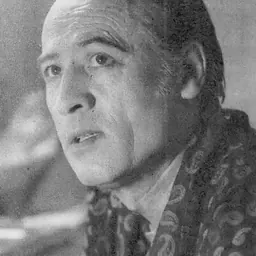
Related people
Same field, nearest in time
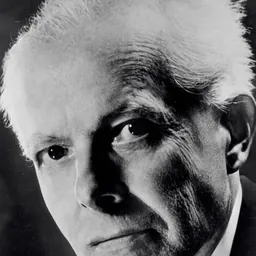



Contemporaries
People whose lives overlapped Ujō Noguchi's




Frequently asked questions
Who was Ujō Noguchi?
Japanese poet and lyricist (1882–1945)
When was Ujō Noguchi born?
Ujō Noguchi was born on 29 May 1882 in Isohara.
When did Ujō Noguchi die?
Ujō Noguchi died on 27 January 1945 in Former Residence of Ujō Noguchi.
What was Ujō Noguchi's occupation?
Ujō Noguchi was a composer, poet, lyricist and songwriter.
What nationality was Ujō Noguchi?
Ujō Noguchi was Japanese.
Sources & further reading
Cite this page
APA: Biography.guide. (2026). Ujō Noguchi. https://biography.guide/ujo-noguchi/
MLA: "Ujō Noguchi." Biography.guide, https://biography.guide/ujo-noguchi/.
Chicago: "Ujō Noguchi." Biography.guide. https://biography.guide/ujo-noguchi/.
Data last updated: 2026-09-20 · Spot an error? Report a correction.
Page generated 2026-09-27 05:33 UTC