
About Torbjörn Caspersson
Lived 1910 – 1997 (aged 87). Torbjörn Caspersson was a Swedish university teacher, geneticist, physicist and biochemist, known for Nucleic acid.
Contributions Caspersson made several key contributions to biology. He provided William Astbury with well prepared samples of DNA for Astbury's pioneering structural measurements. In 1936, in his doctoral thesis in chemistry, presented at the Karolinska Institute in Stockholm, he first studied genetic material inside a cell with an ultraviolet microscope to determine the nucleic acid content of cellular structures such as the nucleus and nucleolus using the Feulgen reaction to stain the DNA. He worked with Jack Schultz in Stockholm from 1937 to 1939 on protein synthesis in cells and published the work in 1939, where he independent of Jean Brachet, working out the same problem using a different technique, found that cells making proteins are rich in ribonucleic acids RNA, implying that RNA is required to make proteins. This was summarised in his book 'Cell Growth and Cell Function' (1950). He received a personal professorship from the Swedish state in 1944. He became head of the newly created department for cell research and genetics at the Medical Nobel Institute, at the Karolinska, in 1945. He was the first to study the giant chromosomes found in insect larvae. He studied the role of the nucleolus in protein synthesis. He examined the relationship between the quantity of heterochromatin (chromosomes with few genes) and the rate of growth of cancer cells. In 1969 when working at the Karolinska Institute, he (with Lore Zech) found that a stain (quinacrine mustard) caused chromosomes to show light and dark lateral bands along their length. This banding method permits the accurate identification of all 22 autosomes and the X and Y chromosomes. This technique highlighted slight structural abnormalities and specific identification of the extra chromosomes involved in conditions such as Down's syndrome (see also cytogenetics).
In 1977 he retired as head of the medical cell research and genetics department at the Karolinska Institute in Stockholm
In 1979 Caspersson was awarded the Balzan Prize for Biology "For his fundamental studies on protein metabolism and nucleic acids, culminating in a method for identifying specific bands on individual chromosomes by ultraviolet microscopy, thereby creating a new tool for the study of evolution" (motivation of the Balzan General Prize Committee). He was a member of both the American Academy of Arts and Sciences and the American Philosophical Society.
Don’t just read it —
keep it.
Full-length biographies made to live with: read them, listen on the way to work, watch them tonight.
- E-book
- Audio
- Video
Instant download · yours to keep · every purchase keeps this site free
Important facts
People in Torbjörn Caspersson's life
Named in this biography and alive at the same time

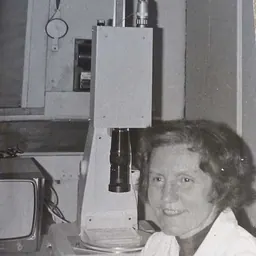

Related people
Same field, nearest in time


Contemporaries
People whose lives overlapped Torbjörn Caspersson's





Frequently asked questions
Who was Torbjörn Caspersson?
Swedish biologist (1910–1997)
When was Torbjörn Caspersson born?
Torbjörn Caspersson was born on 15 October 1910 in Motala parish.
When did Torbjörn Caspersson die?
Torbjörn Caspersson died on 7 December 1997.
What was Torbjörn Caspersson's occupation?
Torbjörn Caspersson was a university teacher, geneticist, physicist and biochemist.
What was Torbjörn Caspersson known for?
Torbjörn Caspersson was known for Nucleic acid.
What nationality was Torbjörn Caspersson?
Torbjörn Caspersson was Swedish.
Sources & further reading
· Wikipedia: Torbjörn Caspersson
· DBpedia: Torbjörn Caspersson
Cite this page
APA: Biography.guide. (2026). Torbjörn Caspersson. https://biography.guide/torbjorn-caspersson/
MLA: "Torbjörn Caspersson." Biography.guide, https://biography.guide/torbjorn-caspersson/.
Chicago: "Torbjörn Caspersson." Biography.guide. https://biography.guide/torbjorn-caspersson/.
Data last updated: 2026-09-20 · Spot an error? Report a correction.
Page generated 2026-09-27 05:18 UTC