
About Tito Livio Zambeccari
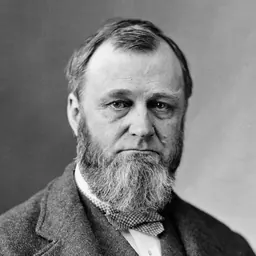
Lived 1802 – 1862 (aged 60). Tito Livio Zambeccari was an Italian naturalist and italian unification.
Tito Livio Zambeccari (30 June 1802 – 2 December 1862) was an Italian soldier and journalist known for his participation in the struggle for Italian unification. He was involved in various wars for liberation and skirmishes that marked the Italian struggle for independence between 1821 and 1860. He was frequently forced into exile by the authorities throughout his life. Between 1826 and 1840, he was active on the side of Liberalism and nationalism in South America where he participated in several major wars, including the Cisplatine War, the Argentine Civil Wars, and the Ragamuffin War.
Zambeccari's courage and commitment to the liberation cause were widely recognized, but nevertheless among more thoughtful comrades he suffered from a reputation as an outspoken and impulsive buffoon. Felice Orsini wrote: "Zambeccari is a very close friend, but be in no doubt that when danger threatens, in those situations where military insight and resolve are needed, it is unfortunately the case that he is useless. That is a great pity, because the man is devoted to his country." and also publishing a "Hymn to Liberty" ("Inno alla libertà") of his own as a fundraiser for the wounded heroes of Ituzaingó, the battle whereby the Cisplatina province effectively secured independence from the Empire of Brazil (though that was an outcome only formally secured, following British mediation / encouragement, eighteen months later through the Treaty of Montevideo, the founding treaty of the independent state of Uruguay).
Later in 1829 Caudillo Juan Manuel de Rosas took power as governor in Buenos Aires, marking the start of what de Rosas characterised as a three-year benevolent dictatorship, and opponents viewed in less charitable terms. Zambeccari left the country, moving now to Porto Alegre in the Brazilian province of Rio Grande do Sul, where he became involved with another liberation movement, backing the separatist "rebel monarchist" Bento Gonçalves da Silva. During the next few years he switched roles frequently, at times a liberation journalist, sometimes a scientific researcher, and at other times working as a private secretary to Gonçalves. According to one commentator, he emerged "as one of the inspirers and theorists of the republican revolution" ("...ad essere uno degli ispiratori e teorici della rivoluzione repubblicana".)
On 4 October 1836, while engaged in combat against the armies of the boy emperor, Zambeccari was captured at the Battle of Fanfa Island and taken prisoner. He was led in chains to a prison ship moored in the harbour at Porto Alegre. Later he was transferred to a more permanent place of detention in the Fortress of Santa Cruz near Rio de Janeiro. He was held as a prisoner of war for slightly more than three years. This put an end to his participation in the fighting, but he was able to remain active, producing a number of geographical maps and watercolour paintings. In addition, he translated into Portuguese a number of political and philosophical works by Félicité de La Mennais and Jean Charles Léonard de Sismondi. Release, when it came, was predicated on a conditional amnesty. On 2 December 1839 Zambeccari was escorted to an English ship and sent back to Europe.
He was landed at Portsmouth and made his way to London. The cause of Italian liberation from (primarily) Austrian domination and/or control was popular with the political class in England, and London was home to a large number of Italian political exiles. Among these, Zambeccari met Giuseppe Mazzini, who had been living in London since 1837. Long before they met, Mazzini had been aware of Zambeccari, whom he regarded as a "republican of integrity" ("un repubblicano integerrimo"). In South America Zambeccari had publicised and promoted Mazzini's Young Italy movement through his journalism, and in London Mazzini was able to express his appreciation of this in person, and to introduce Zambeccari to the principal Italian revolutionaries present in London at the time.
Back in Italy Livio Zambeccari was back in Italy by the end of 1840, but he remained under a ban when it came to any attempt to access territories controlled as part of the Papal States. Before 1860 that included not just Rome but also Romagna including, under arrangements re-instated in 1815, Bologna. Unable to return, even now, to his home city, Zambeccari made his new home between Lucca and Florence, close to the homes of his Tuscan relatives. In Lucca he was staying close to the ducal court, and it was through the intervention with the Papal authorities of Duke Charles Louis that during 1841 Zambeccari was finally permitted to return home to Bologna. In his home city, Count Zambeccari did his best to pass himself off as a lifelong student and scholar with a passion for geography and other natural sciences. Nevertheless, he is of greater interest to subsequent generations of historians because of the way in which throughout (and beyond) the 1840s he participated actively in the events which led to Italian unification. As soon as he arrived in Bologna he established contacts with local Mazzinian and Carbonari groups dedicated, according to the "revolutionary" narrative of the times, to the ending of tyranny and the establishment of constitutional government. He worked closely with Nicola Fabrizi, a fiery and committed leader in the network of risorgimento patriots.
There had been a falling out between Fabrizi and Mazzini, but Fabrizi nevertheless entrusted Zambeccari with a leading role in a revolt that was to be triggered during 1843 by the launch of an insurrection of Sicily and Naples which would then spread to the rest of the Italian peninsular, in ways which would lead to the expulsion of Austrian armies from the central and northern parts of the territory, followed by the creation of a united Italy. Mazzini, despite his own reputation as a manufacturer of poorly thought-through schemes, refused to back Fabrizi's project, highlighting the risk that Sicily was more likely to declare independence than lead a glorious campaign through Italy ending in the achievement of unification. In Bologna, Zambeccari nevertheless played his part as one of the leaders of the so-called "Moti di Savigno", a patriot insurrection launched in the little town of Savigno, some 15 miles outside Bologna. The exercise was a failure, chiefly remembered in retrospect for the brutality with which it was put down. Zambeccari was not one of the 19 participants sentenced to death, but he was banned from the Bologna region.
The installation of Pope Pius IX in June 1846 was marked by the declaration of an amnesty for persons determined to have been convicted for "political crimes" in the Papal states, which took effect on 17 July 1846, a month following the new pope's enthronement. Zambeccari was living in hiding in Tuscany by this time, and as a beneficiary from the amnesty, in July 1846 he took the opportunity to return to Bologna.
The following year Zambeccari and other prominent members of the patriot persuasion found themselves excluded from positions of leadership within the city's newly established "Guardia Civica pontificia" (loosely, "civic guard [in the Papal states]"), modelled on an equivalent body recently established in Rome and created, in response to popular pressure, at the instigation of Cardinal Amat, the conservative and politically astute churchman who at this time was serving as papal legate in Bologna. The creation of this body of (initially 500) men mandated to undertake some of the duties subsequently assigned to police forces a widely welcomed. But there was a striking absence of consensus over what it was for. For moderates, it represented a guarantee of civic freedoms already won while for others it was a potential guarantee of civic freedoms that would be won in the future. For Mazzinians and other risorgimento patriots the popular idea of the "guardia civica" was seen as the creation of a nucleus of a citizen army that might be built up to take in the Austrians and win Italian independence. It was noted that the men who emerged as leaders in the new organisation under the discrete but effective choreography of the cardinal, such as Marco Minghetti, Annibale Ranuzzi and Giuseppe Tanari were all firmly on the "moderate" end of the political spectrum. Mazzinian aspirations were extremely popular in Bologna, however. Faced with a barrage of press criticism and the risk of rioting on the streets (or worse) Amat relented: Zambeccari was appointed to an official leadership position within the "guardia civica". The papal authorities and their representatives in the city nevertheless continued to observe his doings with suspicion, however.
During the first part of April 1848 Zambeccari led his men through the southern districts of the Veneto, passing through Occhiobello, Badia Polesine, Montagnana and the nearby Castle of Bevilaqua. On 9 April 1848, he commandeered the castle (which had not been used for serious military operations for more than three centuries) which he commandeered and used a base from which to launch a rapid series of raids against Austrian military positions. This marked the launch of a regional guerrilla war with which Zambeccari's name would subsequently be associated. By the time the Austrian army arrived ten days later and destroyed what remained of the castle fortifications Zambeccari had moved on, but the guerrilla campaign continued. Following the well-honed tactics of guerrilla warfare, Zambeccari's battalion moved rapidly, avoiding set-piece battles. As the fighting spread the reputation of his "Cacciatori dell’Alto Reno" grew: orders were received from Generals Alberto Ferrero and Alessandro Guidotti that they should defend the strategically important line of the Piave and then withdraw to Treviso, where the city folk had succeeded in expelling the forces of the Austrian garrison the previous month. As they reached Treviso they came across and clashed with Austrian military units. The fighting ended when, under circumstances that would remain controversial, Zambeccari broke off the engagement and fled in the direction of Mestre.
In September 1848 he placed himself at the service of the Republic of San Marco, the break-away region surrounding Venice which achieved a precarious and variable measure of freedom from Austrian control between March 1848 and August 1849. He was able to contribute to General Guglielmo Pepe's rebel/patriot force a group of armed men that had, in the previous few months, more than doubled in size and achieved several significant successes in guerrilla sorties against units of the Austrian army. A couple of months later as the approaching winter heralded a likely break in the fighting, the Papal States were plunged into intensified crisis by the assassination in Rome, on 15 November 1848, of Justice Minister Pellegrino Rossi. Excited mobs took over the city streets, and on 24 November 1848 the pope fled, making for the relative safety of Gaeta, along the coast road to towards Naples. Over the next few weeks, the revolutionary government of what became the so-called Roman Republic emerged. These developments prompted Zambeccari to leave Venice and return home to Bologna. He arrived with his battalion on 22 December 1848: in the pioneering election held on 21 January 1849 "Colonel Zambeccari" (as he was by this time frequently identified) was elected to membership of the short-lived Roman Constitutional Assembly.
1849 In April 1849 Zambeccari was appointed commander in chief ("comandante superiore") in respect of the defence of Ancona. He was supported by approximately 4,000 patriot volunteers from various Italian regions. The political context was one in which, following the declaration of the Roman Republic, the city of Ancona had declared itself independent of papal rule (which was in any case somewhat theoretical as long as the pope was exiled in Gaeta). The Austrians had come to an agreement with the exiled pope and were openly fighting in order to restore the Papal States and return Ancona to them. On the military front, Zambeccari's handling of the Ancona command did not go uncriticised. There were those who found his strategy unnecessarily passive and defensive. Through his chosen strategy he was nevertheless successful in repelling several Austrian attacks, before being obliged to raise the white flag following a heavy bombardment.
Shorter exile: 1849-1854 By the early summer of 1849, as the Austrians systematically rapidly recovered the rebel cities one after another, it was clear that viewed as a war of independence, the Italian uprisings of 1848/49 had failed. On 21 June 1849, after nearly a month of heavy artillery bombardment, Ancona formally surrendered, one of the last cities to do so. Zambeccari had been permitted to leave the previous day. Like many of the risorgimento activists of the '48 generation, he now made his way to Corfu, which had been a designated "British protectorate" since 1815. Daniele Manin and Niccolò Tommaseo were among his more distinguished fellow exiles. As Italian war refugees continued to arrive on the island Zambeccari set about trying to set up a committee to deal with the basic needs of the patriots. His incessant organisational activities aroused the suspicion of the British authorities, however. There were concerns that as an effective liberation activist in Italy and South America - pursuing causes of which British governments tended to approve - Zambeccari might now inflame a corresponding desire for independence among Corfiotes - a cause for which British governments could muster no enthusiasm. So they arrested him. During or before 1851 he was transferred to Patras in neighbouring Greece. Patras, like Corfu, also became home to many fugitive Italian patriots and others. One of these, a man from Naples called Oronzio Spinazolla, was arrested for theft during the first part of 1853, and following interrogation had managed to find himself charged as an accomplice in a (failed) conspiracy to assassinate King Otto. Hoping to ingratiate himself with his interrogators, Spinazolla implicated several of his former comrades from the Austro-Italian wars of 1848/49. At some point during that time Spinazolla had worked in a secretarial capacity of Zambeccari, who was already a relatively well-known - and from some perspectives notorious - member of the exiled Italian community in Patras. Zambeccari was one of those whom Spinazolla implicated. Austrian diplomats, who were not without influence in the fledgling Greek kingdom, seized their opportunity and applied pressure. He was moved on again, this time to Athens and spent several months in prison. It was in 1854 that Zambeccari was, according to at least one source, deported from Greece. Elsewhere it is indicated that he was driven out of Greece by a Cholera epidemic. When first he arrived on Corfu Zambeccari was appalled that almost all of the 1848 Italian veterans he encountered were living in abject penury; he attracted comment by distributing packages of 300 Obols. Soon he became tormented by his own lack of money. For Zambeccari there turned out to be a solution available, however. He was able to sell off, from his Corfiote exile, various assets including, notably, the family estate he had inherited at San Marino di Bentivoglio in the countryside alongside the road from Bologna to Ferrara.
After July 1859 it was clear that, with French military and political backing, Italian unification under the leadership of the Kingdom of Sardinia-Piedmont had been achieved, even if many critical questions as to its extent and character remained unanswered. On 8 October 1859, Livio Zambeccari teamed up with seven influential brother Masons in the region to establish the "Ausonia Lodge" in Turin. On 20 December 1859 that formed the basis for the Grand Orient of Italy, recreating an earlier incarnation of the Grand Orient that had been suppressed in 1814 after French revolutionary idealism (with which Masonry was closely associated at the time) fell abruptly out of favour. Towards the end of 1860 he served briefly as interim Grand Master of the Grand Orient of Italy. He accepted a further appointment to the same position - again on an interim basis - between October 1861 and February 1862. He made a major contribution to reorganising the secret society, earning the plaudit from at least one admirer that he proved himself "the indefatigable proponent of Italian masonic unity". In 1860, in his capacity as a Prince of the Pink Cross of the Ancient and Accepted Scottish Rite ("Principe Rosa-Croce del Rito scozzese antico ed accettato"), Zambeccari founded the "Human Concord Lodge of Bologna" ("loggia Concordia Umanitaria di Bologna"). In 1862 he also became a full member of the "Loggia Osiride" ("Osiris [masonic] lodge") in Turin.
The final two or three years of Zambeccari's life were marred by a series of disappointments. He was also held back by the deteriorating state of his health. In February 1860 he sought election to the Bologna city council but failed to gain election. After the liberation war moved south Zambeccari participated as a volunteer at the Battle of the Volturno, fought in the Naples region early in October 1860. Although the outcome of the battle was indecisive in purely military terms, it quickly became clear that the military and political initiative remained with Garibaldi. At the personal invitation of Garibaldi, whom he had first gotten to know when they were both patriot exiles in South America during the 1830s, Zambeccari accepted a position as inspector-general in the anti-Bourbon "Army of the South" and director of Garibaldi's "Ministry of War". The precarious state of his health forced him to surrender his postings and return to Bologna in November 1860, however. After this, he was, for much of the time, condemned to remain in or close to Bologna. He stayed in touch, as far as possible, with patriot comrades and became involved with the "Amici dei popoli" ("Friends of the people") workers' welfare association. Livio Zambeccari died at Bologna on 2 December 1862.
Don’t just read it —
keep it.
Full-length biographies made to live with: read them, listen on the way to work, watch them tonight.
- E-book
- Audio
- Video
Instant download · yours to keep · every purchase keeps this site free
Important facts
People in Tito Livio Zambeccari's life
Named in this biography and alive at the same time




Related people
Same field, nearest in time



Contemporaries
People whose lives overlapped Tito Livio Zambeccari's





Frequently asked questions
Who was Tito Livio Zambeccari?
Italian patriot (1802–1862)
When was Tito Livio Zambeccari born?
Tito Livio Zambeccari was born on 30 June 1802 in Bologna.
When did Tito Livio Zambeccari die?
Tito Livio Zambeccari died on 2 December 1862 in Bologna.
What was Tito Livio Zambeccari's occupation?
Tito Livio Zambeccari was a naturalist and italian unification.
What nationality was Tito Livio Zambeccari?
Tito Livio Zambeccari was Italian.
Sources & further reading
· Wikipedia: Tito Livio Zambeccari
Cite this page
APA: Biography.guide. (2026). Tito Livio Zambeccari. https://biography.guide/tito-livio-zambeccari/
MLA: "Tito Livio Zambeccari." Biography.guide, https://biography.guide/tito-livio-zambeccari/.
Chicago: "Tito Livio Zambeccari." Biography.guide. https://biography.guide/tito-livio-zambeccari/.
Data last updated: 2026-09-22 · Spot an error? Report a correction.
Page generated 2026-09-27 05:29 UTC