
About Thomas McCulloch
Lived 1776 – 1843 (aged 66–67). Thomas McCulloch was a naturalist.
Thomas McCulloch (September 1775 – September 9, 1843) was a Scottish-born, Presbyterian minister, author, educator, and education reformer. He was the founder and principal of Pictou Academy (pronounced pick-toe) and the first principal of Dalhousie College (now Dalhousie University) from 1838–1843. He is the author of The Stepsure Letters (1821-1823), considered to be the first major work of English Canada humour.
Early life Thomas McCulloch was born in Ferenese in the parish of Neilston in Renfrewshire (now East Renfrewshire), Scotland, the fourth child and second son of Elizabeth Neilson and Michael McCulloch and baptised on September 10, 1775. Michael McCulloch, a master block printer, died at age forty-six, leaving six children, five sons and one daughter, Andrew (d. April 8, 1854), John, Thomas, Mary Elizabeth (1765 – 1860), William (1776 – 1813), and George.
Elizabeth Neilson emigrated along with her family in 1803 to Nova Scotia. John died while sailing from Halifax to Pictou, Nova Scotia, William taught in the school at Pictou, and George, the youngest son, a cabinet maker, also lived in Pictou.
Elizabeth appears to have been a well-loved figure in the family, as Thomas McCulloch's wife, Isabella Walker, writes on Elizabeth's death, Well was it for me that I was blessed with the example and motherly affection of our good old grandmother, in many unthought of trials in the land of strangers, and I fondly hope that the many, many, precious petitions presented at her Father's throne on our behalf will not remain without a special, a powerful return of saving mercy to our souls as a family, and as individuals. We were all near her heart, especially our eternal interests.
Thomas' son, William, writes of his grandmother, Our annual gatherings at her house were a great treat, and nothing remains of our early recollections to dim the brightness of her character.
Little else is known of Thomas McCulloch's life prior to attending university.
Education and early ministry Thomas McCulloch was educated at the University of Glasgow, graduating in 1792. at Whitburn, where he provided classes in Hebrew. At the completion of his studies, he was licensed by the Presbytery of Kilmarnock as a minister in 1799 and was ordained to the Secession Church at Stewarton.
McCulloch was interested in a variety of subjects and had a natural talent as a teacher. His son, William, describes him, In stature Mr. McCulloch was about medium height, slightly built, light and active, and capable of enduring long continued physical strain. He was a clear and deep thinker, the result of combining the study of books with the study of men, and the spirit of the times. In preaching he possessed the faculty of readily grasping the main point of a subject, and connecting it with its varied lines of collateral thought and illustration, and in a style clear, terse, almost proverbial, conveying to the hearer just what he intended to say, nothing more nor less. The least intelligent could easily grasp his meaning, couched as it was in vigorous Saxon, and free from technical or high sounding words and phrases. Even when a lad, as he made some pointed statement of duty, and illustrated it, as was his wont, with a reference to the scenes of common life, the thought came, "Why did I not think of that?" But I did not think of it.
As a preacher, He was quiet in the pulpit, using no gesture to emphasize his message. While such was the character of his ordinary ministrations it was especially at the Lord's table that his power manifested itself, when he seemed to forget everything, but the presence of his Master. His impassioned appeals, his glowing yet chastened eloquence, made the hearer almost feel as though "a door was opened in heaven."
During his studies and early ministry, McCulloch was supported by Rev. David Walker of the "Auld Light" Burgher congregation near Glasgow. It was during this time McCulloch met Walker's daughter, Isabella (1770 – October 9, 1847), and they were married on July 27, 1799 in Eastwood, Renfrewshire. The couple had nine children, three, Michael (1800 – 1881), Helen (1801 – 1875), and Elizabeth (1802 – 1834), were born in Scotland and emigrated with their parents. At 28 years of age, due to "inadequate support" from the congregation and a call for ministers in the British colonies in North America, McCulloch left the congregation and was given an appointment by the Presbyterian church at Prince Edward Island. In August 1803, he and his wife and three children sailed from Clyde, Scotland for the colony. They didn't arrive until November 3 after a "long and stormy" voyage. Ships sailing to the Maritimes from Scotland often first landed in Pictou, Nova Scotia, a location where earlier Scottish settlers established a community.
Because of the weather, having arrived in winter, McCulloch and Walker decided to wait until spring before cross over to PEI. McCulloch's stipend was not paid. As a result, with little food or money, McCulloch spent a great deal of time during this first winter gathering firewood. He also spent time acting as a physician, travelling to outlying areas to provide medical assistance, often by foot and without payment. The family moved to a shared house, and then building a new house, completed in 1806. This house remains as a historic house. In 1807, McCulloch visited Halifax and made a positive impression to the point he was asked to remain as a minister in local church, which he declined. McCulloch remained at Pictou for 35 years.
McCulloch contemporaries, both friend and foe, understood his rhetorical abilities, persuasion, and charm. Halifax's Morning Post in 1839, described McCulloch as "a man of vast mental attainments, and a profound investigator into the mysteries of nature", and "as one of the prominent leading minds that have given Nova Scotia some claim to literary distinction." The Novascotian, at the time edited by Richard Nugent, who was critical of McCulloch, described him as having possessed an original and powerful intellect, which had been strengthened by attainments of a high order, he might, under more auspicious circumstances, have left something that would imperishably have connected his name with literature and science."
In 1824, McCulloch resigned as minister at Pictou to focus more fully on the academy as well as on education in the colony more directly.
A first attempt to raise funds in 1807 resulted in only $1156.00, not enough to start or maintain a school.
Through much controversy, in 1808, McCulloch established a grammar school at Pictou in his home. The school quickly outgrew the home, as it became popular with families outside of Pictou, attracting students from neighbouring PEI and Cape Breton Island, as well as from British colonies in the Caribbean Islands. This led to its expansion, and a separate log building was constructed as the school's first separate building. The school was granted government funding only in 1811; prior to this, its operation relied on subscriptions from local residents. Through the Act to establish Grammar Schools in several Counties and Districts of this Province, Pictou Academy, as part of the "district of Pictou" was provided "the sum of one hundred and fifty pounds, annually, be included in the estimate of the ordinary expenses of the province...for the payment of the masters, tutors, and ushers thereof respectively." Students "shall be taught English grammar, the Latin and Greek languages, orthography, the use of the globes, and the practical branches of the mathematicks, or such other useful learning as may be judged necessary."
In others words, think critically and reason for themselves.
In 1814, with a student body of 30-40 students, the log building was destroyed by fire. McCulloch then turned to the lieutenant governor in Halifax, who provided £100 to rebuild. formally established the Pictou Academy, which "on 25 March 1816 the House passed an 'Act for founding, establishing and maintaining an Academy at Pictou'" in Nova Scotia, receiving royal assent. What was significant in this Act was the condition on which it was founded: it "placed no denominational restrictions on students," though "required an oath of adherence from trustees and teachers to the established churches of England or Scotland."
While continuing to seek an agreement for a nondenominational board and permanent funding, McCulloch also sought degree-granting status for the Academy. This was chiefly stymied due to Lord Dalhousie's desire to create a third school in Halifax, and from opposition from King's College. His understanding of access to education was not simply broken down along sectarian lines; he believed that access to education was also divided by class as well as the contemporary understanding of individual learning,
it had been generally supposed that the person designed for mechanical employment, could derive little advantage from a liberal education. Progress in the arts of civilized life was thus left to that part of society, who, whatever mechanical habits of ingenuity they might acquire, possessed least of that intelligence which is the true basis of improvement.
These views were as much a part of the Scottish Enlightenment as they were to the "preeminence in science of the University of Edinburgh in the late eighteenth century."
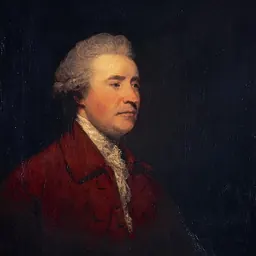
While McCulloch was as ardent an anti-Catholic, as he was against the Anglican church's monopoly on instruction in the colonies, especially in higher education. McCulloch was persuaded by Anglican Bishop, Charles Inglis, to participate in the 1804-10 pamphlet war between Protestants and Catholics in the colonies. McCulloch published the Popery Condemned by Scripture and the fathers (1808) against Edmund Burke, Roman Catholic Vicar General in Halifax, and the pamphlet, Popery again Condemned by Scripture and the fathers (1810). At the same time, he defended the Dissenters from the Anglican Church. In September 1813, he published a letter stating that all Dissenters, who made up the vast majority of the population, Unfortunately for McCulloch, any unity between the Anglican oligarchy and the Dissenters and other Protestant groups was disrupted in his attempt to unite "all Protestant Nonconformists" in an alliance to further their rights in Nova Scotia. For McCulloch, "he cause of liberal education became a key instrument in this new political strategy." The post-US rebellion period in Nova Scotia was difficult, as many thousands of refugees from the 13 colonies, which included hundreds of slaves, arrived in Halifax with little possessions or funds, and a severe housing shortage ensued. Many were held in with suspicion, and in this, McCulloch saw the same signs in Nova Scotia's governance that lead to the rebellion in the 13 Colonies, as well as that of the French Roman Catholics that lead to the French Revolution. McCulloch writes that it was the "irrational, authoritarian culture" of Roman Catholicism in France that lead to "its inevitable denouement in the French Revolution and subsequent Reign of Terror." To avoid a similar result for the province, McCulloch asserted acceptance Nonconformist ideology in a series of newspaper articles as a counter to the rigidity of the Anglican precepts. Students in Nova Scotia could only receive a degree from King's College, the only degree-granting institution, if students accepted the 39 Articles of Faith of the Anglican Church and not attend any Roman Catholic or "dissenting church" services.
For his work, McCulloch was labelled as a Republican and someone who fostered rebellion. This conflict continued for many years and was at the highest levels, directly involving the Archbishop of Canterbury (Patron of King's College) and the British King.
Part of McCulloch's stand was due to financing of education in the colony. The 1811 Grammar School Act and are considered to be the first major work of English Canadian humour. The writings are part political satire and social commentary through humour at the expense of Nova Scotians.
The characters in the letters were archetypes of the people of Nova Scotia of the period. In the style of satire, in Letter 1 (December 22, 1821), for example, he names the local minister, Parson Drone; the police, Constable Catchpole; the banker, Mr. Ledger; and the barman, Mr. Tipple. Parson Drone description: The parson has been long among us, and is a very good sort of man; but, I believe, he has fared very hardly: for though my townsmen all respect him, and are the most active people in the world at selling watches and swapping horses, they have never made themselves richer and, therefore, have little to give but good wishes. But the parson, except when he is angry, is very good-natured and disposed to bear with a great deal; and, having acquired a large fund of patience himself, he has become a quack at comforting, and prescribes it indiscriminately for all sorts of ills. His own life has been spent between starving and preaching; and having no resources himself, it never occurred to him that, for the wants and troubles of others, there can be any remedy but patience.
In 1826, William Oliphant, an Edinburgh publisher, published McCulloch's novella, William and Melville, for which he "seems to have paid thirty guineas," which is approximately $6300.00 CDN (2024).
Death and legacy McCulloch died in Halifax on September 9, 1843 at the age of 67 after a short illness. McCulloch was named a National Historic Person in 1959. His former home in Pictou is now operated as the McCulloch House Museum.
Don’t just read it —
keep it.
Full-length biographies made to live with: read them, listen on the way to work, watch them tonight.
- E-book
- Audio
- Video
Instant download · yours to keep · every purchase keeps this site free
Important facts
People in Thomas McCulloch's life
Named in this biography and alive at the same time




Related people
Same field, nearest in time


Contemporaries
People whose lives overlapped Thomas McCulloch's



Frequently asked questions
Who was Thomas McCulloch?
Canadian naturalist
When was Thomas McCulloch born?
Thomas McCulloch was born in 1776 in Scotland.
When did Thomas McCulloch die?
Thomas McCulloch died on 9 September 1843.
What was Thomas McCulloch's occupation?
Thomas McCulloch was a naturalist.
Sources & further reading
Cite this page
APA: Biography.guide. (2026). Thomas McCulloch. https://biography.guide/thomas-mcculloch-naturalist/
MLA: "Thomas McCulloch." Biography.guide, https://biography.guide/thomas-mcculloch-naturalist/.
Chicago: "Thomas McCulloch." Biography.guide. https://biography.guide/thomas-mcculloch-naturalist/.
Data last updated: 2026-09-20 · Spot an error? Report a correction.
Page generated 2026-09-27 05:23 UTC