
About Niccolò Tommaseo
Lived 1802 – 1874 (aged 71). Niccolò Tommaseo was an Italian linguist, journalist, writer, politician, historian and poet.
Niccolò Tommaseo (; 9 October 1802 – 1 May 1874 ) was a Dalmatian Italian linguist, journalist and essayist, the editor of a (A Dictionary of the Italian Language) in eight volumes (1861–74), of a dictionary of synonyms and other works. He is considered a precursor of the Italian irredentism.
Biography Born at Sebenico (Šibenik),
A friend of Antonio Rosmini, of Vincenzo Monti and of Alessandro Manzoni, in 1825 he met in Florence in the Gabinetto Vieusseux Giacomo Leopardi, but their friendship deteriorated after a short time. In the novel Faith and Beauty (Fede e bellezza, 1840) he describes his love relationship in an oscillation between moralism and eroticism which pushed Manzoni to accuse him of being a public Catholic sinner.
Having moved to Florence in the autumn of 1827, he became a friend of Gino Capponi and soon became one of the important voices in the Antologia. In 1830 appeared the Nuovo Dizionario de' Sinonimi della lingua italiana which confirmed his public reputation. Following the protests of the Austrian government against an article defending the Greek revolution that resulted in the closure of the journal in which he was publishing, he sought voluntary exile in Paris.
During his years in Paris he published the political work Dell'Italia (1835), the volume of verses, Confessioni (1836), the historical fiction Il Duca di Atene (1837), a commentary on the Divine Comedy (1837), and his Memorie Poetiche (1838).
From Paris, he moved to Corsica, where with the support and collaboration of the magistrate and essayist of Bastia, Salvatore Viale, he worked to compile the copious Italian oral traditions of the island, where he claimed to find the purest Italian dialect in the book Canti populari: Canti Corsi.
In Venice he published the first two installments of his novel Fede e Bellezza, praised today as an early example of the psychological novel. His anthology of popular songs, Canti popolari italiani, corsi, illirici, greci (1841) and the Scintille/Iskrice (1842) are rare examples of a metropolitan culture above nationalism.
In 1847, he returned to the journalistic forum, and as an outspoken defender of liberalizing laws for a wholly free press was arrested, causing a scandal: he was freed during the liberal revolution headed by Daniele Manin and assumed responsibilities in the briefly renewed Venetian Republic, which cost him an exile (because accused of Italian irredentist) in Corfù when Habsburg control was reasserted over Lombardy-Venetia. In Corfù, with his eyesight failing, he nevertheless managed to write numerous essays, among which, in Rome et le monde (written in French), he declared, as a good Catholic, the necessity of the Church's relinquishing temporal power in the Papal States. During this time, he abandoned his hopes for the "moderate" road to the Unification of Italy through the House of Savoy.
In 1854, with his sight ever more compromised, he moved to Turin (1854), then once again to Florence (1859), where he took a villa at Settignano. His opposition to the House of Savoy made him refuse all honours, including a seat in the Senate. In his final years he devoted himself to the weighty dictionary of the Italian language, in seven volumes, which was completed in 1874, after his death.
Main works
Don’t just read it —
keep it.
Full-length biographies made to live with: read them, listen on the way to work, watch them tonight.
- E-book
- Audio
- Video
Instant download · yours to keep · every purchase keeps this site free
Important facts
People in Niccolò Tommaseo's life
Named in this biography and alive at the same time
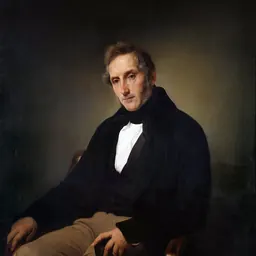
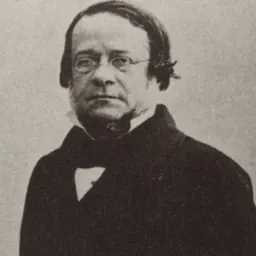
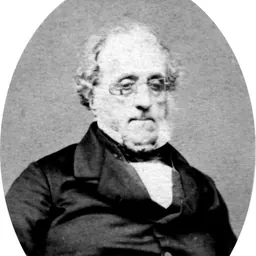

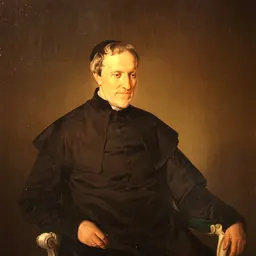
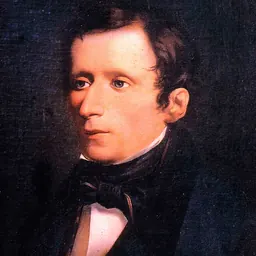
Related people
Same field, nearest in time
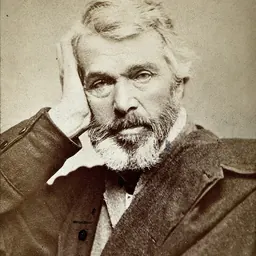
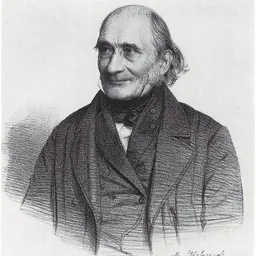
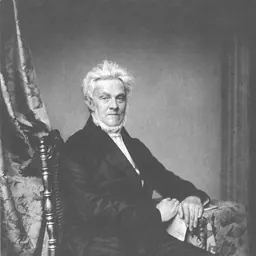

Contemporaries
People whose lives overlapped Niccolò Tommaseo's






Frequently asked questions
Who was Niccolò Tommaseo?
Italian linguist (1802-1874)
When was Niccolò Tommaseo born?
Niccolò Tommaseo was born on 9 October 1802 in Šibenik, Italy.
When did Niccolò Tommaseo die?
Niccolò Tommaseo died on 1 May 1874 in Florence.
What was Niccolò Tommaseo's occupation?
Niccolò Tommaseo was a linguist, journalist, writer, politician, historian and poet.
What nationality was Niccolò Tommaseo?
Niccolò Tommaseo was Italian.
Sources & further reading
Cite this page
APA: Biography.guide. (2026). Niccolò Tommaseo. https://biography.guide/niccolo-tommaseo/
MLA: "Niccolò Tommaseo." Biography.guide, https://biography.guide/niccolo-tommaseo/.
Chicago: "Niccolò Tommaseo." Biography.guide. https://biography.guide/niccolo-tommaseo/.
Data last updated: 2026-09-20 · Spot an error? Report a correction.
Page generated 2026-09-27 05:23 UTC