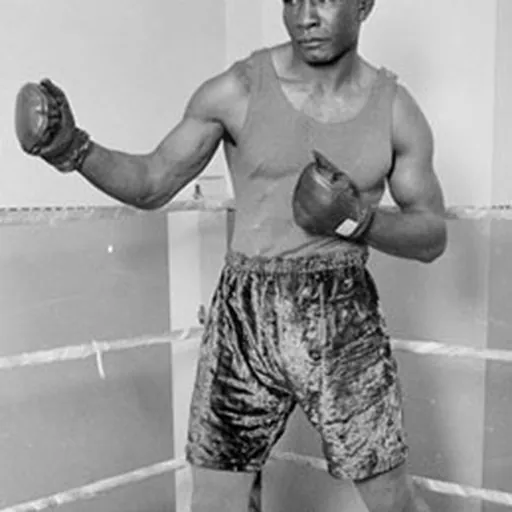
About Tiger Flowers
Lived 1895 – 1927 (aged 32). Tiger Flowers was an American boxer.
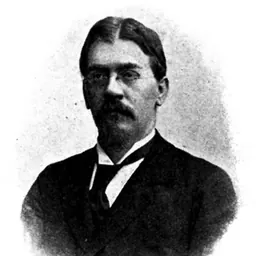
Theodore "Tiger" Flowers (February 14, 1895 – November 16, 1927) was an American professional boxer. Nicknamed "the Georgia Deacon", he rose to prominence in the early 20th century, becoming the first African American world middleweight boxing champion after defeating Harry Greb to claim the title in 1926. He was inducted into Ring magazine's Hall of Fame in 1971, the Georgia Sports Hall of Fame in 1976, the World Boxing Hall of Fame in 1990, and the International Boxing Hall of Fame in 1993. A left-handed fighter, Flowers was fast and elusive, usually avoiding heavy punishment while landing quick, sharp blows.
Flowers is considered a trailblazer of his era, becoming world champion during a time when top-level prizefighting was mostly restricted to white competitors. Flowers has been compared to his predecessors George Dixon, Barbados Joe Walcott, Joe Gans, and Jack Johnson, each of whom had been the first black world champions in their respective weight classes.
Personal life
Early life and family Theodore “Tiger” Flowers was born on February 14, 1895, in Mitchell County, Georgia, to Aaron Flowers (1878–1957) and Lula Dawson Flowers (1875–1949), who had married on December 28, 1888, in the county seat of Camilla.
Flowers was one of six children. His siblings were:
• Uly Smith Flowers (b. 1908, Georgia)
• Cecil Nathan Flowers (b. June 5, 1910, Brunswick, Georgia – d. September 30, 1992, New York City, New York)
• Carl Flowers (b. March 5, 1896, Georgia – d. May 25, 1978, Glynn County, Georgia), a baker and pastry cook who married Bessie Anderson (divorced) and later Viola Farrester
• Gertrude Flowers (b. October 1898, Georgia), mother of Ira Marjorie Johnson with Kinchen Johnson
• O’See Flowers Williams (b. February 11, 1900, Brunswick, Georgia – d. January 13, 1992, Volusia County, Florida), a tutor who married Columbus Williams.
Marriage and children On November 22, 1915, Theodore Flowers married Willie Mae Spellers. The couple had one daughter, Verna Lee Flowers (later Jackson), born on September 9, 1921, in Georgia. Following Theodore Flowers’ death in 1927, Willie Mae and Verna Lee relocated to Los Angeles.
Verna Lee Jackson died on April 18, 2021, at Martin Luther King Jr. Community Hospital in Los Angeles.
Professional career
After working as a stevedore on the Georgia coast, Flowers temporarily relocated to Philadelphia in 1918; this is where he ultimately began boxing professionally at the age of 23.
By early 1920 he started training with manager Walk Miller. Over the next six years the lefthander competed all over the country in a grueling ascent to the top of the boxing ranks.
Flowers combined showmanship inside the ropes with a public persona characterized by sobriety and religious devotion; eventually becoming donned "The Deacon". He famously carried a Bible into the ring for each fight and also shared Scripture. A devoutly religious man, Flowers would recite a passage from Psalm 144 before every bout throughout his career.
Flowers' first bout was a victory over fighter Billy Hooper, which he followed up with an impressive two-dozen straight victories before suffering his first loss to Panama Joe Gans.
Like many other African American boxers of the time period, Flowers found it difficult to obtain fights with white fighters early in his career. He found himself primarily having to fight men of his own race, and many times over, in order to make a living. Despite this, during his era Flowers challenged many high-caliber fighters, including Maxie Rosenbloom, Sam Langford, Kid Norfolk, Johnny Wilson, Jamaica Kid, Mickey Walker and many other future Hall of Fame inductees.
By 1924, after being rated the number-one contender for Harry Greb's middleweight title by The Ring magazine, Flowers earned a shot at Greb; despite previously losing a questionable decision to light heavyweight champion Mike McTigue.
On February 26, 1926, before a crowd of 16,311 at Madison Square Garden in New York, Flowers dethroned champion Harry Greb by split decision. He would also defeat Greb once more on August 19, 1926, in a highly controversial decision, with most claiming Greb clearly won.
Tiger's next and final championship bout came against Mickey Walker on December 3, 1926, in Chicago, where he was defeated for the title. A match decided by points in the end, it was considered a controversial decision in the eyes of many. The match later was investigated by the Illinois Athletic Commission, but the decision was not overturned.
Flowers immediately set his sights on a rematch to regain the title, but his career would be cut short before ever gaining the opportunity.
Flowers' final match, a victory over Leo Gates, was fought November 12, 1927.
Death Flowers was hospitalized in New York City in early November 1927, requiring surgery to remove scar tissue from around his eyes. Complications from the surgery ultimately resulted in his death on November 16, 1927, at age 32. The circumstances of Flowers' death were similar to those of the death of former opponent Harry Greb about a year prior. Greb checked into an Atlantic City clinic for surgery to repair damage to his nose and respiratory tract caused by his ring career and several car crashes. However, complications occurred, and he died of heart failure.
Posthumously, Theodore Flowers was honored as one of the greatest fighters of his era. The International Boxing Research Organization would rank him as number 12 on their list of Greatest Middleweights of All Time. Boxing historian Bert Sugar placed him 68th in his Top 100 Fighters catalog. The Bleacher Report named him the number 6 greatest southpaw in boxing history.
An important figure in Atlanta's black community, Tiger was remembered as a deacon for the Butler Street CME Church and as a member of the lodges of Masons, Elks, and Knights of Pythias. His house on Simpson Road was one of the most luxurious in the city.
Estimates put the number of mourners who turned up to show their respects at around 75,000, and an additional 7,000 crammed the City Auditorium to witness a lavish memorial service. He was laid to rest at Lincoln Cemetery in Atlanta.
Professional boxing record All information in this section is derived from BoxRec, unless otherwise stated.
Official record
All newspaper decisions are officially regarded as "no decision" bouts and are not counted in the win/loss/draw column.
Unofficial record
Record with the inclusion of newspaper decisions to the win/loss/draw column.
Titles in boxing Major world titles NYSAC middleweight champion (160 lbs) NBA (WBA) middleweight champion (160 lbs)
The Ring magazine titles The Ring middleweight champion (160 lbs)
Regional/International titles Southwest middleweight champion (160 lbs)
Undisputed titles Undisputed middleweight champion
Don’t just read it —
keep it.
Full-length biographies made to live with: read them, listen on the way to work, watch them tonight.
- E-book
- Audio
- Video
Instant download · yours to keep · every purchase keeps this site free
Important facts
People in Tiger Flowers's life
Named in this biography and alive at the same time


Related people
Same field, nearest in time




Contemporaries
People whose lives overlapped Tiger Flowers's

Frequently asked questions
Who was Tiger Flowers?
African-American boxer (1895-1927)
When was Tiger Flowers born?
Tiger Flowers was born on 5 August 1895 in Camilla.
When did Tiger Flowers die?
Tiger Flowers died on 16 November 1927 in New York City.
What was Tiger Flowers's occupation?
Tiger Flowers was a boxer.
What nationality was Tiger Flowers?
Tiger Flowers was American.
Sources & further reading
Cite this page
APA: Biography.guide. (2026). Tiger Flowers. https://biography.guide/tiger-flowers/
MLA: "Tiger Flowers." Biography.guide, https://biography.guide/tiger-flowers/.
Chicago: "Tiger Flowers." Biography.guide. https://biography.guide/tiger-flowers/.
Data last updated: 2026-09-21 · Spot an error? Report a correction.
Portrait: Wikimedia Commons · author & licence
Page generated 2026-09-27 05:00 UTC