
Thomas Mathews
British officer of the Royal Navy from Wales
About Thomas Mathews
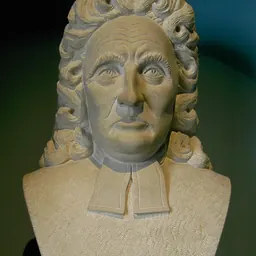
Lived 1676 – 1751 (aged 75). Thomas Mathews was a Welsh and British naval officer, politician, admiral and military personnel.
Admiral of the Blue Thomas Mathews (October 16762 October 1751) was a Royal Navy officer. He joined the navy in 1690 and saw service on a number of ships, including during the Nine Years' War and the War of the Spanish Succession. He interspersed periods spent commanding ships with time at home at the family estate in Llandaff. He distinguished himself with service with Sir George Byng at the Battle of Cape Passaro in 1718, and went on to command squadrons in the Mediterranean and Indian Ocean, before largely retiring from naval service.
Mathews returned to active service in 1741, following Britain's entry to the War of the Austrian Succession, and took command of the fleet in the Mediterranean. The usual difficulties of performing delicate diplomatic duties were further exacerbated by the fact that he was on bad terms with his second in command, Richard Lestock, on whom he relied to manage the fleet. The pivotal moment of his naval career came in 1744, when he attempted to intercept a Franco-Spanish fleet at the Battle of Toulon. The action was fought in confused circumstances, with poor communications and the breakdown of the chain of command. Despite possessing the superior force, Mathews was unable to secure a decisive result, and the enemy were able to escape with the loss of one ship, while Mathews's fleet lost one and had several others badly damaged.
The failure to secure a victory incensed the British public, and a series of courts-martial and a public inquiry led to several officers being cashiered. Mathews' second in command, Lestock, was tried but acquitted, blaming the outcome on Mathews' poor planning and ill-tempered and unwise attack. Mathews was tried and convicted of the charges, and dismissed from the navy. He returned to his estates at Llandaff, before moving to London and dying there in 1751.
Family and early life He was born at Llandaff Court, Llandaff, the son of Colonel Edward Mathews (died 1700), and grandson on his mother's side of Sir Thomas Armstrong (1624–1684) (who was executed in 1684, for his part in the Rye House Plot). Mathews was also a descendant of the Welsh knight Sir David ap Mathew and King Louis VI of France. Mathews joined the navy in 1690, serving aboard , which was then under the command of his uncle, Sir Francis Wheler.
Mathews and Chester were then assigned to the fleet sent to reduce and capture Nova Scotia under Commodore George Martin in 1710, and took over command of the force after Martin's return to England. Admiral Kanhoji Angre of the Malabar Coast. The presence of his ships caused Angre's activity to be much reduced, but their strongholds remained impregnable.
In June 1742, a squadron of Spanish galleys, which had taken refuge in the Bay of Saint-Tropez, was burnt by the fire ships of Mathews' fleet. In the meantime a Spanish squadron had taken refuge in Toulon, and was watched by the British fleet from Hyères. Mathews was promoted to Admiral of the White on 1 March 1743 and again to Admiral of the Blue on 20 August. On 21 February 1744 (N.S., 10 February O.S.) the Spaniards put to sea in company with a French force. Mathews, who had now returned to his flagship, followed, and an engagement took place on 22 and 23 February. The line had still not been formed as night fell, leading Mathews to hoist the signal to come to, intending for his ships to first finish forming the line. The van and centre squadrons did so, but Lestock commanding the rear obeyed the order to come to, without having formed the line. By daybreak on 21 February, the rear of the British fleet was separated by a considerable distance from the van and centre. He regarded the outcome as down to factional party politics, rather than as a reflection on his conduct. Mathews moved to Bloomsbury Square in 1749 and died there on 2 October 1751. He was buried at St George's, Bloomsbury.
Personality Mathews' personality was the subject of particular study during the controversy over Toulon, with his detractors claiming that he was hot-headed, intemperate, and incapable of managing the complex task of commanding a fleet in battle, which had led to the defeat. Horace Walpole, in his correspondence with Sir Horace Mann, noted that "Mathews believes that Providence lives upon beef and pudding, loves prize-fighting and bull-baiting, and drinks fog to the health of Old England." In a speech in the Commons Walpole declared "Mathews remains in the light of a hot, brave, imperious, dull, confused fellow." Mann, who was strongly opposed to how Naples' neutrality had been violated during Mathews' tenure as commander in the Mediterranean, declared "'Tis wonderful how void Admiral Mathews is of common sense, good manners, or knowledge of the world. He understands nothing but Yes or No, and knows no medium." Walpole and his correspondents often referred to Mathews as "Il Furibondo". Despite their criticism, those who knew Mathews personally, while admitting that he could be hot-tempered, described him as "warm-hearted, kindly and affectionate; a clear-sighted magistrate, a capable farmer, and a keen sportsman".
Family and issue Mathews married Henrietta Burgess, of Antigua, in 1705. The couple had a son, Thomas, who became a major in the army. Henrietta died about 1740, and Mathews remarried about 1745, to Millicent Powell.
Don’t just read it —
keep it.
Full-length biographies made to live with: read them, listen on the way to work, watch them tonight.
- E-book
- Audio
- Video
Instant download · yours to keep · every purchase keeps this site free
Important facts
People in Thomas Mathews's life
Named in this biography and alive at the same time




Related people
Same field, nearest in time



Contemporaries
People whose lives overlapped Thomas Mathews's



Frequently asked questions
Who was Thomas Mathews?
British officer of the Royal Navy from Wales (1676-1751)
When was Thomas Mathews born?
Thomas Mathews was born on 1 October 1676 in Glamorgan.
When did Thomas Mathews die?
Thomas Mathews died on 2 October 1751 in London.
What was Thomas Mathews's occupation?
Thomas Mathews was a naval officer, politician, admiral and military personnel.
What nationality was Thomas Mathews?
Thomas Mathews was Welsh and British.
Sources & further reading
Cite this page
APA: Biography.guide. (2026). Thomas Mathews. https://biography.guide/thomas-mathews/
MLA: "Thomas Mathews." Biography.guide, https://biography.guide/thomas-mathews/.
Chicago: "Thomas Mathews." Biography.guide. https://biography.guide/thomas-mathews/.
Data last updated: 2026-09-26 · Spot an error? Report a correction.
Page generated 2026-09-27 05:16 UTC