
Stafford Fairborne
Royal Navy admiral of the fleet;
About Stafford Fairborne
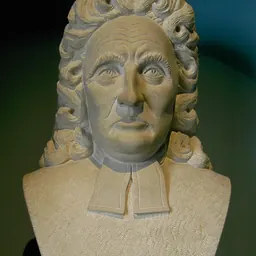
Lived 1666 – 1742 (aged 75–76). Stafford Fairborne was a British naval officer, politician and member of Parliament.
Admiral of the Fleet Sir Stafford Fairborne (1666 – 11 November 1742) was a Royal Navy officer and Whig politician. As a captain he saw action in command of various ships at the Battle of Beachy Head, at the Battle of Barfleur and at the Battle of Lagos during the Nine Years' War.
As a flag officer Fairborne was given command of the inshore squadron in a fleet sent to the Mediterranean during the War of the Spanish Succession. The fleet was defeated at the Battle of Cádiz but later achieved a victory at the Battle of Vigo Bay. He later became Second-in-Command, under Sir Cloudesley Shovell, of the Mediterranean Fleet and was present at the siege and capture of Barcelona. After that he was given command of a squadron sent to La Rochelle and took part in the capture of Ostend.
Fairborne represented Rochester as a Member of Parliament from 1705 to 1710 and also served as a member of the council of the Lord High Admiral (an office vested at that time in Prince George of Denmark).
Early career Born the eldest son of Sir Palmes Fairborne, Governor of Tangiers and Margery Fairborne (née Devereux), Fairborne became a King's letter boy in 1681. Promoted to lieutenant, he commanded the fourth-rate HMS Bonaventure during the captain's illness in a successful encounter with some Salé vessels off Mamora in June 1685 and, after being promoted to commander on 12 July 1686, he was given command of the Salé prize HMS Half Moon later that month.
Promoted to captain on 30 August 1688, Fairborne was given command of the fifth-rate HMS Richmond later that month. The fact that his mother had been left without a pension by the old regime is likely to have made Fairborne a supporter of the Glorious Revolution of November 1688.
Fairborne served as part of the naval brigade under the Duke of Marlborough at the siege of Cork in September 1690 during the Williamite War in Ireland before commanding the third-rate HMS Elizabeth at the Battle of Barfleur in May 1692. In February 1703, he refused a command in the West Indies and, fearing he had been banned by the council of the Lord High Admiral from holding any future command, challenged Admiral George Churchill to a duel: both officers were subsequently arrested. Nothing was heard from Fairborne for a whole month. After refitting at Gothenburg in Sweden the ship returned to England. in February 1706. He was given command of a squadron sent to La Rochelle in May 1706 and took part in the capture of Ostend in June 1706. In each of these actions he was personally involved in dangerous inshore operations and was said to have "courted danger like a mistress".
Fairborne was promoted to full admiral on 7 January 1708 and was returned again for Rochester at the 1708 British general election. He retired as a council member in June 1708, and was promoted to Admiral of the Fleet on 21 December 1708. In Parliament he supported the Whig Ministry voting for the Naturalization of the German Palatines in 1709 but lost his Rochester seat at the general election in 1710 which produced a landslide victory for the Tory party in the wake of the prosecution of Henry Sacheverell which Fairborne had supported. He died on 11 November 1742 and was buried in Westminster Abbey.
Family In June 1694 Fairborne married Dorothy Fane; they had three sons (all of whom predeceased him) and a daughter.
Don’t just read it —
keep it.
Full-length biographies made to live with: read them, listen on the way to work, watch them tonight.
- E-book
- Audio
- Video
Instant download · yours to keep · every purchase keeps this site free
Important facts
People in Stafford Fairborne's life
Named in this biography and alive at the same time


Related people
Same field, nearest in time


Contemporaries
People whose lives overlapped Stafford Fairborne's



Frequently asked questions
Who was Stafford Fairborne?
Royal Navy admiral of the fleet; (1666-1742)
When was Stafford Fairborne born?
Stafford Fairborne was born in 1666.
When did Stafford Fairborne die?
Stafford Fairborne died on 11 November 1742 in London.
What was Stafford Fairborne's occupation?
Stafford Fairborne was a naval officer, politician and member of Parliament.
What nationality was Stafford Fairborne?
Stafford Fairborne was British.
Sources & further reading
· Wikipedia: Stafford Fairborne
Cite this page
APA: Biography.guide. (2026). Stafford Fairborne. https://biography.guide/stafford-fairborne/
MLA: "Stafford Fairborne." Biography.guide, https://biography.guide/stafford-fairborne/.
Chicago: "Stafford Fairborne." Biography.guide. https://biography.guide/stafford-fairborne/.
Data last updated: 2026-09-20 · Spot an error? Report a correction.
Page generated 2026-09-27 05:32 UTC