
About Richard Lestock
Lived 1679 – 1746 (aged 67). Richard Lestock was a British naval officer and admiral.
Admiral of the Blue Richard Lestock (22 February 1679 – 17 December 1746) was a Royal Navy officer who served in the War of the Spanish Succession and War of Austrian Succession. He fought in a number of battles and was a controversial figure, most remembered for his part in the Battle of Toulon and the subsequent court-martial.
Family and early years Lestock is believed to have been born on 22 February 1679, though he may have been born some years previously. He was the second son of Richard Lestock (d. 1713) and his wife, Rebecca (d. 1709). His father had been magistrate for Middlesex, and commander of a number of merchant ships. On 26 December 1690, the father was among those invited by the Admiralty to volunteer for naval service, which he did. On 6 January 1691 Lestock's father was appointed to command HMS Cambridge.
Lestock followed his father into the navy. In April 1701 he was appointed third lieutenant to the Cambridge. A number of postings to different ships then followed, to HMS Solebay, HMS Exeter and then HMS Barfleur. The Barfleur was at this time the flagship of Sir Cloudesley Shovell. Lestock was present with Shovell at the Battle of Málaga. Shovell then promoted him to his first command, and in August 1705 Lestock became master and commander of the fire ship HMS Vulture. Whilst in command of her, he was active ashore at the relief of Barcelona and the capture of Alicante.
Captain of the Fowey and the Panther Lestock took over the command of the 32-gun HMS Fowey on 29 April 1706, and was sent home in September with the news of the surrender of Alicante. On his return he was among those who helped to destroy a 64-gun French warship off Almeria in December that year. He was then ordered to join with Sir George Byng to assist the ground forces in the failed attack on Toulon in 1707. Lestock and the Fowey were then present at the capture of Menorca the following year. The Fowey was sailing from Alicante to Lisbon in April 1709, when on 14 April she was overhauled by two enemy 40-gun frigates. A two-hour battle ensued, after which the outgunned Fowey was forced to surrender. Lestock was exchanged shortly after and returned to England, where he faced a court-martial for the loss of his ship. He was fully acquitted on 31 August 1709. Contrary winds however stopped him sailing until 29 April. Three weeks later Sir Chaloner Ogle was appointed commander-in-chief at Jamaica instead, and a letter was written ordering Lestock to strike his flag and return to Britain. No reason was given. Lestock was dismayed by this snub, writing in a letter from Port Royal on 21 November:My affair being without precedent I cannot say much, but such a fate as I have met with is far worse than death, many particulars of which I doubt not will be heard from me when I shall be able to present myself to my lords of the admiralty. Further humiliation followed when he was twice passed over for flag-rank in 1733 and again in 1734. During this period five captains of lesser seniority were promoted. Despite this apparent stalling of his career, Lestock continued in active service. He was appointed captain of HMS Somerset on 22 February 1734,
Bad weather contrived to delay the sailing for several weeks, and he was unable to join Vice-Admiral Nicholas Haddock's fleet until the end of January 1742. By this time, the ships had been badly damaged by the weather, and many of the crew were ill or had died. Nevertheless, Lestock was promoted to rear-admiral on 13 March 1742. Haddock was forced to return to England a couple of months later due to ill health, leaving Lestock as acting commander-in-chief. Lestock hoped to have the appointment confirmed from England, but was bitterly disappointed to learn that Vice-Admiral Thomas Mathews had been dispatched to take over command. The evidence of the court-martial was not released and confusion over the true events persisted for some time. Robert Beatson decided that Lestock 'shewed a zeal and attention which gives a very advantageous idea of his capacity as a seaman and an officer' whilst John Campbell declared in his Lives of the British Admirals that Lestock 'ought to have been shot'.
Public opinion remained divided, but a song written in the earlier nineteenth century about the heroism of Richard Avery Hornsby, entitled Brave Captain Hornsby references Lestock, depicting him as betraying his friends:
There is an old proverb I've lately thought on, When you think of a friend you're sure to find none; For when that I thought to see Lestock come by, He was five miles a distance, and would not come nigh;
Return to service and last days
On 5 June 1746, just two days after his acquittal he was promoted admiral of the blue and given command of a large squadron. The original plan called for the launching of an assault on Quebec, but an attack on the French port of Lorient was decided instead. Despite planning difficulties, the force was landed and nearly succeeded in taking the city. The result was ultimately a failure and was viewed as such by a disappointed public, but Lestock appears to have acquitted himself well. He hoped to receive an appointment to command a spring expedition to North America, but his health suddenly declined, and he died of a stomach ailment on 13 December 1746. The couple also had a daughter, Elizabeth, who survived her father. In addition, Lestock promoted a man named James Peers to the command of the Kingston at Jamaica on 26 August 1732. Peers was apparently spoken of as Lestock's son-in-law; however there was no mention of him in Sarah's will.
His wife predeceased him on 12 September 1744. Their daughter married James Peacock, a purser in the navy. Lestock seems to have been on bad terms with his family, leaving all of his property to an apothecary, William Monke of London. He also left a bequest to his friend Henry Fox, who had been one of those defending him in the Commons.
Don’t just read it —
keep it.
Full-length biographies made to live with: read them, listen on the way to work, watch them tonight.
- E-book
- Audio
- Video
Instant download · yours to keep · every purchase keeps this site free
Important facts
People in Richard Lestock's life
Named in this biography and alive at the same time


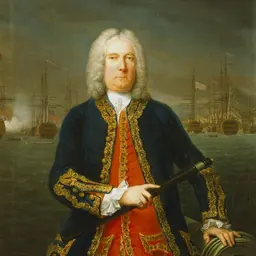
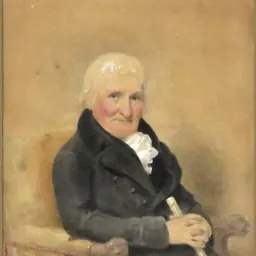
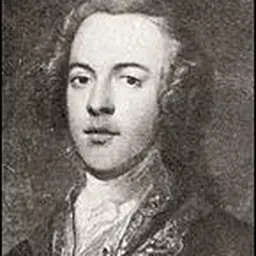


Related people
Same field, nearest in time

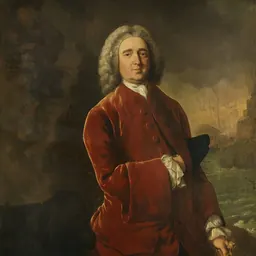

Contemporaries
People whose lives overlapped Richard Lestock's



Frequently asked questions
Who was Richard Lestock?
Royal Navy admiral (1679-1746)
When was Richard Lestock born?
Richard Lestock was born on 22 February 1679 in Portsmouth.
When did Richard Lestock die?
Richard Lestock died on 17 December 1746 in Portsmouth.
What was Richard Lestock's occupation?
Richard Lestock was a naval officer and admiral.
What nationality was Richard Lestock?
Richard Lestock was British.
Sources & further reading
Cite this page
APA: Biography.guide. (2026). Richard Lestock. https://biography.guide/richard-lestock/
MLA: "Richard Lestock." Biography.guide, https://biography.guide/richard-lestock/.
Chicago: "Richard Lestock." Biography.guide. https://biography.guide/richard-lestock/.
Data last updated: 2026-09-20 · Spot an error? Report a correction.
Page generated 2026-09-27 05:32 UTC