
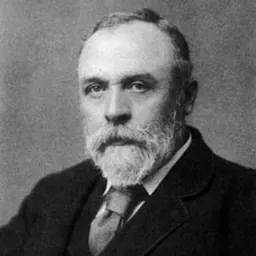
Thomas Griffith Taylor
British geographer, anthropologist and world explorer.
About Thomas Griffith Taylor
Lived 1880 – 1963 (aged 82). Thomas Griffith Taylor was a British explorer, geologist, anthropologist, geographer, polar explorer and glaciologist, known for Terra Nova Expedition.
Thomas Griffith "Grif" Taylor (1 December 1880 – 5 November 1963) was an English-born geographer, anthropologist, explorer, and academic. He was a survivor of Captain Robert Scott's Terra Nova Expedition to Antarctica (1910–1913). Taylor was a senior academic geographer at universities in Sydney, Chicago, and Toronto.
Early life and education Thomas Griffith Taylor was born in the town of Walthamstow, England, to parents James Taylor, a metallurgical chemist, and Lily Agnes, née Griffiths. Within a year after his birth, the family had moved to Serbia, where his father was manager of a copper mine. Three years later, they returned to Britain when his father became director of analytical chemistry for a major steelworks company.
In 1893, the family emigrated to New South Wales Australia, where James secured a position as a government metallurgist. Taylor, age 13, attended The King's School in Sydney.
Early academic career and further study In 1904 Taylor joined the teaching staff at Newington College in Sydney, but was not happy there. He became a demonstrator at Sydney University under Professor David, and in 1906 published his first paper on climatology.
In February 1906 he accompanied Mawson and English geologist Walter Howchin on a trip to the Flinders Ranges in South Australia, which led to Mawson's first work about South Australian geology, submitted to the state government in March 1906. Taylor's research on this expedition, which focused on the Ajax Mine Fossil Reef, led to two published papers on Archaeocyatha, in 1908 and 1910, the latter being a landmark paleontological monograph, in which he acknowledges the work of Mawson and Howchin.
In 1907, Taylor was awarded an 1851 Exhibition Scholarship to Emmanuel College, Cambridge, where he graduated with a B.A. [Research]. He led a second successful expedition in November 1911, this time centering on the Granite Harbour region approximately 50 miles (80 km) north of Butter Point. Meanwhile, Scott led a party of five on a journey to the South Pole, in a race to get there before a rival expedition led by Norwegian Roald Amundsen. They reached the Pole in January 1912, only to find a tent left there by Amundsen containing a dated message informing them that he had reached the Pole 5 weeks earlier. Scott's entire team perished during the return journey, only 11 miles from safety.
In regards to anthropology, Taylor looks at records of hair texture and size, nose size, ear size, cephalic indices, skin color, and height. He links sexual attraction amongst different races to evolved and diverged cultural preferences for beauty. Taylor comes up with the theory of the "tri-peninsular world", in which the world is divided into three peninsulas descending south from a common point in the Arctic (Americas, Europe and Africa, Asia and Australia). In these peninsulas, Taylor finds climate and race similarities. In regards to racial variation within smaller regions, Taylor offers this passage about Europe's races:
The most suitable parts of the world for habitation are, according to Taylor, in Europe, Western Siberia, the Americas, and Eastern China. These are the places that, if not already overcrowded, are where the world's masses must one day move into. Places least adaptable to European styles of agriculture and settlement are considered by Taylor "useless". In the final section of the book Taylor lays out the possibilities of future expansion of the white race, which he sees as the only race which will expand. Though he voices that no Europeans would wish to extinguish or force native people from their lands, "these primitive people are doomed to extinction..." Whites would eventually settle all "useful lands."
Taylor disagreed with theories that put the Nordic race as the apotheosis of mankind. By his theory, Asiatic races would be the most pure. He gives great accolades to the Chinese race. He links Europe's historical accession in the global sphere to command of the seas and easy access to plentiful surface coal.
Taylor takes a seemingly contradictory viewpoint by both decrying miscegenation and saying that white Australian women who married Chinese men were OK to do so. Mixing of more advanced races was, ostensibly, acceptable, while miscegenation with more primitive races was to be abhorred.
All citations are from the book Environment, Race, and Migration.
Move to North America and return to Australia In 1929, he accepted a post as Senior Professor of Geography at the University of Chicago. In 1936 he moved to the University of Toronto founding the Geography department there. During the 1930s, Taylor was co-editor of the German journal on racial studies Zeitschrift fur Rassenkunde, he felt that American scholars were concerned too little with racial classification, and showed an affinity to the works of Baron von Eickstedt. In 2001, an Australian postage stamp commemorated Taylor and fellow explorer Douglas Mawson.
Taylor was the author of some 20 books and 200 scientific articles.
Taylor was portrayed by Terry Kingley in the 1985 Central Television serial The Last Place on Earth.
Don’t just read it —
keep it.
Full-length biographies made to live with: read them, listen on the way to work, watch them tonight.
- E-book
- Audio
- Video
Instant download · yours to keep · every purchase keeps this site free
Important facts
People in Thomas Griffith Taylor's life
Named in this biography and alive at the same time





Related people
Same field, nearest in time
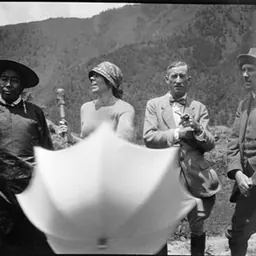


Contemporaries
People whose lives overlapped Thomas Griffith Taylor's

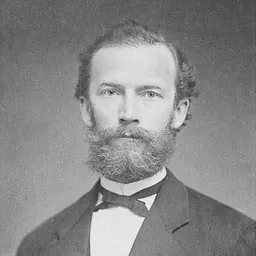

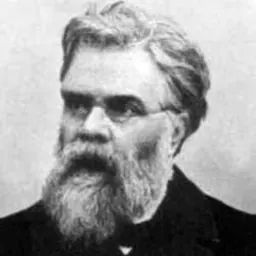
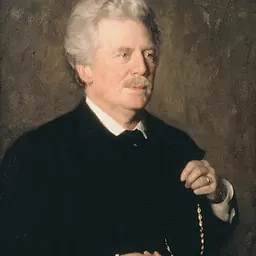
Frequently asked questions
Who was Thomas Griffith Taylor?
British geographer, anthropologist and world explorer. (1880–1963)
When was Thomas Griffith Taylor born?
Thomas Griffith Taylor was born on 1 December 1880 in Walthamstow.
When did Thomas Griffith Taylor die?
Thomas Griffith Taylor died on 5 November 1963 in Manly.
What was Thomas Griffith Taylor's occupation?
Thomas Griffith Taylor was an explorer, geologist, anthropologist, geographer, polar explorer and glaciologist.
What was Thomas Griffith Taylor known for?
Thomas Griffith Taylor was known for Terra Nova Expedition.
What nationality was Thomas Griffith Taylor?
Thomas Griffith Taylor was British.
Sources & further reading
· Wikipedia: Thomas Griffith Taylor
· DBpedia: Thomas Griffith Taylor
Cite this page
APA: Biography.guide. (2026). Thomas Griffith Taylor. https://biography.guide/thomas-griffith-taylor/
MLA: "Thomas Griffith Taylor." Biography.guide, https://biography.guide/thomas-griffith-taylor/.
Chicago: "Thomas Griffith Taylor." Biography.guide. https://biography.guide/thomas-griffith-taylor/.
Data last updated: 2026-09-20 · Spot an error? Report a correction.
Page generated 2026-09-27 05:33 UTC