
Roy Chapman Andrews
American explorer, naturalist, and writer
About Roy Chapman Andrews
Lived 1884 – 1960 (aged 76). Roy Chapman Andrews was an American explorer, paleontologist, writer, zoologist, botanical collector and natural history, known for Paleontology.
Roy Chapman Andrews (January 26, 1884 – March 11, 1960) was an American explorer, adventurer, and naturalist who became the director of the American Museum of Natural History. records their experiences.
In 1920, Andrews began planning for expeditions to Mongolia and drove a fleet of Dodge cars westward from Peking. In 1922, the party discovered a fossil of Paraceratherium (then named "Baluchitherium"), a gigantic hornless rhinocerotoid, which was sent back to the museum, arriving on December 19. The fossil species Andrewsarchus was named after him.
Andrews, along with Henry Fairfield Osborn, was a proponent of the Out of Asia theory of humanity's origins and led several expeditions to Asia from 1922 to 1928 known as the "Central Asiatic Expeditions" to search for the earliest human remains in Asia. The expeditions did not find human remains. However, Andrews and his team made many other finds, including dinosaur bones and fossil mammals and the first nests full of dinosaur eggs ever discovered. He had an accidental injury to his foot when his collecting pistol went off. Andrews' account of these expeditions can be found in his book The New Conquest of Central Asia.
In his preface to Andrews's 1926 book, On the Trail of the Ancient Man, Henry Fairfield Osborn predicted that the birthplace of modern humans would be found in Asia and stated that he had predicted this decades earlier, even before the Asiatic expeditions. Mrs. Yvette Borup Andrews, first wife of Roy Chapman Andrews, feeding Tibetan Bear cub in 1917 On July 13, 1923, the party was the first in the world to discover dinosaur eggs. Initially thought to be eggs of a ceratopsian, Protoceratops, they were determined in 1995 actually to belong to the theropod Oviraptor. During that same expedition, Walter W. Granger discovered a skull from the Cretaceous period. In 1925, the museum sent a letter back informing the party that the skull was that of a mammal, and therefore even more rare and valuable; more were uncovered. Expeditions in the area stopped during 1926 and 1927. In 1928, the expedition's finds were seized by Chinese authorities but were eventually returned. The 1929 expedition was cancelled. In 1930, Andrews made one final trip and discovered some mastodon fossils. A cinematographer, James B. Shackelford, made filmed records of many of Andrews' expeditions. (Sixty years after Andrews' initial expedition, the American Museum of Natural History sent a new expedition to Mongolia on the invitation of its government to continue exploration.) Later that year, Andrews returned to the United States and divorced his wife, with whom he had two sons. He married his second wife, Wilhelmina Christmas, in 1935.
In 1927, the Boy Scouts of America made Andrews an Honorary Scout, a new category of Scout created that year. This distinction was given to "American citizens whose achievements in outdoor activity, exploration and worthwhile adventure are of such an exceptional character as to capture the imagination of boys...". That same year, Andrews was elected to the American Philosophical Society.
Andrews was President of The Explorers Club from 1931 to 1934. In 1934, he became the director of the Natural History museum. In his 1935 book The Business of Exploring, he wrote "I was born to be an explorer...There was never any decision to make. I couldn't do anything else and be happy." In 1942, Andrews retired to North Colebrook, Connecticut. He and Wilhelmina lived on a country estate of 160 acres, "PondOWoods". He wrote most of his autobiographical books of life and adventures here. Around 1958, Andrews moved to Carmel Valley, California. He died on March 11, 1960, of heart failure at Peninsula Community Hospital in Carmel, California. He is buried in Oakwood Cemetery in his hometown of Beloit.
Association with character "Indiana Jones"
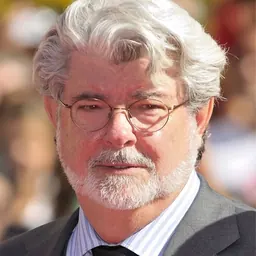
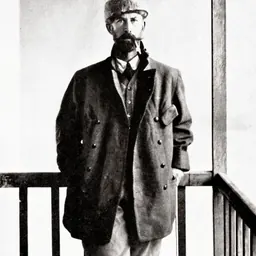
Douglas Preston of the American Museum of Natural History wrote: "Andrews is allegedly the person that the movie character of Indiana Jones was patterned after. However, neither George Lucas nor the other creators of the films have confirmed this. Other candidates have been suggested, including Colonel Percy Fawcett. The 120-page transcript of the story conferences for the movie does not mention Andrews."
An analysis by the Smithsonian Channel concludes that the linkage was indirect, with Andrews (and other explorers) serving as the model for heroes in adventure films of the 1940s and 1950s, who in turn inspired Lucas and his fellow writers.
Don’t just read it —
keep it.
Full-length biographies made to live with: read them, listen on the way to work, watch them tonight.
- E-book
- Audio
- Video
Instant download · yours to keep · every purchase keeps this site free
Important facts
Family & relationships
People in Roy Chapman Andrews's life
Named in this biography and alive at the same time




Related people
Same field, nearest in time


Contemporaries
People whose lives overlapped Roy Chapman Andrews's

Frequently asked questions
Who was Roy Chapman Andrews?
American explorer, naturalist, and writer (1884–1960)
When was Roy Chapman Andrews born?
Roy Chapman Andrews was born on 26 January 1884 in Beloit.
When did Roy Chapman Andrews die?
Roy Chapman Andrews died on 11 March 1960 in Peninsula Community Hospital.
What was Roy Chapman Andrews's occupation?
Roy Chapman Andrews was an explorer, paleontologist, writer, zoologist, botanical collector and natural history.
What was Roy Chapman Andrews known for?
Roy Chapman Andrews was known for Paleontology.
What nationality was Roy Chapman Andrews?
Roy Chapman Andrews was American.
Sources & further reading
· Wikipedia: Roy Chapman Andrews
· DBpedia: Roy Chapman Andrews
Cite this page
APA: Biography.guide. (2026). Roy Chapman Andrews. https://biography.guide/roy-chapman-andrews/
MLA: "Roy Chapman Andrews." Biography.guide, https://biography.guide/roy-chapman-andrews/.
Chicago: "Roy Chapman Andrews." Biography.guide. https://biography.guide/roy-chapman-andrews/.
Data last updated: 2026-09-20 · Spot an error? Report a correction.
Page generated 2026-09-27 05:27 UTC