
About Thomas Baker
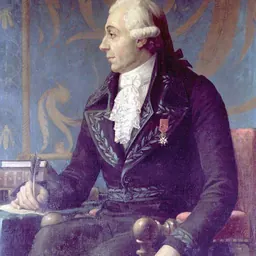
Lived 1771 – 1845 (aged 73–74). Thomas Baker was a British naval officer.
Vice-Admiral Sir Thomas Baker KCB (1771 – 26 January 1845) was a Royal Navy officer who served in the American War of Independence and the French Revolutionary and Napoleonic Wars. He had obtained his own command during the French Revolutionary Wars and was to play a part in bringing about three of the battles of the Napoleonic Wars, the Battle of Copenhagen, the Battle of Trafalgar, and the Battle of Cape Ortegal. He only directly participated in the third, but his actions there, and the capture of the French frigate Didon beforehand brought him honours and rewards.
While towing Didon to a British port, he and another vessel were sighted by the combined Franco-Spanish fleet under Pierre-Charles Villeneuve, and mistaken as scouts for the Channel Fleet. He therefore turned south to Cádiz, leading to the abandonment of the planned invasion of England, and the destruction of the French fleet at Trafalgar by Horatio Nelson some months later. He rose through the ranks after the end of the wars with France, and was commander of the South America Station during Charles Darwin's voyage aboard . He eventually died with the rank of vice-admiral in 1845 after a long and distinguished career.
Early life Baker was born in 1771 in Kent, where his family were residents of Walmer. His naval career began on 23 August 1781 when he joined the storeship as a midshipman, serving in the Downs under Captain John Stone. He sailed out to Halifax with her, and left Hermione on 5 October 1785 when she was paid off. On 12 July he was appointed to command the 28-gun , serving in the Downs under Vice-Admiral Joseph Peyton. He was active against French privateers while in command of Nemesis, capturing the 14-gun Renard in the Channel on 12 January 1800, followed by the Modéré some time later. The commander of the Freja, Captain Krabbe, announced that he would fire on any boat that Baker sent to carry this out. Baker did so anyway and the Danish opened fire, but missed the boat. The shot hit the Nemesis and killed a man. Incensed, Baker ordered a general action and after 25 minutes fighting, subdued the Freja. The Freja and the convoy were escorted into the Downs, where the commander of the station, Vice-Admiral Skeffington Lutwidge, ordered that the Freja continue to fly the Danish colours while the matter was investigated. The negotiations resulted in the British agreeing to repair and return the Freja, leaving the matter of the rights of searching vessels to be determined later. He was assigned to the Channel Fleet under Admiral William Cornwallis, and on 10 August 1805 he came across the 40-gun French frigate off Cape Finisterre. The Phoenix had at this time been altered to resemble from a distance a large sloop of war. The Didon, which was carrying despatches instructing Rear-Admiral Allemand's five ships of the line to unite with the combined Franco-Spanish fleet under Vice-Admiral Pierre-Charles Villeneuve, intercepted the American merchant and from him received news that a 20-gun British frigate was at sea and might be foolish enough to attack the Didon. The Phoenix had 12 killed and 28 wounded, the French sustained losses of 27 killed and 44 wounded. The following day the three ships were sighted by the combined fleet under Villeneuve, heading for Brest and then on to Boulogne to escort the French invasion forces across the Channel. Villeneuve mistook the British ships for scouts from the Channel Fleet, and fled south to avoid an action. A furious Napoleon raged 'What a Navy! What an admiral! All those sacrifices for nought!' The British ships altered their course and made for Plymouth, where they arrived on 3 September, having prevented an attempt by their French prisoners to capture the Phoenix and retake the Didon.
Baker and Cape Ortegal Baker resumed his service in the Bay of Biscay, and on 2 November he was discovered off Cape Finisterre by four French ships of the line under Pierre Dumanoir le Pelley, that had escaped from the destruction of the Franco-Spanish fleet at Trafalgar two weeks previously. They chased the Phoenix southwards, with Baker trying to lure them towards a British squadron he knew to be in the area, under Captain Sir Richard Strachan. He made contact with Strachan's forces later that day, and was sent by Strachan to round up the rest of the scattered squadron while Strachan took the bulk of his force in pursuit. The British eventually closed on the fleeing French on 4 November, whereupon Phoenix joined the other frigates in harassing the French, until Strachan could bring his larger ships in action. The frigates then attacked one side of the French line, with the ships of the line engaging the other, until the French were forced to surrender. He transferred to in May 1806, in which he served in the Bay of Biscay until 1808.
Further rewards followed after the end of the war; he was appointed a Companion of the Bath on 4 June 1815, nominated a Colonel of the Royal Marines on 12 August 1819 and promoted to Knight Commander of the Bath on 8 June 1831. Baker remained in command of the station until 1833. The Baker River (Chile) bears his name. He returned home, was promoted to vice-admiral on 10 January 1837, and died at Walmer on 26 January 1845, at the age of 74.
Don’t just read it —
keep it.
Full-length biographies made to live with: read them, listen on the way to work, watch them tonight.
- E-book
- Audio
- Video
Instant download · yours to keep · every purchase keeps this site free
Important facts
People in Thomas Baker's life
Named in this biography and alive at the same time
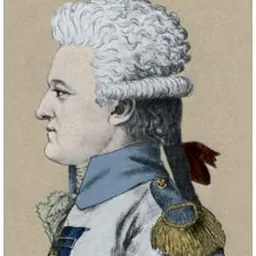
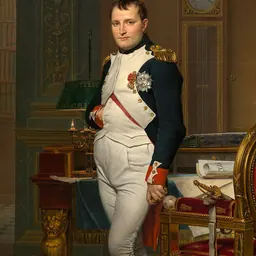




Related people
Same field, nearest in time



Contemporaries
People whose lives overlapped Thomas Baker's



Frequently asked questions
Who was Thomas Baker?
officer of the Royal Navy (1771-1845)
When was Thomas Baker born?
Thomas Baker was born in 1771 in Kent.
When did Thomas Baker die?
Thomas Baker died on 26 January 1845 in Walmer.
What was Thomas Baker's occupation?
Thomas Baker was a naval officer.
What nationality was Thomas Baker?
Thomas Baker was British.
Sources & further reading
· DBpedia: Thomas Baker (Royal Navy officer)
Cite this page
APA: Biography.guide. (2026). Thomas Baker. https://biography.guide/thomas-baker-naval-officer/
MLA: "Thomas Baker." Biography.guide, https://biography.guide/thomas-baker-naval-officer/.
Chicago: "Thomas Baker." Biography.guide. https://biography.guide/thomas-baker-naval-officer/.
Data last updated: 2026-09-20 · Spot an error? Report a correction.
Page generated 2026-09-27 05:34 UTC