
About Charles Darwin
Lived 1758 – 1778 (aged 19). Charles Darwin was a British physician and writer.
Charles Darwin (3 September 1758 – 15 May 1778) was the eldest son of Erasmus Darwin (17311802) and Mary Howard (17401770). He was the uncle of the famous naturalist Charles Darwin (18091882), though he died several years before his nephew was born. He showed considerable promise while studying medicine at the University of Edinburgh but died before completing his studies.
Childhood and classical education A memoir by his father recalled young Charles Darwin as having a precocious interest in science, from infancy being:
Like his father, he had a stammer as a child. In an attempt to cure this by learning the French language, around the end of October 1766 the eight-year-old Charles Darwin was sent to Paris with a private tutor, the Reverend Samuel Dickenson. They travelled, and brought back many aromatic plants of Montpellier from Gouan. Darwin was only allowed to converse in French, and by their return in or possibly after March 1767 he was able to speak fluent French without a stammer, but the problem persisted when he spoke English. He went on to study at Lichfield School which had, in his father's view, an excessive emphasis on the Classics. His mother suffered from a long illness, and died on 30 July 1770. Erasmus showed deep distress, but was resilient and after about a year found another partner. Charles continued to show impressive abilities as he grew up. He made friends with some of his father's fellow members of the Lunar Society, including William Small and Matthew Boulton. About the end of April, Mr. Darwin had employed the greatest part of a day in accurately dissecting the brain of a child which had died of hydrocephalus, and which he had attended during its life. That very evening he was seized with severe head-ach. This, however, did not prevent him from being present in the Medical Society, where he mentioned to Dr. Duncan the dissection he had made, and promised the next day to furnish him with an account of all the circumstances in writing. But the next day, to his headach there supervened other febrile symptoms. And, in a short time, from the hemorrhagies, petechial eruption, and foetid loose stools which occurred, his disease manifested a very putrescent tendency.
The clinical picture described here, particularly the petechial haemorrhages, strongly supports a diagnosis of meningococcal disease.
Charles Darwin was buried in the family vault of his professor and mentor, Andrew Duncan MD, in the Burying Ground of the Parish Church of St Cuthbert's chapel of ease (later renamed Buccleuch Parish Church),
Publication of work Erasmus translated his son's graduating dissertation from Latin into English, and had it together with the gold medal winning dissertation published in Lichfield in book form in 1780 as Experiments establishing a criterion between mucaginous and purulent matter. And an account of the retrograde motion from the absorbent vessels of animal bodies in some diseases. The author's name was shown as Charles Darwin, and Erasmus wrote a short memoir as an appendix, including the description of his son's childhood shown above.
In October 1825 the brothers Eras and Charles went to Edinburgh University, and in January they visited "the old Dr. Duncan", Charles wrote home "What an extraordinary old man he is, now being past 80, & continuing to lecture", though Dr. Hawley, who had shown them round the city, thought Duncan was now failing. In an 1879 biographical sketch of his grandfather Erasmus Darwin, he outlined his uncle's life, and said that "Professor Andrew Duncan, in whose family vault Charles was buried, cut a lock of hair from the corpse, and took it to a jeweller, whose apprentice, afterwards the famous Sir H. Raeburn, set it in a locket for a memorial. The venerable professor spoke to me about him with the warmest affection forty-seven years after his death, when I was a young medical student in Edinburgh."
Don’t just read it —
keep it.
Full-length biographies made to live with: read them, listen on the way to work, watch them tonight.
- E-book
- Audio
- Video
Instant download · yours to keep · every purchase keeps this site free
Important facts
People in Charles Darwin's life
Named in this biography and alive at the same time

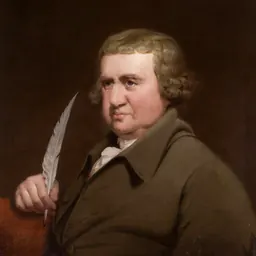
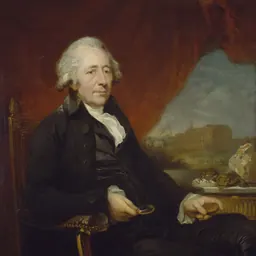
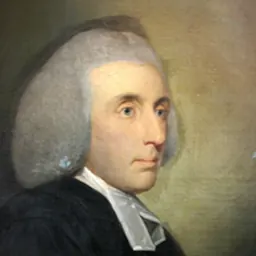


Related people
Same field, nearest in time



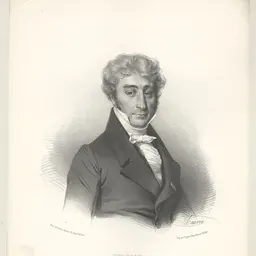

Contemporaries
People whose lives overlapped Charles Darwin's




Frequently asked questions
Who was Charles Darwin?
oldest son of Erasmus Darwin and uncle of the naturalist Charles Darwin
When was Charles Darwin born?
Charles Darwin was born on 3 September 1758 in Lichfield.
When did Charles Darwin die?
Charles Darwin died on 15 May 1778.
What was Charles Darwin's occupation?
Charles Darwin was a physician and writer.
What nationality was Charles Darwin?
Charles Darwin was British.
Sources & further reading
· DBpedia: Charles Darwin (medical student)
Cite this page
APA: Biography.guide. (2026). Charles Darwin. https://biography.guide/charles-darwin-physician/
MLA: "Charles Darwin." Biography.guide, https://biography.guide/charles-darwin-physician/.
Chicago: "Charles Darwin." Biography.guide. https://biography.guide/charles-darwin-physician/.
Data last updated: 2026-09-20 · Spot an error? Report a correction.
Page generated 2026-09-27 05:21 UTC