
About Thomas Albert Andrew Becker
Lived 1832 – 1899 (aged 66). Thomas Albert Andrew Becker was an American catholic priest and catholic bishop.
Thomas Albert Andrew Becker (né Baker; December 30, 1832 – July 29, 1899) was an American prelate of the Catholic Church. He served as the first Bishop of Wilmington (1868–1886) and the sixth Bishop of Savannah (1886–1899).
Early life and education Becker was born Thomas Baker on December 30, 1832, in Pittsburgh, Pennsylvania. He was the second of five children of John and Susan (née Walker) Baker. His parents were natives of County Down, Ireland, who had immigrated to the United States in 1831 and settled in Pittsburgh, where his father operated a hardware store. In 1842, the family moved to a farm in Findley Township in Mercer County. He later attended the Western University of Pennsylvania (now the University of Pittsburgh) until 1849, when a fire destroyed the university's building. He then briefly attended the newly established Allegheny Institute (now Avery College). In 1850, he enrolled at St. Xavier College in Cincinnati, Ohio, where his older brother Samuel was a student. A year later, however, he left Cincinnati and accepted a teaching position at Martinsburg Academy in Martinsburg (then part of Virginia). At the academy, one of his pupils was John Joseph Kain.
Conversion and name change Becker was raised as a Presbyterian. Thomas later converted as well, receiving a conditional baptism on May 22, 1853, from Father Andrew Talty in Winchester. He was confirmed by Bishop John McGill on November 6, 1853.
At a Requiem Mass for Becker in 1899, Bishop John Samuel Foley recounted the story behind Becker's conversion:
According to one of Becker's nephews, Samuel and Thomas's conversion led their father to disown them and demand them to change their last name. Both Samuel and Thomas adopted the Germanized name Becker at their Catholic baptism.
Priesthood In 1855, two years after his conversion, Becker was sent to study for the priesthood at the Pontifical Urban College for the Propagation of the Faith in Rome. During his time there, he once delivered an address to Pope Pius IX in Gaelic. Becker was ordained a priest on June 18, 1859, by the Cardinal Vicar, Costantino Patrizi Naro, at the Lateran Basilica. Later that summer, he received the degree of Doctor of Divinity from the Urban College.
Upon his return to the United States in 1859, Becker served as an assistant at St. Peter's Cathedral in Richmond. In 1860, he was appointed pastor of St. Joseph's Church in Martinsburg, where he succeeded Father Talty (who had baptized him). He oversaw the completion of the church, which was dedicated by Bishop McGill in September 1860.
Civil War During the Civil War, Becker was a strong supporter of the Confederate States of America. He reportedly passed military intelligence to General Stonewall Jackson and helped Colonel John S. Mosby evade capture by Union soldiers. The basement of Becker's church in Martinsburg was used as a stable by Union soldiers, while the sacristy was used to hold prisoners of war. Archbishop Francis Kenrick of Baltimore wrote to President Abraham Lincoln on Becker's behalf on March 13, explaining that only a bishop was authorized to make changes to the Catholic liturgy. Secretary of War Edwin Stanton then ordered Becker to be released from custody, but General Benjamin S. Roberts objected, insisting that his arrest had been "eminently proper." After Archbishop Kenrick again interceded for Becker, General Robert C. Schenck wrote to Secretary Stanton on April 10:
Upon Schenck's recommendation, Becker was brought to Baltimore and placed in the personal custody of Archbishop Kenrick. Becker was then appointed an assistant at St. Peter the Apostle Church in Baltimore, where he remained until Kenrick's death in July 1863. He then joined the faculty of Mount St. Mary's College in Emmitsburg, where he served as professor of dogmatic theology, Scripture, and Church history for a year. From 1864 to 1865, he served as secretary to Kenrick's successor, Archbishop Martin John Spalding.
Following the end of the war in 1865, Becker returned to Richmond and served as rector of St. Peter's Cathedral until becoming a bishop in 1868. At the Second Plenary Council of Baltimore in 1866, he served as a peritus to Bishop McGill and as one of the three official secretaries of the council.
Bishop of Wilmington At the Second Plenary Council of Baltimore, the Catholic bishops of the United States proposed the creation of the Diocese of Wilmington to cover the Delmarva Peninsula—including the entire state of Delaware, nine counties on the Eastern Shore of Maryland, and two counties on the Eastern Shore of Virginia. The bishops submitted to the Holy See a terna, or list of three candidates, to serve as its first bishop; in order, they ranked: Father Patrick Reilly of Wilmington, Father Edward Brennan of Baltimore, and Becker. The Vatican's decision was delayed for two years due to a debate over whether Wilmington would be a suffragan diocese of the Archdiocese of Baltimore or the Archdiocese of Philadelphia. On March 3, 1868, Pope Pius IX established the new diocese as a suffragan of Baltimore and named Becker as its bishop.
At the beginning of Becker's tenure in 1868, the Diocese of Wilmington contained eight priests and 14 churches to serve 5,000 Catholics. In 1879, he opened a protectory for boys at Delaware City under the care of the Sisters of St. Francis of Philadelphia. In order to attend to the needs of his new diocese, he was excused from attending the First Vatican Council (1869–1870).
Becker faced many difficulties as Bishop of Wilmington, including lack of financial resources and priestly vocations. In 1879, he submitted his resignation as bishop to the Holy See. Franchi's successor, Cardinal Giovanni Simeoni, sought the opinion of Becker's metropolitan, Archbishop James Gibbons of Baltimore, who replied that Becker would be happier if he were transferred to a diocese where there was more work. He built a new episcopal residence in 1889, and added two spires to the cathedral in 1896. However, in February 1898, a fire destroyed the cathedral. He sold the college to the Jesuits, who converted it into a novitiate for their order. Citing his actions toward the Jesuits and Marists, the secular clergy openly rebelled against Becker in 1897. The priests informed Archbishop Sebastiano Martinelli, the Apostolic Delegate to the United States, that Becker had not ordained a single diocesan priest since becoming Bishop of Savannah and that the number of priests had actually declined from 21 to 11 since 1886. While there, he suffered a seizure on July 28, 1899, and died the following day at the age of 66.
His Requiem Mass was celebrated by Bishop Henry P. Northrop at St. Patrick's Church in Savannah, with Bishop Augustine Van de Vyver delivering the eulogy.
In 1891, as Bishop of Savannah, Becker expressed his belief that African Americans "are very prone to vice and when fallen are almost incapable of being raised up." The following year, however, he recognized "the injustice done [to] the tax-paying negroes of by-gone years in forcing them to pay for the support of schools, to which they could not send their children..."
Becker was responsible for the introduction of racial segregation policies into the Diocese of Savannah. One incident involved his segregation of St. Benedict the Moor Parish in Savannah, which had been an interracial congregation. Becker personally separated the parish with an unannounced visit to the church in the middle of a Sunday Mass. He reportedly declared to the congregation: "You white people associating and mixing with the niggers will soon become worse than the niggers."
Becker unsuccessfully attempted to get Fr John R. Slattery to send the Josephites to minister to Black Catholics in Georgia, but did manage to convince Archabbot Boniface Wimmer to send Benedictines for the same purpose. He also supported the work of Mother Mathilda Beasley, the first Black nun in Georgia, and worked with her to build a new orphanage for Black girls in 1896.
Don’t just read it —
keep it.
Full-length biographies made to live with: read them, listen on the way to work, watch them tonight.
- E-book
- Audio
- Video
Instant download · yours to keep · every purchase keeps this site free
Important facts
People in Thomas Albert Andrew Becker's life
Named in this biography and alive at the same time




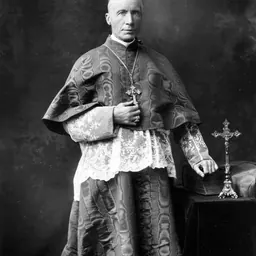
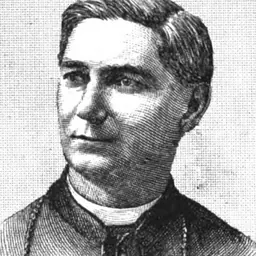
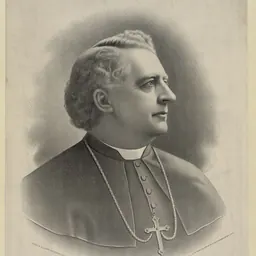
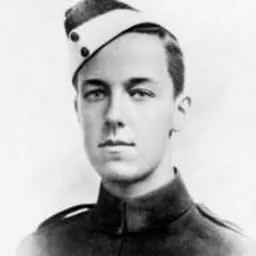
Related people
Same field, nearest in time
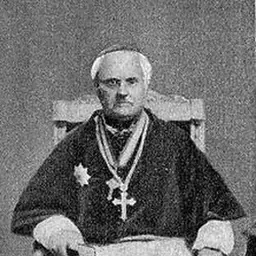
Contemporaries
People whose lives overlapped Thomas Albert Andrew Becker's



Frequently asked questions
Who was Thomas Albert Andrew Becker?
Catholic bishop (1832–1899)
When was Thomas Albert Andrew Becker born?
Thomas Albert Andrew Becker was born on 20 December 1832 in Pittsburgh.
When did Thomas Albert Andrew Becker die?
Thomas Albert Andrew Becker died on 29 July 1899 in Washington.
What was Thomas Albert Andrew Becker's occupation?
Thomas Albert Andrew Becker was a catholic priest and catholic bishop.
What nationality was Thomas Albert Andrew Becker?
Thomas Albert Andrew Becker was American.
Sources & further reading
· Wikipedia: Thomas Albert Andrew Becker
· DBpedia: Thomas Albert Andrew Becker
Cite this page
APA: Biography.guide. (2026). Thomas Albert Andrew Becker. https://biography.guide/thomas-albert-andrew-becker/
MLA: "Thomas Albert Andrew Becker." Biography.guide, https://biography.guide/thomas-albert-andrew-becker/.
Chicago: "Thomas Albert Andrew Becker." Biography.guide. https://biography.guide/thomas-albert-andrew-becker/.
Data last updated: 2026-09-20 · Spot an error? Report a correction.
Page generated 2026-09-27 05:22 UTC