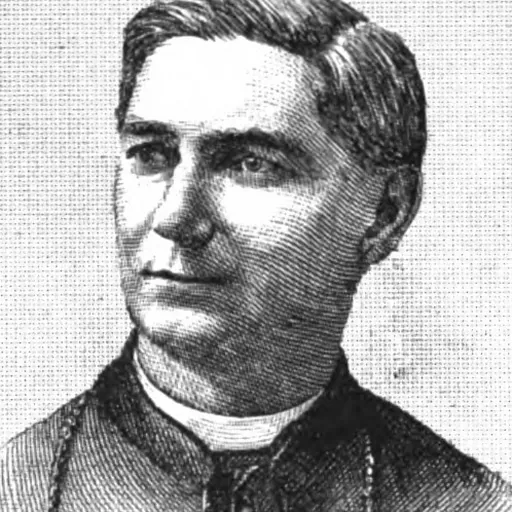
About John Joseph Kain
Lived 1841 – 1903 (aged 62). John Joseph Kain was an American catholic priest and catholic bishop.
John Joseph Kain (March 1840 – October 13, 1903) was an American prelate of the Catholic Church. He served as Bishop of Wheeling from 1875 to 1893 and as Archbishop of St. Louis from 1895 until his death in 1903.
Early life and education John Kain was born in March 1840 in Martinsburg, Virginia, which is now part of West Virginia. His parents were Irish immigrants from County Cork, There, he established a lifelong friendship with one of his classmates, John J. Keane. He then continued his studies at St. Mary's Seminary in Baltimore, earning a baccalaureate in theology maxima cum laude. While Kain prepared for the priesthood, one of his sisters joined the Sisters of Charity.
Priesthood On July 2, 1866, Kain was ordained a priest by Archbishop Martin John Spalding in Baltimore. At the time, the parish covered eight counties in West Virginia and four counties in Virginia. He dedicated most of his tenure to restoring Catholic communities after Civil War, repairing churches at Harpers Ferry and Martinsburg and entirely rebuilding churches at Winchester and Berkeley Springs. By the end of his tenure in 1893, there were 35 priests, 64 churches, and 20,000 Catholics.
Although Kain would become a longtime ally of Bishop Gibbons of the Diocese of Richmond (later archbishop of Baltimore and a cardinal), In 1876, Kain petitioned the Holy See to adjust the two dioceses to align with state boundaries.
Kain attended the third Plenary Council of Baltimore (1884), where he took a prominent role in discussions on the Baltimore Catechism, clerical trials, and spiritual care of immigrants.
Archdiocese of St. Louis By 1892, Archbishop Peter Richard Kenrick was 86 years old and had led the Archdiocese of St. Louis for 49 years. In November of that year, a terna, or list of candidates, for a coadjutor archbishop to Kenrick was submitted by the priests of the archdiocese—including Kain, Bishop John Lancaster Spalding of Peoria, and Bishop Edward Fitzgerald of Little Rock. The bishops of the archdiocese also submitted a terna, including Kain, Spalding, and Bishop Silas Chatard of Indianapolis. Kenrick had originally wanted the vicar general of the archdiocese to become his coadjutor but had been overruled by his fellow clergy. He also did not appreciate it when Kain took up quarters in the archbishop's residence. Kain exercised limited authority until December 1893, when the Holy See named him apostolic administrator of the archdiocese. By the end of his tenure in 1903, there were 437 priests, 252 churches, 141 parochial schools, 16 hospitals, seven orphanages, and 220,000 Catholics. In 1893, he opened Kenrick Seminary. Glennon was appointed in April of that year.
The next month, in May 1903, Kain took up residence at St. Agnes Hospital in Baltimore. He remained there for five months, dying on October 10 at the age of 63. He is buried in Calvary Cemetery.
Rosati-Kain Academy in St. Louis is partially named in his honor.
Views In the 1913 Catholic Encyclopedia, Kain was described as "an admirable exemplar of progressive conservatism and conservative progressiveness." Kain was generally aligned with the liberal faction. ; McQuaid also said that Kain "has a great deal of backbone" in a 1894 letter to Archbishop Corrigan.
Kain took a tolerant view of secret societies, which the Church generally considered as incompatible with Catholic doctrine. In 1890, a Catholic newspaper printed a quote from Kain saying that Freemasonry in France and Italy was the enemy of Christianity but, in the United States and England, was essentially Christian. Given the papal ban of Freemasonry, Cardinal Simeoni of the Congregation for the Propagation of the Faith consequently asked Cardinal Gibbons to investigate the matter; Gibbons later told Simeoni that Kain had repudiated his statement. In 1894, the Holy Office condemned the Odd Fellows, Sons of Temperance, and Knights of Pythias. However, Kain refused to publish the decree in the Archdiocese of St. Louis, writing to Gibbons that "the majority of [bishops] were opposed to the condemnation of those societies."
Don’t just read it —
keep it.
Full-length biographies made to live with: read them, listen on the way to work, watch them tonight.
- E-book
- Audio
- Video
Instant download · yours to keep · every purchase keeps this site free
Important facts
People in John Joseph Kain's life
Named in this biography and alive at the same time



Related people
Same field, nearest in time

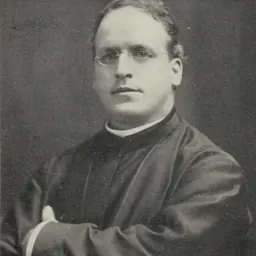
Contemporaries
People whose lives overlapped John Joseph Kain's

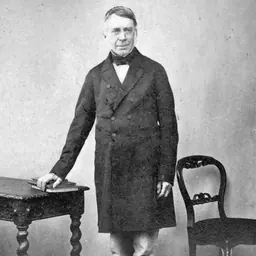
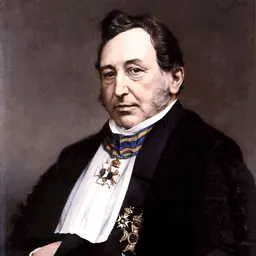

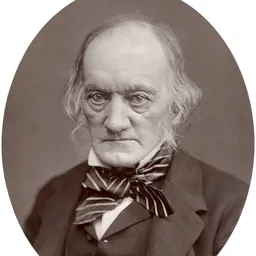
Frequently asked questions
Who was John Joseph Kain?
American Catholic archbishop (1841-1903)
When was John Joseph Kain born?
John Joseph Kain was born on 31 May 1841 in Martinsburg.
When did John Joseph Kain die?
John Joseph Kain died on 13 October 1903 in St. Louis.
What was John Joseph Kain's occupation?
John Joseph Kain was a catholic priest and catholic bishop.
What nationality was John Joseph Kain?
John Joseph Kain was American.
Sources & further reading
Cite this page
APA: Biography.guide. (2026). John Joseph Kain. https://biography.guide/john-joseph-kain/
MLA: "John Joseph Kain." Biography.guide, https://biography.guide/john-joseph-kain/.
Chicago: "John Joseph Kain." Biography.guide. https://biography.guide/john-joseph-kain/.
Data last updated: 2026-09-23 · Spot an error? Report a correction.
Portrait: Wikimedia Commons · author & licence
Page generated 2026-09-27 05:08 UTC