
Martin John Spalding
(1810-1872), Archbishop of Baltimore
About Martin John Spalding
Lived 1823 – 1872 (aged 48). Martin John Spalding was an American catholic priest, writer and catholic bishop.
Martin John Spalding (May 23, 1810 – February 7, 1872) was an American Catholic prelate who served as archbishop of Baltimore from 1864 to 1872. He previously served as bishop of Louisville from 1850 to 1864. He advocated aid for freed slaves following the American Civil War. Spalding attended the First Vatican Council, where he first opposed, and then supported, a dogmatic proclamation of papal infallibility.
Early life and education Martin Spalding was born on May 23, 1810, in Rolling Fork, Kentucky, the sixth of eight children of Richard and Henrietta (née Hamilton) Spalding. His ancestors came to the American colonies from England and Ireland, settling in the British Province of Maryland around the mid-17th century. Spalding's paternal grandfather, Benedict Spalding, moved to Kentucky from St. Mary's County, Maryland in 1790. His mother's family, also from Maryland, moved to Kentucky in 1791. Martin was a distant cousin of Mother Catherine Spalding, co-founder of the Sisters of Charity of Nazareth. When Martin Spalding reached age eight, his family sent him in 1818 to a country school in the area. While at the school, Spalding learned his multiplication tables in one day. He received his first communion in 1820 at age ten. Spalding celebrated his first mass over Saint Peter's tomb in the subterranean chapel of St. Peter's Basilica. He soon built a reputation as a gifted preacher and lecturer. With Flaget's advancing age and Charbrat's progressive blindness, Spalding assumed administration of the diocese.
Episcopacy
Coadjutor Bishop and Bishop of Louisville
After Chabrat resigned in 1847, the Vatican needed to appoint another coadjutor bishop for Flaget, who was too weak to conduct his duties. On April 18, 1848, Pope Pius IX appointed Spalding as coadjutor bishop of Louisville and titular bishop of Lengone. He received his episcopal consecration on September 1, 1848, from Flaget, with Bishops Francis Kenrick and Richard Miles serving as co-consecrators, at St. Louis Cathedral in Louisville. Francis Kenrick's brother, Archbishop Peter Kenrick, preached the homily for the service.
Spalding completed construction of Cathedral of the Assumption in Louisville in 1852, with Archbishop John Baptist Purcell dedicating it in October 1852. Following the riots' end, Spalding wrote, "I entreat all to pause and reflect, to commit no violence, to believe no idle rumors, and to cultivate that peace and love which are characteristics of the religion of Christ." He also remarked that "those who are in such a way liberated ordinarily become miserable vagabonds, drunkards and thieves."
After founding the House of the Good Shepherd, Spalding conducted a visitation of the archdiocese, during which he administered Confirmation to 8,000 people. as well as the Association of St. Joseph, a society dedicated to the care of homeless girls.
In 1866, Spalding recruited four monks of the Xaverian Brothers from Belgium to found St. Mary's Industrial School, a facility for homeless boys.
In 1867, Spalding visited Rome to participate in the centenary celebration of the martyrdom of St. Peter. He returned to Rome in 1869 to attend the First Vatican Council, where he was a member of the Commission on Faith and of the Commission on Postulata. Exhausted from his visit to Rome, Spalding traveled to Savoy in France and Switzerland to regain his health. He expected to return to Rome when the Vatican Council reassembled. However, the capture of Rome by King Victor Emmanuel II in 1870, during the war for the unification of Italy, forced the canceling of the council. Spalding instead returned to Baltimore. He also remarked that "those who are in such a way liberated ordinarily become miserable vagabonds, drunkards and thieves."
Papal infallibility While he firmly believed in papal infallibility, Spalding initially considered that its dogmatic definition would be unnecessary and inexpedient. Instead, he favored an implicit over an explicit definition, as he believed the latter would likely "excite controversies now slumbering and almost extinct." However, Spalding reversed himself on the necessity of an explicit definition of infallibility after being drawn into a dispute with Bishop Félix Dupanloup and after the governments of France, Germany, Italy, and Spain joined in opposition to a definition. Spalding stated:
Immediately after the final vote on infallibility, he addressed a pastoral letter to Baltimore, in which he explained the necessity of such a definition and attacked what he felt were numerous misrepresentations.
Freedom of worship In 1865, Spalding issued a defense of Pius IX's Syllabus of Errors, which many Americans viewed as a condemnation of the basic principles of their system of government. For instance, Spalding declared:
Social issues Spalding condemned mixed marriages between Catholics and Protestants and called them "alliances so fraught with evil." He also condemned the participation of Catholics in Freemasonry and termed the brotherhood "a human substitute for a divine religion."
Publications
Sketches of the Life, Times, and Character of the Rt. Rev. Benedict Joseph Flaget (1852) Miscellanea (1855) History of the Protestant Reformation (1860)
Don’t just read it —
keep it.
Full-length biographies made to live with: read them, listen on the way to work, watch them tonight.
- E-book
- Audio
- Video
Instant download · yours to keep · every purchase keeps this site free
Important facts
People in Martin John Spalding's life
Named in this biography and alive at the same time

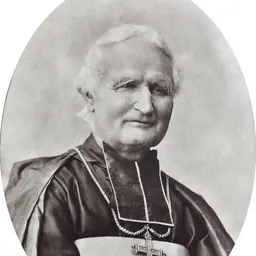
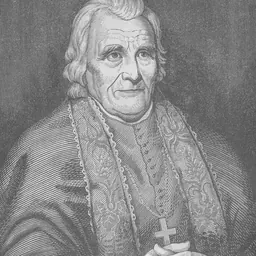
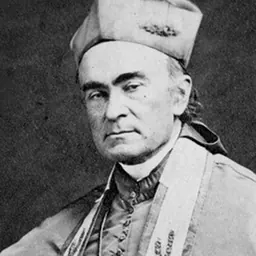

Related people
Same field, nearest in time
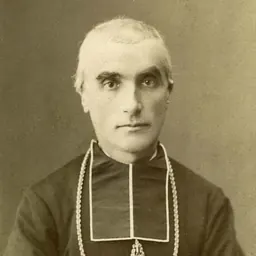


Contemporaries
People whose lives overlapped Martin John Spalding's



Frequently asked questions
Who was Martin John Spalding?
(1810-1872), Archbishop of Baltimore
When was Martin John Spalding born?
Martin John Spalding was born on 23 May 1823 in Rolling Fork.
When did Martin John Spalding die?
Martin John Spalding died on 7 February 1872 in Baltimore.
What was Martin John Spalding's occupation?
Martin John Spalding was a catholic priest, writer and catholic bishop.
What nationality was Martin John Spalding?
Martin John Spalding was American.
Sources & further reading
· Wikipedia: Martin John Spalding
· DBpedia: Martin John Spalding
Cite this page
APA: Biography.guide. (2026). Martin John Spalding. https://biography.guide/martin-john-spalding/
MLA: "Martin John Spalding." Biography.guide, https://biography.guide/martin-john-spalding/.
Chicago: "Martin John Spalding." Biography.guide. https://biography.guide/martin-john-spalding/.
Data last updated: 2026-09-25 · Spot an error? Report a correction.
Page generated 2026-09-27 05:11 UTC