
About Tanko Yakasai
Born 1926. Tanko Yakasai is a Nigerian politician.
Alhaji Salihu Abubakar Tanko Yakasai
Early life and education Salihu Abubakar Tanko Yakasai was born on 5 December 1925 in the Kofar Mata quarters of Kano City, then part of Colonial Nigeria. His father, Abubakar Barau, was of Chamba origin from Adamawa. Hauwa Abubakar, his mother, was a Fulani from Lau, in what is now Taraba State. They met and married in Kano, where they had settled after migrating there. He was given the name Salihu, and was nicknamed 'Tanko'. He spent much of his upbringing in the Yakasai district of Kano, from which he derived his last name.
During this time, Yakasai was mostly focused on expanding his tailoring business. His engagement with politics was initially limited to reading the works of political thinkers such as Sa'adu Zungur, Aminu Kano, Isa Wali, Nuhu Bamalli, and Abubakar Tafawa Balewa. These writings, which frequently appeared in Hausa-language newspapers like Gaskiya Ta Fi Kwabo, often called for Nigerian independence and criticised British colonial rule.
In the early 1950s, Yakasai co-founded the Askianist Movement with poet Mudi Sipikin and Mustapha Dambatta. Intended to function as NEPU's youth wing within the broader Zikist Movement (or its counterpart), the group was "devoted to disseminating among the youth NEPU's class analysis of Northern Nigeria and especially to inflame the traditional animosity between the Habe stock and the members of the Fulani ruling classes."
Following the 1953 Kano riots, the Askianist Movement became the Positive Action Wing (PAW), initially conceived as a self-defense group against attacks by pro-NPC enforcers known as Jam'iyyar Mahaukata ('Madmen's Party'). Under Yakasai's leadership as national secretary, PAW became increasingly militant and was dissolved in 1954 after it "turned out to be even more violent." That same year, Yakasai was appointed Hausa editor of NEPU's party newspaper, the Daily Comet.
In October 1960, Yakasai, then NEPU's publicity secretary, was expelled from the party. He later attributed his dismissal to ideological differences, particularly his advocacy for a Marxist-Leninist orientation incorporating Maoist principles into NEPU's party constitution. This came after an unauthorised tour by Yakasai and others to the Soviet Union, China, and East Germany. After his expulsion, he founded the Sawaba Party of Nigeria (SPN) and formed alliances with the militant Sawaba Party in the Republic of Niger. Yakasai's SPN provided logistical support to Sawabist guerrillas and student cadres, reportedly engaging in arms trafficking to assist their cause.
Yakasai rejoined NEPU in 1963. Following the collapse of the First Republic, the newly installed military government of Johnson Aguiyi-Ironsi banned all political parties and associations, suspending Yakasai's political career. Following a cabinet reshuffle in 1971, Bako reassigned him as State Commissioner for Forestry, Community Development, and Cooperatives. The following year, Yakasai was appointed State Commissioner for Finance after the death of his predecessor, Umaru Gumel. Yakasai was appointed as publicity secretary of the NPN.
During the Second Republic (1979–1983), he served as Special Assistant to President Shehu Shagari on National Assembly Liaison. Yakasai also acted as Shagari's 'proxy' to Aminu Kano, former NEPU president and leader of the opposition People's Redemption Party. Despite leading rival parties, Shagari often consulted Kano on political matters.
Yakasai was released after General Ibrahim Babangida overthrew Buhari's regime in 1985 and assumed leadership as Head of State. However, he was again arrested in 1986 for engaging in political activities. During General Sani Abacha's regime (1993–1998), Yakasai maintained a "close relationship" with the dictator. He was a founding member and member of Board of Trustees of the Arewa Consultative Forum (ACF), an influential northern Nigerian socio-political advocacy group.
Over the course of his political career, Yakasai has claimed to have been arrested 14 times by police in Kano alone.
Personal life Yakasai is married to multiple wives. He has 19 children and over 80 grandchildren.
Yakasai published an autobiography titled Tanko Yakasai: The Story of a Humble Life, an autobiography in 2004.
Don’t just read it —
keep it.
Full-length biographies made to live with: read them, listen on the way to work, watch them tonight.
- E-book
- Audio
- Video
Instant download · yours to keep · every purchase keeps this site free
Important facts
People in Tanko Yakasai's life
Named in this biography and alive at the same time


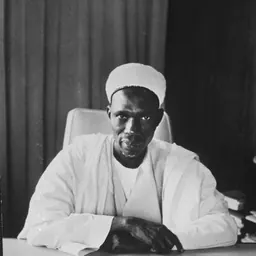
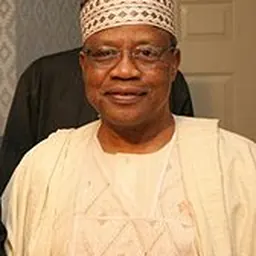



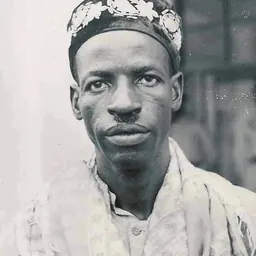
Related people
Same field, nearest in time




Contemporaries
People whose lives overlapped Tanko Yakasai's


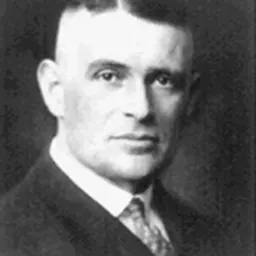
Frequently asked questions
Who is Tanko Yakasai?
politician
When was Tanko Yakasai born?
Tanko Yakasai was born in 1926 in Kano State.
What is Tanko Yakasai's occupation?
Tanko Yakasai is a politician.
What nationality is Tanko Yakasai?
Tanko Yakasai is Nigerian.
Sources & further reading
Cite this page
APA: Biography.guide. (2026). Tanko Yakasai. https://biography.guide/tanko-yakasai/
MLA: "Tanko Yakasai." Biography.guide, https://biography.guide/tanko-yakasai/.
Chicago: "Tanko Yakasai." Biography.guide. https://biography.guide/tanko-yakasai/.
Data last updated: 2026-09-20 · Spot an error? Report a correction.
Page generated 2026-09-27 05:24 UTC