
About Tadeusz Morgenstern-Podjazd
Lived 1895 – 1973 (aged 77). Tadeusz Morgenstern-Podjazd was a Polish military officer.
Tadeusz Józef Roman Morgenstern-Podjazd (November 9, 1895 – October 5, 1973) was a Polish naval officer who was one of the founders of the Navy of the Polish Second Republic and who served as the deputy commander of the Navy between September 1941 and October 1942.
In Austrian service Morgenstern-Podjazd was born into an upper-class Polish family in Czernowitz (modern Chernivtsi, Ukraine) in the province of Bukovina in the Austrian empire. His family was of German origin and had become assimilated into Polish society. His father Roman had fought in the January Uprising against Russian rule in 1863 and fled into the Austrian empire after the defeat of the rising. At least part of the preference of Polish elite families for the Austrian Navy as opposed to the Army was due to the greater possibility of promotion for Poles within the Navy as both the Austrian and Magyar aristocracy preferred the Army. He joined the Imperial Austrian Navy and was trained at the Imperial and Royal Naval Academy at Fiume (present-day Rijeka, Croatia) on the Adriatic Sea, from which he graduated. He reached the rank of lieutenant and served on the cruiser Helgoland and the battleship Habsburg in World War I against the Italian Regia Marina in the Adriatic. Mahan had considerable disdain for the guerre de course strategy of attacking an enemy's merchant fleet and much preferred a strategy of a large fleet centered around battleships that would win a decisive battle of annihilation against its opponents. The influence of Mahan led navies around the world to be focused on the traditional battleship-centric fleet, which was more costly and expensive than a fleet designed for a guerre de course strategy. Polish naval thinking in the interwar period tended towards the Mahanian concept of a fleet strong enough to dominate the Baltic and allow ships from Poland's ally France to enter the Baltic to deliver supplies to Poland.
Morgenstern-Podjazd performed a variety of administrative jobs in Warsaw to recreate a navy for Poland. France and Poland had signed an alliance in 1921, and throughout the Second Republic era, French influence on the Polish military was strong with most of the Polish Navy's warships being built in French shipyards.
A supporter of the Sanation regime, Morgenstern-Podjazd was close to Marshal Józef Piłsudski and in 1931 as the captain of the Wicher took Piłsudski on his holiday to Portugal. The order to retreat to Pińsk turned out to be impractical when the Soviet Union invaded Poland on September 17, 1939. On September 23, 1939, he fled into Hungary, where he was interned. Through he did not know it at the time, this would be the last time he was to see Poland. On October 23, 1939, he was able to escape from Hungary into Romania where in common with many other Polish military personnel, he was not interned by the regime of King Carol II and instead permitted to go on to France.
After a short stay in Bucharest, Morgenstern-Podjazd arrived in Paris to report to the government-in-exile. In December 1939, he was appointed the first Polish naval attache to Sweden, arriving in Stockholm on December 17, 1939. In Sweden he engaged in intelligence-gathering about German naval activities in the Baltic. As the Kriegsmarine normally performed its training in the Baltic while one of its main bases were located in Kiel, much of the information that Morgenstern-Podjazd forwarded to London was listed by the British as either B intelligence ("of value") or A intelligence ("of considerable value"). As the Kriegsmarine always performed the sea trials for new U-boats in the Baltic, his information about the sea trials was especially useful for the British as it allowed them to estimate the number of new U-boats about to enter the Atlantic Ocean.
During the September campaign of 1939, three Polish submarines had fled across the Baltic to Sweden where the boats and their crews were interned after the submarines stayed over the 48 hour limit. As naval attache, Morgenstern-Podjazd was deeply concerned about the Swedish treatment of the interned Polish sailors and frequently visited them to ensure that the Swedes were treating them humanely. The Swedish economy was very closely integrated into the German economy, and for much of World War Two Sweden was to lean in a pro-German neutrality as Sweden was heavily dependent upon German businesses to keep its economy functioning. Morgenstern-Podjazd spent much time taking up complaints from the Polish sailors with the Swedish government, whom he accused of violating various aspects of international law in its treatment of the interned sailors in order to curry favor with the Reich.
In the summer of 1941, a scandal broke out when Commander Bogusław Krawczyk of the Polish submarine ORP Wilk committed suicide on July 19, 1941. In response to the scandal, General Władysław Sikorski, the prime minister of the government-in-exile came into conflict with Admiral Jerzy Świrski and his deputy Commander Karol Korytowski. Sikorski had wanted to sack Admirał Świrski, but was prevented from doing so by objections from the British Royal Navy who argued that Świrski was the most experienced Polish admiral and there was no one to replace him. Morgenstern-Podjazd was appointed to replace Korytowski as Świrski's deputy. In September 1941, he flew on a British bomber to Great Britain and on September 10, 1941, took up command as Swirski's deputy. Morgenstern-Podjazd's relations with Świrski were strained and on January 23, 1942, he attempted to resign, saying he simply could not work with Świrski. His resignation was rejected by Sikorski who urged to find a way to learn how to co-operate with Świrski. On October 15, 1942, he resigned to become the Polish naval attache to the United States. He was to remain in Washington DC until June 1945.
During his time in Washington, his main duty was in arranging liaison between the ships of the Polish Navy and the United States Navy assigned to the convoy duty on the "North Atlantic run" that saw merchantmen take supplies and men from North America to the United Kingdom. In September 1945, he took command of the naval training school ORP Bałtyk in Okehampton. In common with most of the other Polish naval officers, Morgenstern-Podjazd was greatly embittered by Poland losing its independence and saw the outcome of the war as a defeat for his country.
In exile Morgenstern-Podjazd chose not to return to Communist Poland and in 1949 he was elected president of the Navy Association. A painter, some of the watercolors that he painted were exhibited in at a local art gallery in Ottawa, Canada. During his exile, Morgenstern-Podjazd published articles in various Polish emigre magazines and spoke on Radio Free Europe to criticise the Communist regime. In 1964, General Władysław Anders appointed him Rear Admiral. He was interviewed by the journalist Eugeniusz Romiszewski for a documentary that aired on the Polish channel of Radio Free Europe on May 12, 1968, about the 1932 crisis. Morgenstern-Podjazd died in exile in London and is buried in Putney Vale Cemetery.
Promotions
Awards and decorations
Books and articles
Don’t just read it —
keep it.
Full-length biographies made to live with: read them, listen on the way to work, watch them tonight.
- E-book
- Audio
- Video
Instant download · yours to keep · every purchase keeps this site free
Important facts
People in Tadeusz Morgenstern-Podjazd's life
Named in this biography and alive at the same time
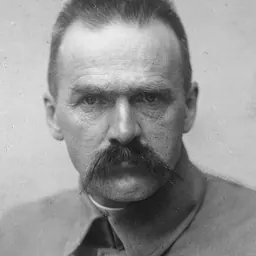
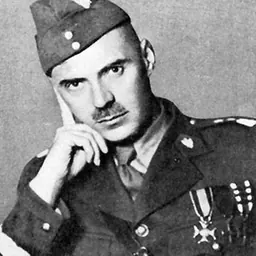
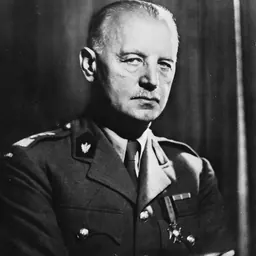
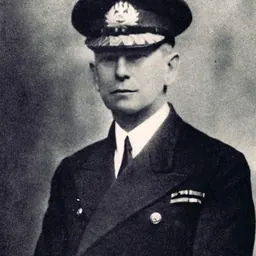

Related people
Same field, nearest in time


Contemporaries
People whose lives overlapped Tadeusz Morgenstern-Podjazd's

Frequently asked questions
Who was Tadeusz Morgenstern-Podjazd?
Polish officer
When was Tadeusz Morgenstern-Podjazd born?
Tadeusz Morgenstern-Podjazd was born on 9 November 1895 in Chernivtsi.
When did Tadeusz Morgenstern-Podjazd die?
Tadeusz Morgenstern-Podjazd died on 5 October 1973 in London.
What was Tadeusz Morgenstern-Podjazd's occupation?
Tadeusz Morgenstern-Podjazd was a military officer.
What nationality was Tadeusz Morgenstern-Podjazd?
Tadeusz Morgenstern-Podjazd was Polish.
Sources & further reading
· Wikipedia: Tadeusz Morgenstern-Podjazd
· DBpedia: Tadeusz Morgenstern-Podjazd
Cite this page
APA: Biography.guide. (2026). Tadeusz Morgenstern-Podjazd. https://biography.guide/tadeusz-morgenstern-podjazd/
MLA: "Tadeusz Morgenstern-Podjazd." Biography.guide, https://biography.guide/tadeusz-morgenstern-podjazd/.
Chicago: "Tadeusz Morgenstern-Podjazd." Biography.guide. https://biography.guide/tadeusz-morgenstern-podjazd/.
Data last updated: 2026-09-22 · Spot an error? Report a correction.
Page generated 2026-09-27 05:21 UTC