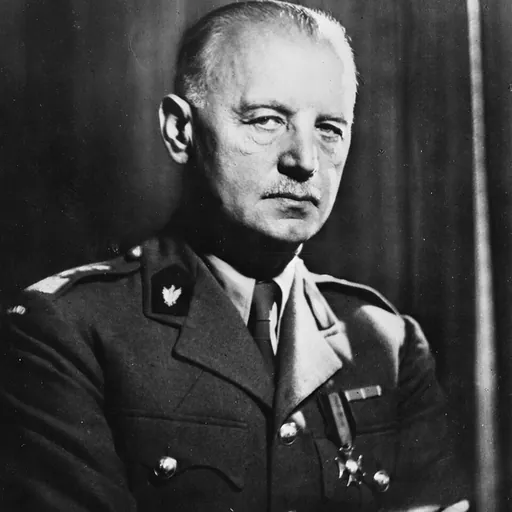
Władysław Sikorski
Polish military and political leader
About Władysław Sikorski
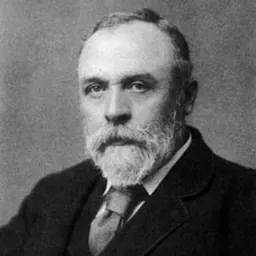
Lived 1881 – 1943 (aged 62). Władysław Sikorski was a Polish politician, military personnel and head of government.
Władysław Eugeniusz Sikorski (; 20 May 18814 July 1943) was a Polish military and political leader. Before World War I, Sikorski established and participated in several underground organizations that promoted the cause of Polish independence. He fought with distinction in the Polish Legions during World War I, and later in the newly created Polish Army during the Polish–Soviet War of 1919–1921. In the latter war, he played a prominent role in the decisive 1920 Battle of Warsaw.
In the early years of the Second Polish Republic, Sikorski held government posts including prime minister (1922–1923) and minister of military affairs (1923–1924). Following Józef Piłsudski's May 1926 Coup and the installation of the Sanation government, he fell out of favor with the new régime.
During World War II, Sikorski became prime minister of the Polish government-in-exile, Commander-in-Chief of the Polish Armed Forces, and a vigorous advocate of the Polish cause in the diplomatic sphere. He supported the reestablishment of diplomatic relations between Poland and the Soviet Union, which had been severed after the September 1939 Soviet invasion of Poland. Subsequently, in April 1943, Soviet leader Joseph Stalin broke off Soviet-Polish diplomatic relations after Sikorski asked the International Red Cross to investigate the Katyn massacres.
In July 1943, a plane carrying Sikorski plunged into the sea immediately on takeoff from Gibraltar, killing all on board except the pilot. The exact circumstances of Sikorski's death have been disputed and have given rise to various theories surrounding the crash. Sikorski had been the most prestigious leader of the Polish exiles, and his death was a severe setback for the Polish cause.
Early life and World War I Sikorski was born in Tuszów Narodowy, Galicia, at the time part of the Austro-Hungarian Empire.
Katyn revelation and death
In 1943 the fragile relations between the Soviet Union and the Polish government-in-exile finally reached their breaking point when, on 13 April, the Germans announced via the Katyn Commission the discovery of the bodies of 20,000 Polish officers who had been murdered by the Soviets and buried in Katyn Forest, near Smolensk, Russia. Only the pilot, Eduard Prchal (1911–1984), survived the crash.
After the Teheran Conference, Stalin decided to create his own puppet government for Poland, and a Committee of National Liberation (the PKWN) was proclaimed in the summer of 1944.
Death controversy
Plaque in memory of Sikorski at the Cathedral of St. Mary the Crowned in Gibraltar.
A British Court of Inquiry convened on 7 July 1943, investigated the crash of Sikorski's Liberator II serial AL 523, but was unable to determine the cause, finding only that it was an accident and "due to jamming of elevator controls", noting that "it has not been possible to determine how the jamming occurred but it has been established that there was no sabotage.".
Honours and awards Plaque to Sikorski in a church in Warsaw inaugurated on the 1000th anniversary of the establishment of Poland - fot. Ivonna Nowicka
Don’t just read it —
keep it.
Full-length biographies made to live with: read them, listen on the way to work, watch them tonight.
- E-book
- Audio
- Video
Instant download · yours to keep · every purchase keeps this site free
Important facts
Family & relationships
People in Władysław Sikorski's life
Named in this biography and alive at the same time


Related people
Same field, nearest in time





Contemporaries
People whose lives overlapped Władysław Sikorski's


Frequently asked questions
Who was Władysław Sikorski?
Polish military and political leader (1881-1943)
When was Władysław Sikorski born?
Władysław Sikorski was born on 20 May 1881 in Tuszów Narodowy.
When did Władysław Sikorski die?
Władysław Sikorski died on 4 July 1943 in Gibraltar.
What was Władysław Sikorski's occupation?
Władysław Sikorski was a politician, military personnel and head of government.
What nationality was Władysław Sikorski?
Władysław Sikorski was Polish.
Sources & further reading
· Wikipedia: Władysław Sikorski
Cite this page
APA: Biography.guide. (2026). Władysław Sikorski. https://biography.guide/wladyslaw-sikorski/
MLA: "Władysław Sikorski." Biography.guide, https://biography.guide/wladyslaw-sikorski/.
Chicago: "Władysław Sikorski." Biography.guide. https://biography.guide/wladyslaw-sikorski/.
Data last updated: 2026-09-20 · Spot an error? Report a correction.
Portrait: Wikimedia Commons · author & licence
Page generated 2026-09-27 04:58 UTC