
About Szmul Zygielbojm
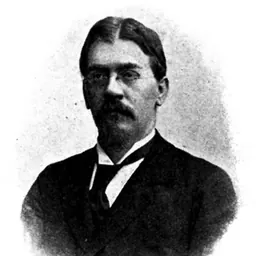
Lived 1895 – 1943 (aged 48). Szmul Zygielbojm was a Polish politician, journalist and trade unionist.
Early years Szmul Zygielbojm was born on February 21, 1895, in the village of Borowica, Poland (then part of the Russian Empire). His family moved to Krasnystaw in 1899. Due to poverty, he left school and began working in a factory at the age of 10. Zygielbojm left home for Warsaw when he was 12, but he returned to Krasnystaw at the beginning of World War I and moved with his family to Chełm.
Bundist career In his 20s, Zygielbojm became involved in the Jewish labor movement, and in 1917 he represented Chełm at the first Bundist convention in Poland. Zygielbojm so impressed the Bund leadership at the convention that he was invited to Warsaw in 1920 to serve as secretary of the Trade Union of Jewish Metal Workers and a member of the Warsaw Committee of the Bund. In 1924 he was elected to the Bund's Central Committee, a position he held until his death.
By 1930, Zygielbojm was editing the Jewish labor unions' journal, Arbeiter Fragen ("Worker’s Issues"). In 1936, the Central Committee sent him to Łódź to lead the Jewish workers' movement, and in 1938 he was elected to its city council.
His booklet, written in English in 1942 and titled "Stop Them Now. German Mass Murder of Jews in Poland", with a foreword by Lord Wedgwood, was his final attempt to make the world aware of the extermination of Jews in Europe.
I must mention here that the Polish population gives all possible help and sympathy to the Jews. The solidarity of the population in Poland has two aspects: first it is expressed in the common suffering and secondly in the continued joint struggle against the inhuman occupying Power. The fight with the oppressors goes on steadily, stubbornly, secretly, even in the ghetto, under conditions so terrible and inhuman that they are hard to describe or imagine.... The Polish and Jewish population keep in constant touch, exchanging newspapers, views and instructions. The walls of the ghetto have not really separated the Jewish population from the Poles. The Polish and the Jewish masses continue to fight together for common aims, just as they have fought for so many years in the past.
In the months following his return from Warsaw, Karski reported to the Polish, British and American governments on the situation in Poland, especially the Warsaw Ghetto and the Bełżec death camp, which he had visited secretly. (It is now believed that Karski had seen the Izbica Lubelska transit ghetto where Jews were held until they could be sent to Bełżec.) Newspaper accounts based on Karski's reports were published by The New York Times on November 25 and November 26, and The Times of London on December 7.
In December, Karski described the conditions in the ghetto to Zygielbojm, who passed along Feiner's message:
This is what they want from their leaders in the free countries of the world, this is what they told me to say: "Let them go to all the important English and American offices and agencies. Tell them not to leave until they obtain guarantees that a way has been decided upon to save the Jews. Let them accept no food or drink, let them die a slow death while the world is looking on. Let them die. This may shake the conscience of the world.
Suicide Zygielbojm's last letter, addressed to Polish president Władysław Raczkiewicz and prime minister Władysław Sikorski and dated 11 May 1943. On 19 April 1943, high-ranking officials of the Allied governments of the UK and the US met in Bermuda, ostensibly to discuss the situation of the Jews in Nazi-occupied Europe. By coincidence, that same day the Nazis attempted to liquidate the remaining Jews in the Warsaw Ghetto and met with unexpected resistance.
By the beginning of May, the futility of the Bermuda Conference had become apparent. Days later, Zygielbojm received word of the suppression of the Warsaw Ghetto Uprising and of the ghetto's final liquidation. He learned that his wife Manya and 16-year-old son Tuvia had been killed there. He died at St Mary's Hospital, Paddington, on 12 May 1943.
In a long suicide note addressed to Polish president Władysław Raczkiewicz and prime minister Władysław Sikorski, Zygielbojm said that while the Nazis were responsible for the murder of the Polish Jews, "the whole of humanity" was also indirectly culpable. He accused the Western Allies of "looking on passively upon this murder of defenseless millions of tortured children, women and men," and the Polish government of not doing enough.
He wished his letter to be widely publicized and hoped that "the Polish Government [would] embark immediately on diplomatic action... in order to save the living remnant of the Polish Jews from destruction." Zygielbojm's younger son, Joseph, survived the ghetto's destruction. After taking a leadership role in the Polish resistance during the war, he emigrated to the United States. He became a scientist at NASA. He died in 1995, survived by his sons, Arthur and Paul.
Zygielbojm did not leave a will, but administration of his estate, valued at £ , was granted to Lucjan Blit, a journalist.
In May 1996, a plaque in memory of Zygielbojm was dedicated at the corner of Porchester Road and Porchester Square in London, near where he had committed suicide. The creation of the memorial was a joint project of the Bund and the Jewish Socialists' Group. The Polish ambassador and the mayor of Westminster were present.
A granite memorial to Zygielbojm was incorporated into a building at 5 S. Dubois Street in Muranów, a housing project built after World War II on the ruins of the Warsaw Ghetto.
In 2008 a plaque was added to the building in Chełm where Zygielbojm had lived. A Bundist commander of the Warsaw Ghetto Uprising, Marek Edelman, wrote a letter that was read at the plaque's dedication.
Zygielbojm is the subject of a 2001 Polish documentary, ("The Death of Zygielbojm"). The film, directed by , won a special mention at the Kraków Film Festival.
In 2021, he was the subject of a Polish drama film ("The Death of Zygielbojm"), which tells the story of an investigation by a British journalist into the life of Szmul Zygielbojm and his attempts to expose Nazi Germany's war crimes. It was directed by Ryszard Brylski and stars Wojciech Mecwaldowski in the title role.
Literature
Don’t just read it —
keep it.
Full-length biographies made to live with: read them, listen on the way to work, watch them tonight.
- E-book
- Audio
- Video
Instant download · yours to keep · every purchase keeps this site free
Important facts
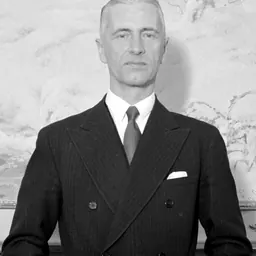
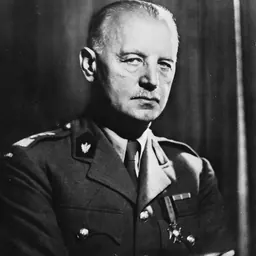
People in Szmul Zygielbojm's life
Named in this biography and alive at the same time

Related people
Same field, nearest in time






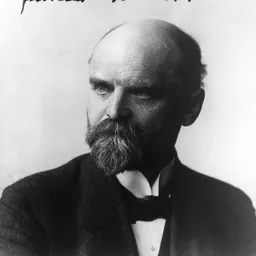
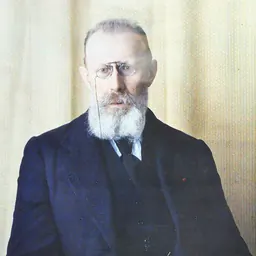
Contemporaries
People whose lives overlapped Szmul Zygielbojm's

Frequently asked questions
Who was Szmul Zygielbojm?
Jewish-Polish politician (1895-1943)
When was Szmul Zygielbojm born?
Szmul Zygielbojm was born on 21 February 1895 in Borowica, Lublin Voivodeship.
When did Szmul Zygielbojm die?
Szmul Zygielbojm died on 12 May 1943 in London.
What was Szmul Zygielbojm's occupation?
Szmul Zygielbojm was a politician, journalist and trade unionist.
What nationality was Szmul Zygielbojm?
Szmul Zygielbojm was Polish.
Sources & further reading
Cite this page
APA: Biography.guide. (2026). Szmul Zygielbojm. https://biography.guide/szmul-zygielbojm/
MLA: "Szmul Zygielbojm." Biography.guide, https://biography.guide/szmul-zygielbojm/.
Chicago: "Szmul Zygielbojm." Biography.guide. https://biography.guide/szmul-zygielbojm/.
Data last updated: 2026-09-20 · Spot an error? Report a correction.
Page generated 2026-09-27 05:28 UTC