
About Suzanne Curchod
Lived 1737 – 1794 (aged 56). Suzanne Curchod was a Swiss writer, salonnière and socialite, known for Necker-Enfants Malades Hospital.
Suzanne Curchod (1737 – 6 May 1794) was a French-Swiss salonist and writer. She hosted one of the most celebrated salons of the Ancien Régime. She also led the development of the Hospice de Charité, a model small hospital in Paris that still exists today as the Necker-Enfants Malades Hospital. She was the wife of French finance minister Jacques Necker, and is often referenced in historical documents as Madame Necker.
Early life and education
Born in May 1737,
These kinds of harsh conditions prompted discussion of hospital reform among government officials. They called for improvements to the hospital environment and for strategic siting of hospitals to make it easier for families to visit hospital-bound relatives. As finance minister, Jacques Necker was particularly influential in steering the agreed reforms.
One of the first of the proposed "neighborhood hospitals" was the Hospice de Charité, a small-scale hospital located in a vacated monastery. Responsibility for its development was placed on Madame Necker, and she turned it into a facility with a 120-patient capacity. She enlisted the services of around a dozen Sisters of Charity, the women who traditionally managed the day-to-day tasks and tended to patients in French hospitals.
The new hospital began accepting patients in 1778, serving the areas of St. Sulpice and du Gros Caillou in Paris and especially welcoming the poor.
Madame Necker aimed to improve patient care while maintaining the institution's financial efficiency, as detailed in the preface of the hospital's first annual report from 1780. She summarized her goals for the Hospice de Charité project thus:
To show the possibility of nursing sick people, each one in a bed to himself, with all the care dictated by the kindliest humanity, without exceeding a fixed price.
The dedication of Madame Necker and the staff to upholding a standard of good care with limited means was recognized by visitors to the hospital. John Howard, a British hospital reformer who visited in 1786, stated that the hospital was a "noble example of private charity". The detailed reports released by the hospital each year further convey Madame Necker's commitment to the project. Not only were illness and patient statistics reported, but also less obvious expenses such as the cost and quantities of food and wine consumed within the hospital.
Madame Necker emphasized hygiene, assigning particular importance to good ventilation. The Hospice de Charité's early mortality rates were somewhat better than at other hospitals, though still high. In 1780, the mortality rate was recorded at 17%, and the next year increased to 21%; by comparison, the overcrowded Hôtel-Dieu had a mortality rate of nearly 25%. Madame Necker's hospital model was employed in the development of other such hospitals, including a tiny 6-bed Montpellier hospital for Protestants that was named after her.
In 1788, Madame Necker relinquished her authority over the Hospice de Charité. In 1792, the hospital was renamed Hospice de l’Ouest or Western Hospice. Today, it is known as the Necker-Enfants Malades Hospital.
Health problems Madame Necker experienced myriad ailments throughout her life, mostly recorded through her letters to friends. In childhood, she is said to have recovered slowly from illnesses, even suffering deafness for a year after one episode. As an adult, her afflictions included endless spells of coughs, chills, and fevers, as well as vaguely described conditions that are hypothesized to have been mental illnesses. It is thought that Madame Necker's own extensive physical and emotional suffering – in addition to the suffering she witnessed in childhood as the daughter of the village pastor – contributed to her passion to improve Parisian health care.
Later years Jacques Necker fell from power in 1789 and was dismissed from the ministry.
Don’t just read it —
keep it.
Full-length biographies made to live with: read them, listen on the way to work, watch them tonight.
- E-book
- Audio
- Video
Instant download · yours to keep · every purchase keeps this site free
Important facts
Family & relationships
People in Suzanne Curchod's life
Named in this biography and alive at the same time
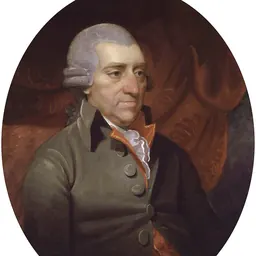
Related people
Same field, nearest in time



Contemporaries
People whose lives overlapped Suzanne Curchod's






Frequently asked questions
Who was Suzanne Curchod?
French-Swiss salonist and writer (1737-1794)
When was Suzanne Curchod born?
Suzanne Curchod was born on 2 June 1737 in Crassier.
When did Suzanne Curchod die?
Suzanne Curchod died on 15 May 1794 in Beaulieu Castle.
What was Suzanne Curchod's occupation?
Suzanne Curchod was a writer, salonnière and socialite.
What was Suzanne Curchod known for?
Suzanne Curchod was known for Necker-Enfants Malades Hospital.
What nationality was Suzanne Curchod?
Suzanne Curchod was Swiss.
Sources & further reading
Cite this page
APA: Biography.guide. (2026). Suzanne Curchod. https://biography.guide/suzanne-curchod/
MLA: "Suzanne Curchod." Biography.guide, https://biography.guide/suzanne-curchod/.
Chicago: "Suzanne Curchod." Biography.guide. https://biography.guide/suzanne-curchod/.
Data last updated: 2026-09-27 · Spot an error? Report a correction.
Page generated 2026-09-27 05:16 UTC