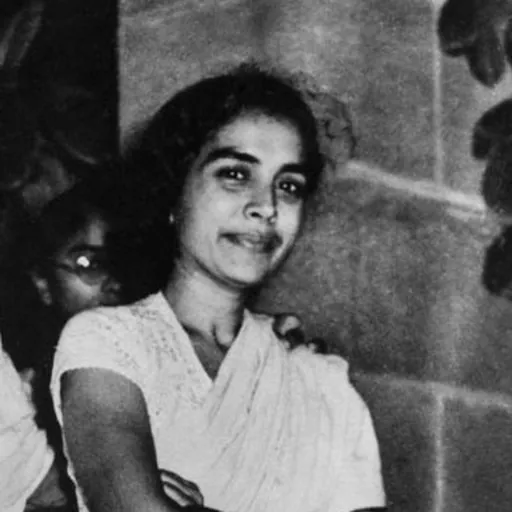
About Sushila Nayyar
Lived 1914 – 2001 (aged 86–87). Sushila Nayyar was an Indian politician, physician and teacher.
Sushila Nayyar, also spelt 'Nayar' (26 December 1914 – 3 January 2001), was an Indian physician, Gandhian and politician who served as the Minister of State for Health and Family welfare. She played a leading role in public health, medical education and social and rural reconstruction in India. She became Gandhi's personal physician and an important member of his inner circle. Later, she wrote several books based on her experiences. She developed an early attraction to Gandhian ideals through her brother and had even met Gandhi as a young child in Lahore.
Further education and public service After Gandhi's assassination in 1948 in Delhi, Sushila Nayyar went to the United States, where she took two degrees in public health from the Johns Hopkins School of Public Health. Returning in 1950, she set up a tuberculosis sanatorium in Faridabad, the model township on the outskirts of Delhi set up on cooperative lines by fellow Gandhian Kamaladevi Chattopadhyay. Nayyar also headed the Gandhi Memorial Leprosy Foundation.
Political career In 1952 she entered politics and was elected to the Legislative Assembly of Delhi. From 1952 to 1955 she served as Health Minister in Nehru's cabinet. She was Speaker of the Delhi Vidhan Sabha (as the State Assembly had been renamed) from 1955 to 1956. In 1957, she was elected to the Lok Sabha, from Jhansi Constituency, and served till 1971. She was Union Health Minister again from 1962 to 1967. During the congress regime, she fell out with Indira Gandhi and joined (Janata party). She was elected to Lok Sabha from Jhansi in 1977 when her new party was voted to power that created history by overthrowing Indira Gandhi's government. Thereafter she retired from politics to devote herself to the Gandhian ideal. She had set up the Mahatma Gandhi Institute of Medical Sciences in 1969, and remained committed to confine her energies to developing and extending it.
Personal life and death She remained unmarried throughout her life. On 3 January 2001, she died due to a cardiac arrest.
Legacy Sushila Nayyar was deeply influenced by the Gandhian philosophy of hard work and abstinence. She was a follower of Gandhian thoughts. She felt strongly about the need for prohibition and linked this to the domestic concerns of poor women whose lives were often blighted by alcoholism in their husbands. She was also a staunch campaigner for family planning, once again seeing this as essential empowerment for women, especially poor women. In her personal life, she practiced strict discipline and expected this also of her followers, acolytes and students. She was one of the circle of young women who followed Gandhi and were deeply impressed by his charisma and magnetism, such that he became the central focus of their lives. She never married. In an age when it was extremely difficult for single young women to have careers, she managed by sheer grit and dedication to carve out a life for herself without concessions to her gender or status. She also believed like Gandhi that there was no such thing as a dirty job, and that medicine required hands-on involvement with patients and their ailments, regardless of feminine delicacy or upper caste squeamishness. However, she could also be authoritarian and unforgiving about other people's foibles, and expected similar levels of sacrifice and ruthlessness from those around her.
Published works The Story of Bapu's Imprisonment (1944) Amaran Ba (Our Ba) written along with Vanamala Parikh (1945) Kasturba, Wife of Gandhi (1948) Kasturba Gandhi: A Personal Reminiscence (1960) Family Planning (1963) Role of Women in Prohibition (1977) Mahatma Gandhi: Satyagraha at Work (Vol. IV) (1951) Mahatma Gandhi: India Awakened, (Vol. V) Mahatma Gandhi: Salt Satyagraha – The Watershed, (Vol. VI) Mahatma Gandhi: Preparing For Swaraj, (Vol. VII) Mahatma Gandhi: Final Fight For Freedom, (Vol. VIII) (c. 1990) Mahatma Gandhi: The Last Phase (completed for her brother Pyarelal, the tenth volume in his biography of Gandhi, published by the Navajivan Publishing House.)
Don’t just read it —
keep it.
Full-length biographies made to live with: read them, listen on the way to work, watch them tonight.
- E-book
- Audio
- Video
Instant download · yours to keep · every purchase keeps this site free
Important facts
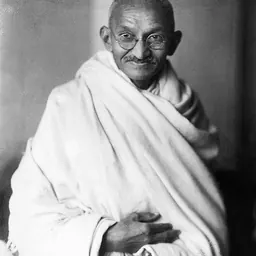
People in Sushila Nayyar's life
Named in this biography and alive at the same time


Related people
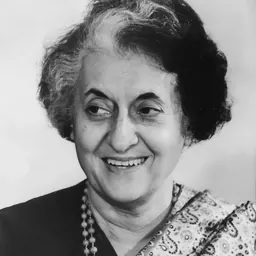
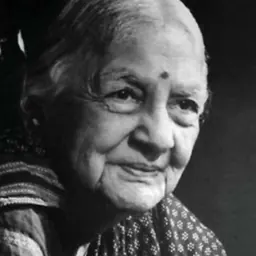
Same field, nearest in time





Contemporaries
People whose lives overlapped Sushila Nayyar's
Frequently asked questions
Who was Sushila Nayyar?
Indian politician and physician
When was Sushila Nayyar born?
Sushila Nayyar was born in 1914 in Kunjah.
When did Sushila Nayyar die?
Sushila Nayyar died on 3 January 2001 in Sevagram.
What was Sushila Nayyar's occupation?
Sushila Nayyar was a politician, physician and teacher.
What nationality was Sushila Nayyar?
Sushila Nayyar was Indian.
Sources & further reading
Cite this page
APA: Biography.guide. (2026). Sushila Nayyar. https://biography.guide/sushila-nayyar/
MLA: "Sushila Nayyar." Biography.guide, https://biography.guide/sushila-nayyar/.
Chicago: "Sushila Nayyar." Biography.guide. https://biography.guide/sushila-nayyar/.
Data last updated: 2026-09-24 · Spot an error? Report a correction.
Portrait: Wikimedia Commons · author & licence
Page generated 2026-09-27 05:09 UTC