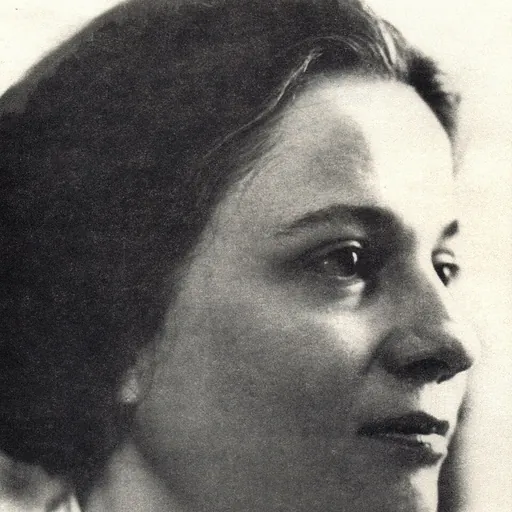
About Susan Catania
Lived 1941 – 2023 (aged 81). Susan Catania was an American politician.
Susan Catania (; December 10, 1941 – November 27, 2023) was an American politician who served as a Republican member of the Illinois House of Representatives from 1973 to 1983. She was involved in women's rights issues, and she led the unsuccessful effort to get the federal Equal Rights Amendment (ERA) ratified by the Illinois General Assembly. Catania also served as chairperson of the Illinois Commission on the Status of Women. A representative from Chicago, she was described as a liberal, feminist, and maverick member of the Republican legislative caucus.
Catania represented a heavily African American and Democratic district, but a Republican could still represent the district under the state's cumulative voting system. In the House, Catania introduced gay rights bills and the Freedom of Information Act, but both efforts were unsuccessful. During her tenure, she sponsored over 50 bills that became law, including the Crime Victim Compensation Act and a bill that designated Martin Luther King Jr. Day as a state holiday, both of which were enacted in 1973. Cumulative voting was abolished by the Cutback Amendment in 1981, and Catania lost any chance to retain her seat in the House going forward. During the 1982 elections, she ran for lieutenant governor, but lost the Republican primary, which was seen as a referendum on ratification of the ERA.
Early years and personal life
Born in Chicago on December 10, 1941, Susan Kmetty grew up in the Beverly neighborhood in the city's South Side. She was an only child. Her father, John Kmetty, made supplies for heavy industrial equipment, and her mother, Helen Giffrow Kmetty, taught home economics at Chicago Public Schools. Susan attended Catholic schools, including Mother McAuley High School. In 1962, she received a Bachelor of Arts degree in chemistry from Saint Xavier University. She later did one year of graduate studies in chemistry, including work as a teaching assistant, at Northwestern University.
In 1963 Kmetty married Anthony E. Catania, whom she had met during an intercollegiate glee club event. They were married for 58 years before Anthony died in 2022.
Catania's education, and the fact that both of her parents worked, motivated her to work full-time in an era when many men assumed women were to stay at home. In 1963, she joined Walter C. McCrone Associates, a microscopy consulting firm in the South Side, as information director, technical writer, and publicist. She hired a babysitter and lived near her workplace, allowing her to nurse her baby during her break. By the end of 1970, Catania quit that job after she did not receive a promotion she had expected. The following year, she filed a sex discrimination lawsuit after her employer allegedly hired a man with less experience but offered him twice the pay. Her claim to the US Equal Employment Opportunity Commission was the first by an Illinois woman for unemployment benefits based on sex discrimination, and included a claim for being denied dependent benefits for her children. Catania connected with the National Organization for Women, which was recruiting women to testify at the General Assembly for a bill expanding access to unemployment benefits for pregnant women. Catania would become one of the women to testify with the organization. By 1972, she worked freelance as a technical publications consultant.
Campaign for the House Amid her advocacy for legislation protecting pregnant women, in 1972 Catania decided to campaign for a seat in the Illinois House of Representatives, representing the 22nd district. Her district was predominantly African American and Democratic.
Three other candidates ran for the Republican nomination, including incumbent Genoa Washington. The Chicago Tribune reported that Catania was running "one of the most vigorous campaigns of the year", in contrast to the other candidates. Washington was confident of his reelection and led a relatively quiet campaign. Catania ran on a platform to mitigate pollution, promote consumer protection, improve public education, promote small business, regulate insurance practices in the inner city, and combat racial and sex discrimination. Washington battled cancer and died a few weeks before the election, leaving his seat vacant. Catania won the election, having secured endorsements from Independent Voters of Illinois and Gloria Steinem, an activist and journalist. She often defied her party's leadership, supporting gun control and abortion, but faced few repercussions as there is no Republican organization in the South Side of Chicago. Throughout her tenure, she sponsored over 50 bills that became law, addressing topics that included domestic violence, child support, joint custody, school bus safety, grandparents' visitation rights, state income tax reform, a rape shield law, and public aid.
Women's rights Catania joined a small group of women legislators who focused on women's rights issues in the 1970s. The infant remained in a car bed under an empty desk near Catania's, and recent renovations had added a new women's lounge by the entrance into the House chamber, the lounge equipped with a loudspeaker to keep its occupants informed of House proceedings. In 1975, Catania was appointed chairperson of the Illinois Commission on the Status of Women, a 16-member panel including both Democratic and Republican appointees. Catania supported the federal Displaced Homemakers Act, which addressed women seeking to enter or re-enter the workforce. She testified at hearings of a US House subcommittee in 1976, and a US Senate subcommittee in 1977. Catania was chief sponsor of the unsuccessful effort to get the federal Equal Rights Amendment (ERA) ratified by the General Assembly, Her term as the commission's chairperson had lasted for eight years. That same year, she won an award named after Susan B. Anthony for her legislative leadership on women's issues.
Other issues In January 1973, Catania introduced a bill that designated Martin Luther King Jr. Day as a state holiday. She was joined as sponsors by Harold Washington (a state representative at the time) and Peggy Smith Martin, and the bill was signed in September of the same year by Governor Dan Walker. Catania introduced gay rights bills as early as 1976, partnering with legislators Robert E. Mann and Leland H. Rayson. Activist Rick Garcia credited her for "open[ing] the door for other moderate Republicans to start to begin supporting basic civil rights for LGBTQ+ people". In 1974, Catania was the first to sponsor the Freedom of Information Act. Chicago-based Democrats in the General Assembly often opposed freedom of information initiatives in the mid-1970s, referring the matters back to legislative committees to avoid consideration. She also sponsored the Crime Victim Compensation Act, which passed in 1973. Catania secured emergency state funding for Cook County Hospital and Provident Hospital, the latter effort which was co-sponsored with Harold Washington. In 1980, Catania supported John B. Anderson during the Republican Party presidential primaries.
Post-House political career alt=Screenshot of television ad, showing a portrait of Catania with the caption "SUSAN CATANIA – For Lt. Governor – Republican Primary March 16" Cumulative voting was abolished by the Cutback Amendment in 1981, and Catania lost any chance to retain her seat in the House going forward. Catania lost the primary, coming in second place to Ryan. In spring 1983, Catania was a fellow at the Harvard Institute of Politics for six months, studying women in politics. Her activities included giving lectures, leading seminars, and rowing along the Charles River as part of a rowing crew team. During the 1984 Republican National Convention, Catania gained national attention as the only delegate who refused to support the Reagan–Bush slate. though she ultimately opted not to run. She helped open a daycare center for state employees in Chicago.
Electoral history Illinois House of Representatives elections
Later elections
Don’t just read it —
keep it.
Full-length biographies made to live with: read them, listen on the way to work, watch them tonight.
- E-book
- Audio
- Video
Instant download · yours to keep · every purchase keeps this site free
Important facts
People in Susan Catania's life
Named in this biography and alive at the same time







Related people
Same field, nearest in time





Contemporaries
People whose lives overlapped Susan Catania's



Frequently asked questions
Who was Susan Catania?
American politician (1941–2023)
When was Susan Catania born?
Susan Catania was born on 10 December 1941 in Chicago.
When did Susan Catania die?
Susan Catania died on 27 November 2023 in Eagle River.
What was Susan Catania's occupation?
Susan Catania was a politician.
What nationality was Susan Catania?
Susan Catania was American.
Sources & further reading
Cite this page
APA: Biography.guide. (2026). Susan Catania. https://biography.guide/susan-catania/
MLA: "Susan Catania." Biography.guide, https://biography.guide/susan-catania/.
Chicago: "Susan Catania." Biography.guide. https://biography.guide/susan-catania/.
Data last updated: 2026-09-23 · Spot an error? Report a correction.
Portrait: Wikimedia Commons · author & licence
Page generated 2026-09-27 05:06 UTC