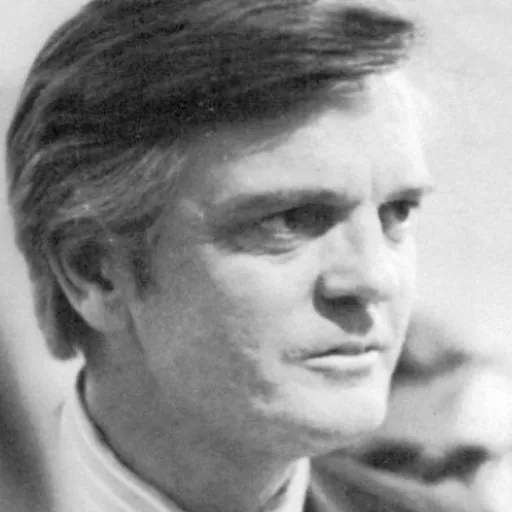
About Dan Walker
Lived 1922 – 2015 (aged 92). Dan Walker was an American military officer, governor, jurist and politician.
Early life and career
Walker was born in Washington, D.C., the son of Virginia May (Lynch) and Lewis Wesley Walker, who were both from Texas. He was raised in San Diego, California, and was valedictorian when he graduated from San Diego High School in 1940.
In 1941, he took an exam to become an officer, ranking fifth out of over three thousand that were tested. He was attending the Naval Academy Preparatory School in Norfolk when Pearl Harbor was attacked. and was later the second governor of Illinois to graduate from Annapolis. After that, he served as a naval officer near the end of World War II. A 1950
The National Commission on the Causes and Prevention of Violence appointed Walker to head the Chicago Study Team that investigated the violent clashes between police and protesters at the 1968 Democratic National Convention. In December, the team issued its report, Rights in Conflict, better known as the Walker Report. The Report became highly controversial, and its author well-known. The report stated that while protesters had deliberately harassed and provoked police, the police had responded with indiscriminate violence against protesters, journalists, and bystanders, which Walker described as a "police riot". The Report charged that many police had committed criminal acts, and condemned the failure to prosecute or even discipline those police.
Governor of Illinois
Walker: Simon: Walker announced his candidacy for Governor of Illinois in 1971 and attracted wide attention by walking across Illinois in 1971. At this time he was the General Counsel of Montgomery Ward and Company, a position he had for over 5 years. During his campaign, Montgomery Ward & Company continued to pay him. They paid him $200,000 per year (equal to $2,000,000 in 2020 dollars.) He also employed his administrative assistant, working on his campaign, who was also paid by Montgomery Ward. Montgomery Ward hoped that this political support would yield benefits when Walker became governor. This never materialized.
Walker's political platform was to stop the proposed Crosstown Expressway in Chicago. This was to run north–south, along Cicero Avenue and had been part of the State of Illinois Transportation plan since the 1950s. This expressway would have had 1 billion dollars of federal funding (10 billion in 2020 dollars). Walker received campaign funds from the Archdiocese of Chicago to stop this Expressway because it would have affected two of the most profitable parishes at the north end at Cicero and the Kennedy expressway.
When Walker was elected, he stopped the Illinois Department of Transportation from pursuing this expressway project. This was a direct political strike against Mayor Daley, who did not support Walker. He narrowly won the 1972 Democratic primary against then-Lieutenant Governor Paul Simon. Though Simon had a "good government" reputation, Walker attacked Simon for soliciting and accepting the endorsement of the Cook County Democratic Party chaired by Chicago Mayor Richard J. Daley, which Walker charged reflected servility to the "Daley Machine". In the 1972 general election, he defeated incumbent Republican Richard B. Ogilvie by a 51% to 49% margin. In the early 1970s, Walker was discussed as a possible presidential candidate.
Howlett: Walker at Bud Billiken Parade in 1973. Photo by John H. White. The enmity between Walker and Chicago Mayor Richard J. Daley's political organization was deep. In 1974, Walker supported state legislative candidates against Daley allies. Walker's deputy governor, Victor deGrazia, later said: "I knew from the beginning that every time Daley looked at Walker, he saw the Church of England and the British suppression of the Irish, and when Dan would look at Daley, he would see the quintessential politician who was only interested in political gain."
"We never established anything even approaching a personal rapport. To some degree, this was an obvious and natural result of my independent political activity. But it went deeper – much deeper," said Walker. During his tenure, Walker was often at odds with both Republicans and Democrats in the state legislature. He did obtain passage of the first law requiring disclosure of campaign contributions and issued a series of executive orders prohibiting corrupt practices by state employees.
In 1976, Walker was defeated in the Democratic primary, losing to Illinois Secretary of State Michael Howlett, the candidate supported by Mayor Daley, by a 54% to 46% margin. In the general election, Howlett was overwhelmingly defeated by former United States Attorney James R. Thompson. A Democrat would not serve as governor of the state for the next 26 years, when Rod Blagojevich was elected in 2002.
Post-governorship
In the 1980s, Walker reentered the private sector by forming Butler-Walker, Inc, a chain of self-named quick oil change franchises later bought by Jiffy Lube, and acquiring two savings and loan associations, one of which was First American Savings and Loan Association of Oak Brook which would later be declared insolvent. In 1987, Walker was charged with Federal bank fraud based on two loans. A private contractor borrowed $279,000 from First American to build schools. As part of a plea agreement, no charges were laid against Walker for any other loans, and no other loans by First American were described as fraudulent.
Walker served eighteen months of his seven-year sentence. He was released in 1989 after his attorneys cited his failing health.
Walker became the second of four Governors of Illinois in the 20th and 21st centuries to be convicted on federal criminal charges. The others were Otto Kerner Jr., George Ryan, and Rod Blagojevich. Unlike Kerner, Ryan, and Blagojevich, Walker's crimes were not related to his term as governor.
Later life and death
After his release from prison in 1989, Walker returned to San Diego, where he spent most of his childhood. He found work as a paralegal. By 2007, he had written several books, In 2007, he published The Maverick and the Machine, in which he discussed his political career, his experiences in prison, and his business and law troubles. Of the latter, he wrote "I knew this was against regulations, but, like most businessmen, I saw a huge difference between a law and a regulation." After his plea deal was reached in 1987, Walker stated, "I have broken the law and pleaded guilty, I have deep regrets and no excuses." Walker died on April 29, 2015, at a veterans hospital in Chula Vista, California, from heart failure, aged 92.
Personal life
Walker was married in 1947 to Roberta Dowse, a Catholic school teacher from Kenosha, Wisconsin. They had seven children, three boys—Daniel Jr., Charles, and William—and four girls, Kathleen, Julie, Roberta, and Margaret. They were divorced in 1977 after 30 years of marriage, when he left her for another woman.
Walker later admitted that the breakdown of the marriage and the divorce was primarily his fault, caused by his stubbornness, arrogance, and lust, and apologized for the pain it caused his family. He also called the divorce the worst decision of his life. Roberta Dowse-Walker, the former First Lady of Illinois, died in December 2006 from colon cancer. Walker later married Roberta Nelson, who was 14 years his junior, and was divorced in 1989 while he was in prison.
In 2007 he resided in Escondido, California, with his third wife, Lillian Stewart. In 2007, they adopted a son. As of 2007, he resided in Rosarito Beach, Baja California, Mexico.
Don’t just read it —
keep it.
Full-length biographies made to live with: read them, listen on the way to work, watch them tonight.
- E-book
- Audio
- Video
Instant download · yours to keep · every purchase keeps this site free
Important facts
People in Dan Walker's life
Named in this biography and alive at the same time





Related people
Same field, nearest in time

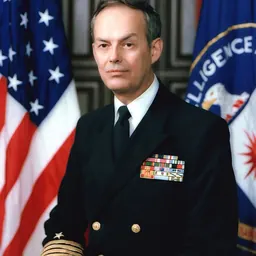

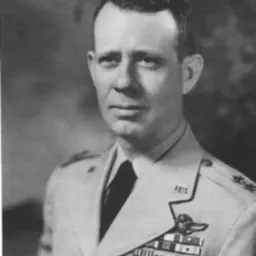

Contemporaries
People whose lives overlapped Dan Walker's

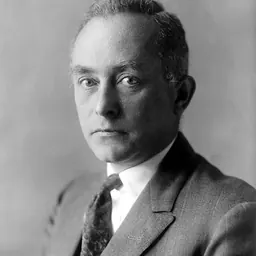
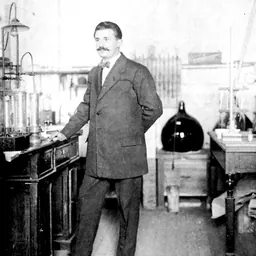
Frequently asked questions
Who was Dan Walker?
36th govenor of Illinois (1922–2015)
When was Dan Walker born?
Dan Walker was born on 6 August 1922 in Washington, D.C..
When did Dan Walker die?
Dan Walker died on 29 April 2015 in Chula Vista.
What was Dan Walker's occupation?
Dan Walker was a military officer, governor, jurist and politician.
What nationality was Dan Walker?
Dan Walker was American.
Sources & further reading
· DBpedia: Dan Walker (politician)
Cite this page
APA: Biography.guide. (2026). Dan Walker. https://biography.guide/dan-walker/
MLA: "Dan Walker." Biography.guide, https://biography.guide/dan-walker/.
Chicago: "Dan Walker." Biography.guide. https://biography.guide/dan-walker/.
Data last updated: 2026-09-24 · Spot an error? Report a correction.
Portrait: Wikimedia Commons · author & licence
Page generated 2026-09-27 05:09 UTC