
About Ștefania Mărăcineanu
Lived 1882 – 1944 (aged 61). Ștefania Mărăcineanu was a Romanian physicist, chemist and teacher.
Ștefania Mărăcineanu (; June 18, 1882 – August 15, 1944) was a Romanian physicist. She worked with Marie Curie and studied polonium, which was named for Curie's homeland. She made proposals that later lead to Irène Joliot-Curie's Nobel Prize. Mărăcineanu believed that Joliot-Curie had taken her work on induced radioactivity to receive the prize.
Biography Early life
"I have great esteem for the work that [Ștefania Mărăcineanu] has accomplished. In particular, she has acquired a perfect knowledge of precise electrometric measurements." In 1907, she enrolled at the University of Bucharest, and received her degree in physical and chemical sciences in 1910. Her senior thesis, titled Light interference and its application to wavelength measurement, earned her a 300 lei prize. After graduation, she taught at high schools in Bucharest, Ploiești, Iași, and Câmpulung. a position she held until 1940.
In 1935, Frederic and Irene Joliot-Curie (n.r. – daughter of scientists Pierre Curie and Marie Curie) won the Nobel Prize in Chemistry discovery of artificial radioactivity, although all data show that Mărăcineanu was the first to make it. In fact, Ștefania Mărăcineanu expressed her dismay at the fact that Irene Joliot-Curie had used a large part of her work observations regarding artificial radioactivity, without mentioning it. Mărăcineanu publicly claimed that she discovered artificial radioactivity during her years of research in Paris, as evidenced by her doctoral dissertation, presented more than 10 years earlier. Mărăcineanu wrote to Lise Meitner in 1936, expressing her disappointment that Irene Joliot Curie, without her knowledge, used much of her work, especially that related to artificial radioactivity, in her work. This was mentioned in the book A devotion to their science: Pioneer women of radioactivity.
Mărăcineanu went on to work at the Paris Observatory until 1929, after which she returned to Romania, and started teaching at the University of Bucharest.
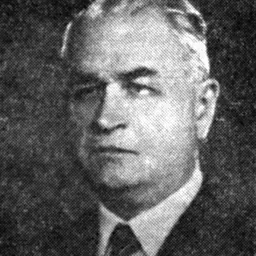
On 29 November 1935, Nicolae Vasilescu-Karpen gave a lecture at the Romanian Academy of Sciences on Artificial radioactivity and Romanian works in this field, which contained clear allusions to Mărăcineanu's research done in previous years. On 24 June 1936, she asked the Academy of Sciences to recognize the priority of her work. In 1937 she was named Director of Research by the Academy, and in 1941 she was promoted to Associate Professor. According to some sources, she is buried at Bellu Cemetery in Bucharest, though other sources disagree on this point.
Don’t just read it —
keep it.
Full-length biographies made to live with: read them, listen on the way to work, watch them tonight.
- E-book
- Audio
- Video
Instant download · yours to keep · every purchase keeps this site free
Important facts
People in Ștefania Mărăcineanu's life
Named in this biography and alive at the same time



Related people
Same field, nearest in time


Contemporaries
People whose lives overlapped Ștefania Mărăcineanu's



Frequently asked questions
Who was Ștefania Mărăcineanu?
Romanian physicist (1882-1944)
When was Ștefania Mărăcineanu born?
Ștefania Mărăcineanu was born on 18 June 1882 in Bucharest.
When did Ștefania Mărăcineanu die?
Ștefania Mărăcineanu died on 15 March 1944 in Bucharest.
What was Ștefania Mărăcineanu's occupation?
Ștefania Mărăcineanu was a physicist, chemist and teacher.
What nationality was Ștefania Mărăcineanu?
Ștefania Mărăcineanu was Romanian.
Sources & further reading
· Wikipedia: Ștefania Mărăcineanu
· DBpedia: Ștefania Mărăcineanu
Cite this page
APA: Biography.guide. (2026). Ștefania Mărăcineanu. https://biography.guide/stefania-maracineanu/
MLA: "Ștefania Mărăcineanu." Biography.guide, https://biography.guide/stefania-maracineanu/.
Chicago: "Ștefania Mărăcineanu." Biography.guide. https://biography.guide/stefania-maracineanu/.
Data last updated: 2026-09-20 · Spot an error? Report a correction.
Page generated 2026-09-27 05:19 UTC