
About Irène Joliot-Curie
Lived 1897 – 1956 (aged 58). Irène Joliot-Curie was a French physicist, chemist, professor, politician, nuclear physicist and researcher.
Irène Joliot-Curie (; ; 12 September 1897 – 17 March 1956) was a French chemist and physicist who received the 1935 Nobel Prize in Chemistry with her husband, Frédéric Joliot-Curie, for their discovery of induced radioactivity. The couple also discovered positron emission in their process. They were the second married couple, after her parents, to win the Nobel Prize, adding to the Curie family legacy of five Nobel Prizes. This made the Curies the family with the most Nobel laureates to date.
She and her mother Marie Skłodowska-Curie form the only mother–daughter pair to have won Nobel Prizes. By the same occasion, Pierre and Irène Curie form the only father-daughter pair to have won Nobel Prizes, compared to six father-son pairs who have won Nobel Prizes.
She was also one of the first three women to be a member of a French government, becoming undersecretary for Scientific Research under the Popular Front in 1936. Both children of the Joliot-Curies, Hélène and Pierre, are also scientists.
In 1945, she was one of the six commissioners of the new French Alternative Energies and Atomic Energy Commission (CEA) created by de Gaulle and the Provisional Government of the French Republic. She died in Paris on 17 March 1956 from an acute leukemia linked to her exposure to polonium and X-rays.
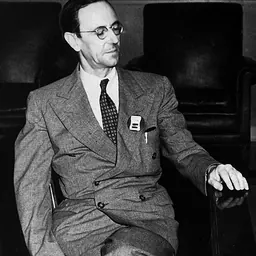
Biography Early life and education Irène was born in Paris, France, on 12 September 1897. She was the first of Marie and Pierre's two daughters. Her sister was named Ève, born in 1904 also in Paris. Education was important to Marie and Irène's education began at a school near the Paris Observatory. The curriculum of The Cooperative was varied and included not only the principles of science and scientific research but also such diverse subjects as Chinese and sculpture, and with great emphasis placed on self-expression and play. Irène studied in this environment for about two years. She began her work as a nurse radiographer on the battlefield alongside her mother. After a few months she was left to work alone at a radiological facility in Belgium. Irène became a Doctor of Science in 1925. In 1932, Joliot-Curie and her husband Frédéric had full access to Marie's polonium. Experiments were done using gamma rays to identify the positron. Though their experiments identified both the positron and the neutron, they failed to interpret the significance of the results and the discoveries were later claimed by Carl David Anderson and James Chadwick respectively. This phosphorus isotope is not found in nature and decays emitting a positron. This discovery is formally known as positron emission or beta decay, where a proton in the radioactive nucleus changes to a neutron and releases a positron and an electron neutrino. By then, the application of radioactive materials for use in medicine was growing, and this discovery allowed radioactive materials to be created quickly, cheaply, and plentifully. The Nobel Prize for chemistry in 1935 brought with it fame and recognition from the scientific community and Joliot-Curie was awarded a professorship at the Faculty of Science.
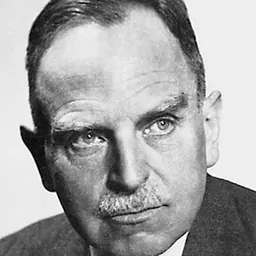
The work that Irène's laboratory pioneered, research into radium nuclei, would also help another group of physicists within Germany. Otto Hahn and Fritz Strassman on 19 December 1938 bombarded uranium with neutrons, but misinterpreted their findings. Lise Meitner and Otto Frisch would theoretically correct Hahn and Strassmann's findings, and after replicating their experiment based on Hungarian physicist Leo Szilard's theory that he had confided to Meitner back in 1933, confirmed on 13 January 1939 that Hahn and Strassmann had indeed observed nuclear fission: the splitting of the nucleus itself, emitting vast amounts of energy. Lise Meitner's now-famous calculations actually proved that nuclear fission was possible and replicable.
In 1948, using work on nuclear fission, the Joliot-Curies, along with other scientists, created the first French nuclear reactor. Treatment with antibiotics and a series of operations relieved her suffering temporarily, but her condition continued to deteriorate. Despite this, Joliot-Curie continued to work and in 1955 drew up plans for new physics laboratories at the Orsay Faculty of Sciences, which is now a part of the Paris-Saclay University, south of Paris.
Political views The Joliot-Curies had become increasingly aware of the growth of the fascist movement.
The Joliot-Curies had continued Pierre and Marie's policy of publishing all of their work for the benefit of the global scientific community, but afraid of the danger that might result should it be developed for military use, they stopped: on 30 October 1939, they placed all of their documentation on nuclear fission in the vaults of the French Academy of Sciences, where it remained until 1949. Frédéric's health was also declining, and he died in 1958 from liver disease, which too was said to be the result of overexposure to radiation.
Joliot-Curie was an atheist and anti-war. When the French government held a national funeral in her honor, Irène's family asked to have the religious and military portions of the funeral omitted. Officer of the Legion of Honor.
Her name was added to the Monument to the X-ray and Radium Martyrs of All Nations erected in Hamburg, Germany.
In 2026, Joliot-Curie and her mother were announced as among the 72 historical women in STEM whose names have been proposed to be added to the 72 men already celebrated on the Eiffel Tower. Her mother was also on the list. The plan was announced by the Mayor of Paris, Anne Hidalgo following the recommendations of a committee led by Isabelle Vauglin of Femmes et Sciences and Jean-François Martins, representing the operating company which runs the Eiffel Tower.
Selected publications
1re thèse: Recherches sur les rayons X du polonium. Oscillation de parcours, vitesse d'émission, pouvoir ionisant. 2e thèse: Propositions données par la Faculté La projection de noyaux atomiques par un rayonnement très pénétrant L'électron positif Radioactivité artificielle Physique nucléaire, radioactivité naturelle, transmutations, radioactivité artificielle, neutrons Les Radioéléments naturels, propriétés chimiques, préparation, dosage Les Progrès récents en radioactivité et en physique nucléaire Autoradiographie par neutrons, dosage séparé de l'uranium et du thorium dans les minéraux Oeuvres scientifiques complètes
Don’t just read it —
keep it.
Full-length biographies made to live with: read them, listen on the way to work, watch them tonight.
- E-book
- Audio
- Video
Instant download · yours to keep · every purchase keeps this site free
Important facts
Family & relationships
People in Irène Joliot-Curie's life
Named in this biography and alive at the same time



Related people
Same field, nearest in time

Contemporaries
People whose lives overlapped Irène Joliot-Curie's


Frequently asked questions
Who was Irène Joliot-Curie?
French chemist and physicist (1897–1956)
When was Irène Joliot-Curie born?
Irène Joliot-Curie was born on 12 September 1897 in 13th arrondissement of Paris.
When did Irène Joliot-Curie die?
Irène Joliot-Curie died on 17 March 1956 in Paris.
What was Irène Joliot-Curie's occupation?
Irène Joliot-Curie was a physicist, chemist, professor, politician, nuclear physicist and researcher.
What nationality was Irène Joliot-Curie?
Irène Joliot-Curie was French.
Sources & further reading
· Wikipedia: Irène Joliot-Curie
Cite this page
APA: Biography.guide. (2026). Irène Joliot-Curie. https://biography.guide/irene-joliot-curie/
MLA: "Irène Joliot-Curie." Biography.guide, https://biography.guide/irene-joliot-curie/.
Chicago: "Irène Joliot-Curie." Biography.guide. https://biography.guide/irene-joliot-curie/.
Data last updated: 2026-09-20 · Spot an error? Report a correction.
Page generated 2026-09-27 05:31 UTC