
About Carl David Anderson
Lived 1905 – 1991 (aged 85). Carl David Anderson was an American physicist and university teacher, known for Muon and Positron.
Biography Carl David Anderson was born on September 3, 1905, in New York City, to Swedish immigrants, Carl David Anderson Sr. and Emma Adolfina Ajaxson. Anderson received his B.S. in Physics and Engineering in 1927, and his Ph.D. in Physics in 1930, both from the California Institute of Technology (Caltech).
Anderson spent the entirety of his career at Caltech; he was Research Fellow (1930–1933) and Assistant Professor to Associate Professor of Physics (1933–1939), before becoming Professor of Physics in 1939, a position he held until his retirement in 1976.
In 1946, Anderson married Lorraine Bergman, with whom he had two sons.
Research Discovery of the positron
Under the supervision of Robert Millikan, Anderson began investigations into cosmic rays during the course of which he encountered unexpected particle tracks in his (modern versions now commonly referred to as an Anderson) cloud chamber photographs that he correctly interpreted as having been created by a particle with the same mass as the electron, but with opposite electric charge.
This discovery, announced in 1932 and later confirmed by others, validated Paul Dirac's theoretical prediction of the existence of the positron. Anderson first detected the particles in cosmic rays. He then produced more conclusive proof by shooting gamma rays produced by the natural radioactive nuclide ThC (208Tl) into other materials, resulting in the creation of positron-electron pairs.
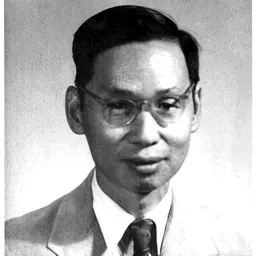
For this work, Anderson shared the 1936 Nobel Prize in Physics with Victor Hess. Fifty years later, Anderson acknowledged that his discovery was inspired by the work of his Caltech classmate, Chung-Yao Chao, whose research formed the foundation from which much of Anderson's work developed but was not credited at the time.
Discovery of the muon In 1936, Anderson and his first graduate student, Seth Neddermeyer, discovered the muon (or 'mu-meson', as it was known for many years), a subatomic particle 207 times more massive than the electron, but with the same negative electric charge and spin 1/2 as the electron, again in cosmic rays.
Anderson and Neddermeyer at first believed that they had seen a pion, a particle which Hideki Yukawa had postulated in his theory of the strong interaction. When it became clear that what Anderson had seen was not the pion, the physicist I. I. Rabi, puzzled as to how the unexpected discovery could fit into any logical scheme of particle physics, quizzically asked "Who ordered that?" (sometimes the story goes that he was dining with colleagues at a Chinese restaurant at the time).
The muon was the first of a long list of subatomic particles whose discovery initially baffled theoreticians who could not make the confusing "zoo" fit into some tidy conceptual scheme. Willis Lamb, in his 1955 Nobel Prize Lecture, joked that he had heard it said that "the finder of a new elementary particle used to be rewarded by a Nobel Prize, but such a discovery now ought to be punished by a 10,000 dollar fine."
Recognition Awards Year Organization Award Citation 1936 Royal Swedish Academy of Sciences Nobel Prize in Physics "For his discovery of the positron."
Memberships Year Organization Type 1938 American Philosophical Society Member 1938 National Academy of Sciences Emeritus 1950 American Academy of Arts and Sciences Member
Select publications
Don’t just read it —
keep it.
Full-length biographies made to live with: read them, listen on the way to work, watch them tonight.
- E-book
- Audio
- Video
Instant download · yours to keep · every purchase keeps this site free
Important facts
People in Carl David Anderson's life
Named in this biography and alive at the same time




Related people
Same field, nearest in time


Contemporaries
People whose lives overlapped Carl David Anderson's
Frequently asked questions
Who was Carl David Anderson?
American physicist
When was Carl David Anderson born?
Carl David Anderson was born on 3 September 1905 in New York City.
When did Carl David Anderson die?
Carl David Anderson died on 11 January 1991 in San Marino.
What was Carl David Anderson's occupation?
Carl David Anderson was a physicist and university teacher.
What was Carl David Anderson known for?
Carl David Anderson was known for Muon and Positron.
What nationality was Carl David Anderson?
Carl David Anderson was American.
Sources & further reading
· Wikipedia: Carl David Anderson
· DBpedia: Carl David Anderson
Cite this page
APA: Biography.guide. (2026). Carl David Anderson. https://biography.guide/carl-david-anderson/
MLA: "Carl David Anderson." Biography.guide, https://biography.guide/carl-david-anderson/.
Chicago: "Carl David Anderson." Biography.guide. https://biography.guide/carl-david-anderson/.
Data last updated: 2026-09-20 · Spot an error? Report a correction.
Page generated 2026-09-27 05:18 UTC