
About Sophie Swetchine
Lived 1782 – 1857 (aged 74). Sophie Swetchine was a Russian lady-in-waiting, salonnière, writer, diarist and philosopher.
Anne Sophie Swetchine (; ; 22 November 178210 September 1857), known as Madame Swetchine, was a Russian mystic, born in Moscow, and famous for her salon in Paris.
Biography She was born Sofia Petrovna Soymonova (sometimes Soïmonov or Soymanof) on 22 November 1782 in Moscow, the daughter of Secretary of State Peter Alexandrovich Soimonov (1734–1801) and his wife, Catherine Boltin (1756–1790).
She spent her early years at the court of Empress Catherine the Great, as her father was one of the empress's closest advisors. She was given a good education, learned to speak several European languages and was popular at court. In 1797, she was made lady-in-waiting to Empress Maria Fedorovna. In 1799, Sophie married General Nicholas Sergeyevich Swetchine. Even though he was his wife's senior by 25 years, their relationship was described by contemporaries as a good one, though the couple did not have children, which is said to have caused her suffering.
Coming from Russian Orthodoxy, in 1815 she became a Catholic, largely as the result of reading the writings of Joseph de Maistre, though she had also been under the influence of the Jesuits. Russian law did not permit members of the Russian nobility who had converted from the Orthodox religion to continue living in Russia, and so Sophie was forced to live in exile, choosing Paris as her new home. There she settled with her husband the following year and there she was to spend the rest of her life.
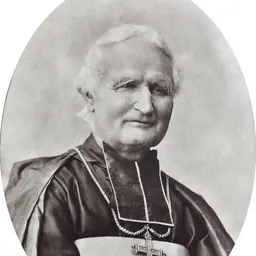
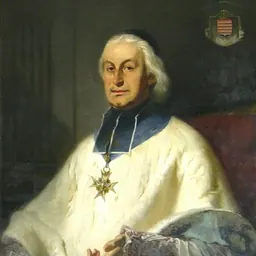
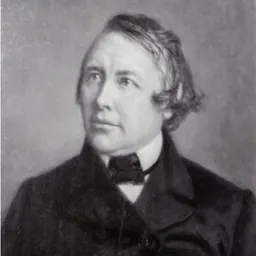
From 1826 until her death in 1857, she kept a salon at number 71, Rue Saint-Dominique. It became famous and was considered remarkable for its high level of courtesy and for its intellectual level. At it she often received Russian exiles, but her guests, who included Victor Cousin and Alexis de Tocqueville, were generally drawn from various sectors of French literary, political and ecclesiastical high society, but with a special interest in the Church. Hence among her guests were prominent Catholics such as the Archbishop of Paris, Hyacinthe-Louis de Quélen, the abbé Félix Dupanloup, later Bishop of Orleans, and Prosper Guéranger, the founder of the Abbey of Solesmes. A prominent note was what has been spoken of as liberal Catholicism, and she accorded a particularly warm welcome to Charles de Montalembert, Armand de Melun, Augustin Cochin and especially Alfred de Falloux and Henri Lacordaire, who was to refound the Dominican Order in France. With the latter two she maintained a close lifelong friendship. Through her many contacts, she is regarded as having exercised an influence on French Catholicism.
Works Her Life and Works (the best known of the latter being "Old Age" and "Resignation") were published by her friend Falloux (2 vols, 1860), as were her Letters (2 vols., 1861).
Quotes Madame Swetchine is noted for the quotation: "How easy to be amiable in the midst of happiness and success." She was reported to have said that "Travel is the frivolous part of serious lives and the serious part of frivolous lives."
Don’t just read it —
keep it.
Full-length biographies made to live with: read them, listen on the way to work, watch them tonight.
- E-book
- Audio
- Video
Instant download · yours to keep · every purchase keeps this site free
Important facts
People in Sophie Swetchine's life
Named in this biography and alive at the same time



Related people
Same field, nearest in time


Contemporaries
People whose lives overlapped Sophie Swetchine's


Frequently asked questions
Who was Sophie Swetchine?
Russian salon-holder
When was Sophie Swetchine born?
Sophie Swetchine was born on 22 November 1782 in Moscow.
When did Sophie Swetchine die?
Sophie Swetchine died on 26 August 1857 in former 1st arrondissement of Paris.
What was Sophie Swetchine's occupation?
Sophie Swetchine was a lady-in-waiting, salonnière, writer, diarist and philosopher.
What nationality was Sophie Swetchine?
Sophie Swetchine was Russian.
Sources & further reading
Cite this page
APA: Biography.guide. (2026). Sophie Swetchine. https://biography.guide/sophie-swetchine/
MLA: "Sophie Swetchine." Biography.guide, https://biography.guide/sophie-swetchine/.
Chicago: "Sophie Swetchine." Biography.guide. https://biography.guide/sophie-swetchine/.
Data last updated: 2026-09-25 · Spot an error? Report a correction.
Page generated 2026-09-27 05:12 UTC